Top 10 Customer Support Outsourcing Companies for 2026
One of the hardest decisions a company can make is to outsource customer service. There could be many reasons why outsourcing would even be on an agenda. Two that stand out are staffing issues (turnover) and training. The outcome of outsourcing customer service could be either a


Evaluating a customer support outsourcing partner on pricing and retention data - not just headcount - is the approach that consistently produces better service outcomes.
The customer support outsourcing market is projected to exceed $110 billion by 2026, yet most ranking lists still pick winners by headcount alone. This comparison evaluates ten providers - from HelpSquad at $8/hr with HIPAA compliance, to Teleperformance's 500,000-agent global network - across pricing transparency, compliance, channel coverage, agent attrition, and vertical specialization. The right vendor depends on your size, industry, and whether you need a pilot before you commit.
In this article:
- What is the best customer support outsourcing company in 2026?
- Which outsourcing companies are HIPAA compliant?
- How much does customer support outsourcing cost per hour?
Quick Answer
The short answer: HelpSquad is the best overall customer support outsourcing company for healthcare practices and SMBs in 2026, offering HIPAA compliance, and 24/7 live chat and call center service starting at $8/hr. Enterprises with global needs should evaluate Concentrix, Teleperformance, or Foundever based on volume and vertical requirements.
Customer support outsourcing refers to hiring a third-party provider - a business process outsourcing (BPO) company - to handle customer-facing communication on your behalf, including inbound calls, live chat, email, and back-office support tasks.
The decision is straightforward in theory. In practice, buyers have to choose among providers ranging from HelpSquad's HIPAA-compliant managed BPO starting at $8 per hour, to Concentrix's Fortune 500 operations spanning 70+ countries, to niche specialists like Working Solutions that deploy exclusively US-based home agents. Each model suits a different buyer profile. This article helps you identify which one matches yours, using six criteria that matter more than headcount: pricing transparency, compliance, channels, agent attrition, trial availability, and vertical fit.
How Did We Choose the Best Customer Support Outsourcing Companies for 2026?
We evaluated ten providers across six criteria: pricing transparency, HIPAA compliance, channel coverage, agent attrition disclosure, trial or pilot availability, and vertical specialization.
An analysis of ten outsourcing providers shows that most vendors compete on either scale or specialization - rarely both. That distinction matters more than people expect. A 500,000-agent global BPO and a managed healthcare-focused team starting at $8 per hour are solving fundamentally different problems. Choosing the wrong tier is the most common mistake I see buyers make, as of .
I'd call the six-criteria test the vendor accountability checklist. Apply it before you shortlist:
- Pricing transparency - Does the vendor publish a starting rate, or do they require a custom quote before sharing any numbers?
- HIPAA compliance - Is the provider a managed BPO with compliance baked into their model, not just a staffing agency that vets individual contractors?
- Channel coverage - Do they handle voice, live chat, and email from one account, or do you need separate vendors?
- Agent attrition disclosure - Will they share their monthly turnover rate? The industry average is 6-8%. Any vendor near that number will rotate agents through your account constantly.
- Trial or pilot availability - Can you test the service before committing to a contract?
- Vertical specialization - Do they have dedicated experience in your industry, or is your account another general intake?
Contrary to popular belief, the largest outsourcing companies do not automatically deliver the best results for small and mid-size businesses. According to a Reddit r/smallbusiness thread from early 2026, small business owners consistently find that enterprise BPO pricing and minimum-volume requirements make big-brand providers inaccessible. The vendors that work best for SMBs are often those with published hourly rates and no long-term contract requirements. Pricing transparency = KEY.
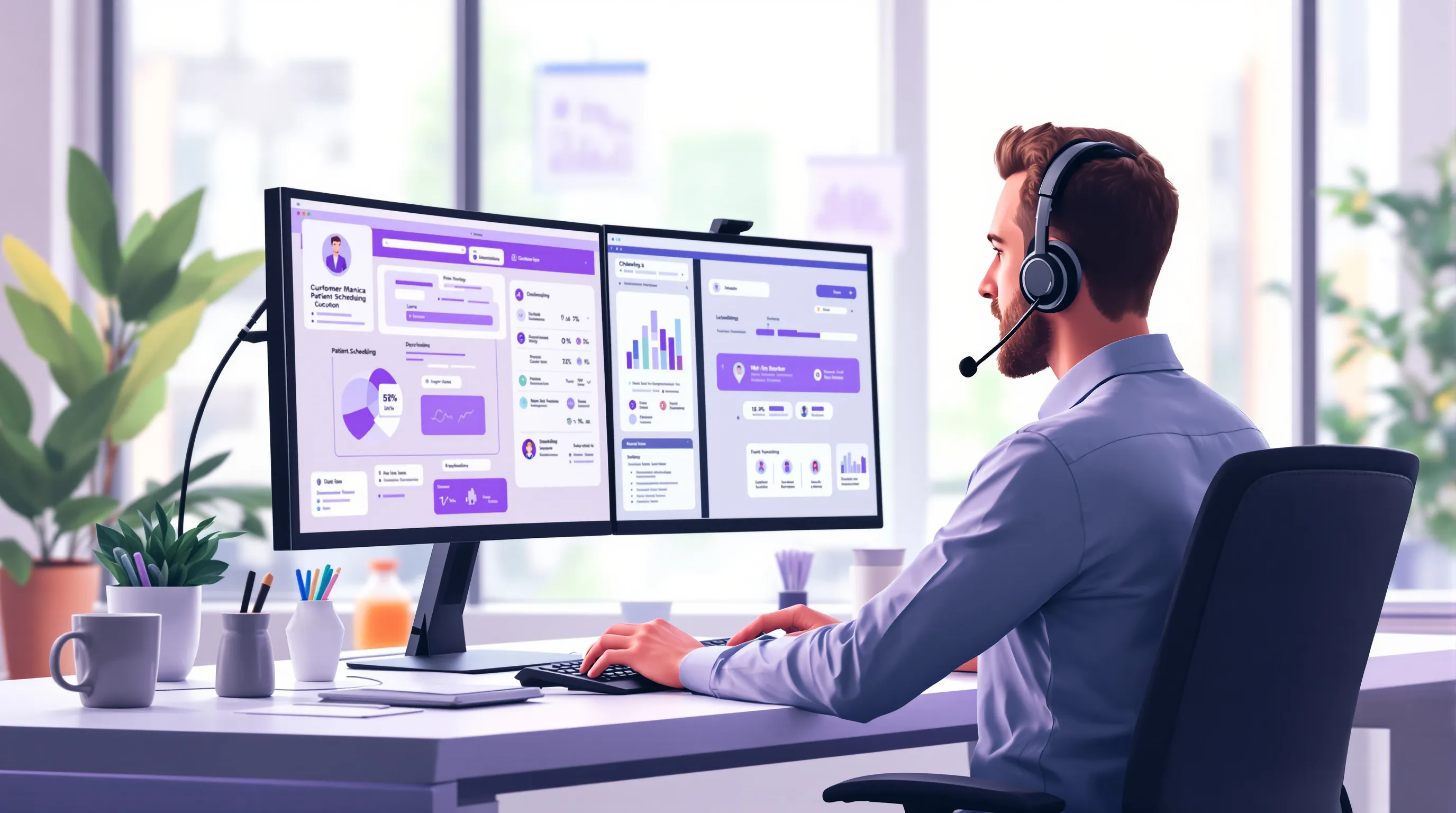
#1 HelpSquad - Best Customer Support Outsourcing Company for Healthcare Practices and SMBs
HelpSquad delivers 24/7 live chat, call center, and virtual assistant services starting at $8 per hour, with HIPAA compliance and bilingual agents. Talk to us before you commit.
In my experience reviewing customer support outsourcing options for small and mid-size practices, HelpSquad stands out because it operates as a fully managed BPO, not a staffing agency. That distinction matters. A staffing agency places individual contractors with your team and you manage them. A managed BPO like HelpSquad owns the agents, the training, the technology, and the quality - you get a dedicated account manager and a team, not a placement.
HelpSquad serves 2,000+ business clients across healthcare, e-commerce, real estate, legal, SaaS, and automotive. Agents are bilingual, based across the US, Europe, Central America, and South Africa, and trained for HIPAA-compliant patient communication. Healthcare is not an afterthought here - it is their core market, which is why I rank them first for any practice looking to outsource front-desk or call-handling functions.
The technology layer matters too. HelpSquad uses the LiveHelpNow platform with the Hue AI chatbot integrated, so you get AI-assisted routing and response alongside the live human agents. This is important: AI handles first-touch filtering, and trained agents handle the rest. You are not choosing between AI and humans.
- Starting price: From $8/hr
- HIPAA compliant: Yes
- Channels: 24/7 live chat, call center, virtual assistants
- Getting started: free discovery call
- Best for: Healthcare practices, SMBs, e-commerce, real estate, legal firms
- What sets it apart: Managed BPO model, AI + human delivery, transparent pricing
The low-commitment start is worth highlighting. Most enterprise BPOs require a signed contract before any real conversation about scope. HelpSquad starts with a free discovery call.
#2 Helpware - Best for Enterprises That Want Hard Accountability Data
Helpware is a US-based BPO founded in , headquartered in Lexington, Kentucky, with approximately 4,000 employees across 19 locations and pricing from $8 to $15 per hour.
What makes Helpware notable is not scale - it is transparency. The company discloses a monthly agent attrition rate of 2.8%, compared to a typical industry range of 6% to 8%. That number should mean more to a buyer than any logo list. High turnover means agents cycling through your account before they know your product, your tone, or your customers. The takeaway: attrition is the single most underrated quality signal when comparing BPO vendors.
Helpware reports 90% CSAT across 400+ clients in 45+ languages, handling support across voice, chat, email, and back-office functions. Their operational footprint spans the US, Mexico, Philippines, Ukraine, Georgia, Puerto Rico, Poland, and Uganda.
In practice, Helpware is a strong fit for mid-market and enterprise buyers who want a partner willing to show their retention numbers in writing. What this means: if a vendor won't disclose attrition, treat that as a yellow flag in any evaluation conversation.
- Starting price: $8-$15/hr
- HIPAA compliant: Not a primary healthcare BPO
- Channels: Voice, chat, email, back-office
- Key stat: 2.8% monthly attrition vs 6-8% industry norm; 90% CSAT
- Best for: Enterprises prioritizing agent retention and CSAT accountability
#3 Concentrix - Best for Fortune 500 Enterprises With Global CX Needs
Concentrix is the largest US-headquartered customer experience outsourcing company, serving 200+ brands across 70+ countries with more than 300,000 employees and a service portfolio that spans voice, chat, email, back-office, and AI-assisted CX delivery.
Enterprise buyers choose Concentrix for its scale, geographic coverage, and proprietary technology stack. The company offers deep vertical expertise in financial services, technology, telecommunications, and retail - and its clients regularly include Apple, Microsoft, and Google among others. If you are managing contact volumes in the hundreds of thousands of interactions per month, the operational infrastructure here is genuinely difficult to match.
That said, Concentrix is designed for enterprise buyers. Small and mid-size organizations will encounter high minimum contract requirements and a sales cycle built around complex RFP processes rather than quick onboarding. For context, According to Hello Rache, specialized healthcare support providers can deliver HIPAA-compliant virtual medical assistance at $9.50 per hour with no minimum contract floors - a very different buyer experience than the enterprise procurement motion at Concentrix.
The takeaway: scale is the selling point, and scale is also the constraint. Concentrix excels when the buyer needs coordinated multilingual support across dozens of countries and can commit to volume minimums that justify the platform investment.
- Starting price: Custom enterprise quotes; no published per-hour rate
- HIPAA compliant: Not a primary healthcare BPO; HIPAA coverage available case-by-case
- Channels: Voice, chat, email, social, back-office, AI-assisted CX
- Scale: 300,000+ employees across 70+ countries
- Best for: Fortune 500 and large enterprise buyers with high monthly contact volumes
- What sets it apart: Global geographic coverage and proprietary CX analytics platform
In practice, healthcare practices and SMBs will find Concentrix's procurement model an awkward fit. I'd recommend reserving this vendor for buyers who already operate enterprise-grade procurement and can absorb longer onboarding timelines.
#4 TTEC - Best for Mid-Market Companies Investing in AI-Human CX Delivery
TTEC is a Nasdaq-listed customer experience services company founded in , headquartered in Englewood, Colorado, with operations across approximately 50 countries and 60+ languages.
What makes TTEC a distinct choice at #4 is its dual-structure model: TTEC Digital (technology design and integration) and TTEC Engage (managed outsourced operations). Buyers who want a single vendor to both redesign their support tech stack and staff the resulting operation will find this combination useful. The proprietary RealPlay AI training platform also matters here - agents train in simulated customer conversations before handling live interactions, which in theory shortens ramp time and reduces early-tenure errors.
I'd characterize TTEC as the most "consultative" vendor on this list. The sales cycle involves a service design phase before staffing begins, which is the right fit for organizations with complex multi-channel requirements but can feel slow to buyers who need agents live within a few weeks.
The company serves mid-market to enterprise clients, with strong vertical depth in financial services, healthcare payer (not provider-side), technology, and retail. It is worth noting that TTEC's healthcare focus skews toward insurance and health plan administration rather than clinical practice support - healthcare practices looking for patient-facing intake help should evaluate HIPAA-specialized providers instead.
- Starting price: Custom; mid-market to enterprise contracts
- HIPAA compliant: Available; stronger on payer side than clinical practice support
- Channels: Voice, chat, email, social, back-office, digital transformation services
- Scale: ~50 countries, 60+ languages, ~51,000 employees
- Best for: Mid-market and enterprise buyers integrating CX technology with outsourced staffing
- What sets it apart: Dual Digital + Engage structure; RealPlay AI agent training platform
In practice, TTEC rewards buyers who have time for a design phase. Fast-onboarding buyers will find the process more involved than with leaner competitors.
#5 Teleperformance - Best for Global Brands That Need Multilingual Coverage at Scale
Teleperformance is a French-headquartered CX outsourcer founded in , operating in 80+ countries with approximately 500,000 agents and support in 300+ languages.
No vendor on this list matches Teleperformance on raw linguistic breadth. If your product has a global customer base spanning Eastern Europe, Southeast Asia, Latin America, and the Middle East simultaneously, Teleperformance can field native-language agents in each region from a single managed contract. That is a genuine and uncommon operational capability. The company's acquisition of Majorel in further extended its geographic footprint and AI service delivery capacity.
Teleperformance's strength is also its limitation for many buyers. Its model is optimized for high-volume, multinational CX delivery - not agile onboarding for a 10-provider clinic or a 50-person software startup. Minimum contract sizes and implementation timelines reflect an enterprise-grade sales motion, not a self-serve or pilot-first approach.
What this means: Teleperformance earns its rank for companies with true global coverage requirements. For buyers prioritizing HIPAA compliance, US-based agent availability, or a responsive pilot before committing, other vendors lower on this list will outperform it on those specific criteria.
- Starting price: Enterprise contracts; no published rate
- HIPAA compliant: Available; not a primary healthcare BPO
- Channels: Voice, chat, email, social, back-office, AI-assisted CX
- Scale: 500,000+ agents across 80+ countries; 300+ languages
- Best for: Global consumer brands needing multilingual coverage across many time zones
- What sets it apart: Unmatched linguistic range; Majorel integration adds AI-driven content services
In practice, Teleperformance works best when language coverage and geographic redundancy are non-negotiable requirements. Buyers for whom those factors are secondary will find better value elsewhere.
#6 TaskUs - Best for Tech, Fintech, and Digital-Native Companies That Need Content Moderation
TaskUs is a Nasdaq-listed outsourcing firm founded in in Santa Monica, California, serving digital-native companies across customer support, content Trust and Safety, and AI data services.
Where TaskUs stands apart from every other provider on this list is its Trust and Safety practice. If your product carries user-generated content - social posts, marketplace listings, images, videos - and you need human reviewers trained to enforce community standards at volume, TaskUs has built dedicated operations and agent wellness programs specifically for that demanding work. The company is a known partner to major tech platforms and digital marketplaces that have publicly discussed their content moderation operations.
The AI data services arm is also worth noting for product teams building machine learning pipelines. TaskUs handles data annotation, training data labeling, and model evaluation - work that pairs naturally with the same agent population doing live support. It is a rare combination under a single BPO contract.
What this means for most buyers: TaskUs is optimized for digital-product companies with content or AI data needs, not for healthcare practices, professional service firms, or businesses seeking traditional inbound call center coverage. The vertical fit is narrow but deep.
- Starting price: Custom; enterprise-oriented contracts
- HIPAA compliant: Not a primary healthcare BPO
- Channels: Live chat, email, content moderation, AI data annotation, back-office
- Scale: 40,000+ employees across US, Philippines, India, Colombia
- Best for: Tech platforms, fintech, marketplaces with UGC or AI training data needs
- What sets it apart: Trust and Safety vertical depth; dedicated agent wellness programs for content reviewers
In practice, TaskUs earns its place for any buyer building or scaling a digital platform with content risks. For traditional business support needs, the fit is weaker.
#7 Working Solutions - Best for US-Only Buyers Who Prioritize Domestic Agents in Every State
Working Solutions is a Dallas-based outsourcer founded in that operates exclusively with US-based home agents spanning all 50 states, serving healthcare, financial services, retail, and insurance clients.
The domestic-only positioning is the entire differentiator here. Most global BPOs route after-hours or overflow calls to offshore centers as a cost measure. Working Solutions does not. Every agent on a Working Solutions contract is a US resident, typically working from a home office, which appeals to buyers with compliance requirements or customer preferences that favor domestic voice support. The company's independent contractor model also tends to attract experienced agents rather than entry-level hires, which in practice translates to lower early-tenure error rates.
Healthcare is a genuine vertical for Working Solutions, not a marketing claim. The company handles patient appointment scheduling, insurance verification calls, and health plan member services - work that requires agents familiar with healthcare terminology and comfortable operating under HIPAA guidelines. For buyers comparing Working Solutions to HelpSquad's virtual medical assistant model, the distinction is modality: Working Solutions is a home-agent call center; HelpSquad provides a broader managed BPO with live chat, call center, and virtual assistant services combined.
- Starting price: Custom; no published per-hour rate
- HIPAA compliant: Yes; healthcare vertical is a stated focus
- Channels: Inbound and outbound voice, including outbound sales campaigns; limited chat and email
- Scale: US only; all 50 states; distributed home-agent workforce
- Best for: Buyers requiring 100% US-based voice agents with healthcare or financial services background
- What sets it apart: Exclusive domestic footprint; experienced independent contractor agents
The takeaway: Working Solutions earns its spot for buyers who have made domestic-only a hard requirement, especially in regulated industries where offshore routing creates compliance risk.
#8 Foundever - Best for Mid-to-Large Enterprises That Want Post-Merger Scale With Brand Continuity
Foundever is the brand formed by the merger of Sitel Group and SYKES Enterprises, creating a 170,000+ employee global BPO operating in 45+ countries and 60+ languages.
Both legacy brands - Sitel and SYKES - had decades-long track records in financial services, technology, telecommunications, and retail customer support. The merged entity combines those operational footprints under a unified name, which matters to enterprise buyers who built relationships with either predecessor and want to continue without a vendor transition. Foundever also brings the technology investments both legacy companies made independently, including workforce management platforms and AI-assisted agent productivity tools.
The integration story is still unfolding. Mergers of this scale typically require two to three years before back-office systems, agent training pipelines, and quality assurance processes fully unify. Buyers evaluating Foundever in should ask specifically which legacy systems are powering their proposed contract and whether reporting and QA processes are standardized across the account.
It is worth noting that Foundever's scale places it in the same enterprise tier as Teleperformance and Concentrix. For buyers who outgrew smaller BPOs but want an alternative to those two dominant players, Foundever is the logical comparison.
- Starting price: Custom; mid-to-large enterprise contracts
- HIPAA compliant: Available case-by-case; not a dedicated healthcare BPO
- Channels: Voice, chat, email, social, back-office, workforce management
- Scale: 170,000+ employees across 45+ countries; 60+ languages
- Best for: Mid-to-large enterprises seeking post-merger scale with established Sitel or SYKES relationships
- What sets it apart: Combined legacy of two established global BPOs under one contract
In practice, Foundever works best when the buyer already knows the legacy brand. New buyers should verify integration status before committing to multi-year terms.
#9 Alorica - Best for Enterprise Buyers Seeking a US-Founded BPO With Nearshore Flexibility
Alorica is a customer service outsourcer founded in , headquartered in Irvine, California, with more than 100,000 employees across 17+ countries and delivery locations in the US, Dominican Republic, Guatemala, Honduras, and the Philippines.
What makes Alorica notable is its combination of US founding, US executive leadership, and a nearshore delivery model that lets buyers balance domestic brand standards with nearshore cost efficiency. For buyers who need English-language agents without committing to US labor costs for the entire volume, Alorica's nearshore centers in Central America are a tested option with geographic proximity to the US time zone.
The company serves healthcare, financial services, retail, and telecommunications clients at the enterprise tier. Healthcare engagement at Alorica skews toward health plan customer service and pharmacy benefit management - similar to TTEC, it is a payer-side and health plan orientation rather than clinical practice support. Practices comparing Alorica to HelpSquad should note the channel difference: Alorica is primarily voice-first, while HelpSquad operates across live chat, call center, and virtual assistant services from a single managed contract.
- Starting price: Custom enterprise contracts; no published hourly rate
- HIPAA compliant: Available; healthcare focus is payer and health plan, not clinical practice
- Channels: Voice, chat, email, back-office; voice is the primary delivery channel
- Scale: 100,000+ employees across 17+ countries; US-founded leadership
- Best for: Enterprise buyers wanting US leadership with nearshore English-language delivery options
- What sets it apart: Central America nearshore footprint; US-founded and US-led governance
In practice, Alorica suits enterprise buyers who want time-zone-aligned nearshore delivery without sacrificing a US-founded vendor relationship. Its scale and geography make it a logical alternative to fully offshore BPOs.
If HelpSquad's managed BPO model - 24/7 live chat, call center, and HIPAA-compliant virtual assistants starting at $8/hr - fits your requirements, talk to us before committing.
What Will Drive Customer Support Outsourcing Decisions Over the Next 12-24 Months?
Three forces will reshape how buyers evaluate providers: rising healthcare-vertical demand, AI adoption that outpaces actual automation maturity, and a shift from brand-size selection to retention-data-led evaluation.
| Signal | Prediction | Why It Matters |
|---|---|---|
| Healthcare vertical demand | More providers will build dedicated healthcare BPO and patient-engagement lines as buyer questions in this space remain unanswered by generalist vendors. | Healthcare clients need HIPAA-compliant workflows, not repurposed call center vendors. Demand is real; compliant supply is still catching up. |
| AI-human hybrid delivery | GenAI will keep layering into agent workflows - 79% of organizations already deploy it for support functions - but full automation at scale remains out of reach for most providers. | Expect AI-assisted delivery as the standard. Do not expect unattended support to replace human agents at volume in the near term. |
| Retention data over brand size | Providers willing to publish attrition and CSAT benchmarks will gain ground against incumbents that disclose only revenue and headcount figures. | High agent turnover erodes service consistency. According to market research on enterprise BPO procurement, workforce stability has risen to a top-three selection criterion alongside price and channel coverage. |
What most buyers miss: the largest BPOs in any ranking are also the ones least likely to disclose granular retention data. If a provider deflects on attrition rates or offers only a satisfaction score without a stated methodology, that evasion is itself a data point worth factoring into the decision.
Outlook - next 12-24 months
What's Next For Customer Support Outsourcing
Three forecasts on how outsourced customer support providers and pricing will shift over the next two years.
Forecasts For Outsourcing Buyers
Each forecast is weighed against supporting and contrary evidence so you can judge how much to rely on it.
Over the next 12-24 months, more providers will market dedicated healthcare BPO, virtual medical assistant, and patient-engagement support lines, as buyer questions in this space remain unanswered by current generalist rankings.
Buyers will increasingly favor outsourcing partners that disclose attrition and CSAT figures over providers chosen mainly for size or global brand recognition.
Outsourced customer support providers will keep layering generative AI into human workflows rather than replacing agents outright, since most organizations are still early in automation maturity.
Early indicators on the radar: Multiple distinct buyer questions asking specifically for the top healthcare BPO companies, healthcare call center providers, and virtual medical assistant companies remain open, while the adjacent medical coding outsourcing market is projected to grow from $8.91 billion to $14.01 billion by 2030. 79% of organizations report already using generative AI for customer support and related functions, yet only 20% consider their automation capability advanced. Helpware publicly reports 90% CSAT and 2.8% monthly attrition against a 6-8% industry norm, a level of transparency not matched in current brand-led rankings dominated by Concentrix, TTEC, Teleperformance, and Alorica.
Evidence Behind Each Forecast
Sources that support each forecast are listed alongside sources that cut against it.
- Top Payment Resolution Services for Dispute Handling in 2026 supports this forecast. [Industry Publication]“Mastercard reports that global chargeback volume will reach 324 million cases by 2028, and roughly 60% of payment disputes eventually turn into chargebacks.”
- Top 10 US Retail Call Center Outsourcing Companies in 2026 is the clearest counter-signal. [Community / Forum]“30%”
- The Future of Outsourcing and Shared Services in 2025 supports this forecast. [Substack / Newsletter]“90% of surveyed executives prioritize cost optimization, but they are also focused on improving service quality (73%) and adding strategic value to the company…”
- 10 Best Medical Coding Companies for 2026: Comparing Top Agencies and Virtual Solutions is the clearest counter-signal. [Industry Publication]“MarketsandMarkets estimates that the global medical coding market will grow from $8.91 billion to $14.01 billion by 2030.”
What Could Change These Forecasts
These are the real-world shifts that would most likely overturn the predictions above.
On confidence and limits
Predictions are screening aids, not certainty machines. The strongest signal here (84/100) still has counter-evidence, and the contrarian signal (51/100) reflects real disagreement among sources.
- If regulators or buyers move in the opposite direction, Healthcare-specific outsourcing demand keeps outpacing generalist coverage would weaken first.
- If the source mix shifts toward stronger contrary evidence, Retention and satisfaction data outweigh brand size in vendor selection could become the more durable forecast.
Which Customer Support Outsourcing Company Should You Choose?
The answer depends on three factors: your industry compliance requirements, your volume, and whether you need a pilot before committing.
Healthcare practices and regulated SMBs belong with providers that publish HIPAA compliance as a baseline and offer trial periods. High-volume enterprises with global coverage needs belong with Concentrix, Teleperformance, or Foundever. Tech and digital-native companies with content moderation requirements belong with TaskUs. Buyers who are non-negotiable on domestic agents should consider Working Solutions.
I'd summarize the central finding this way: vendor size is the least useful selection criterion on this list. The providers that disclosed hard attrition and satisfaction data - Helpware's 2.8% monthly attrition, HelpSquad's 2,000+ client track record - gave buyers more usable information than any revenue or headcount figure. Transparency = KEY. Ask every vendor on your shortlist for their attrition rate and CSAT score before signing.
Frequently Asked Questions
What is customer support outsourcing?
Customer support outsourcing means that a business contracts with a third-party provider to handle customer-facing interactions - phone calls, live chat, email, and back-office tasks - rather than staffing those functions internally. It is a method for controlling labor costs, extending service hours, and accessing specialist compliance expertise without building in-house teams.
How much does customer support outsourcing cost per hour?
Pricing ranges from around $8/hr for managed BPO providers like HelpSquad to $15/hr or more for enterprise-tier specialists like Helpware. Large global providers such as Concentrix, Teleperformance, and Foundever use custom enterprise contracts with no published hourly rate. Nearshore and offshore models typically reduce cost per interaction but add vendor oversight requirements.
Which customer support outsourcing companies are HIPAA compliant?
HelpSquad and Working Solutions both operate with HIPAA compliance as a published baseline. Helpware, TTEC, and Alorica offer HIPAA-capable environments but are not primarily positioned as healthcare BPOs. Concentrix, Teleperformance, and TaskUs do not market HIPAA compliance as a core offering.
What is the average agent attrition rate in customer support outsourcing?
Industry attrition in customer support BPO typically runs between 6% and 8% monthly. Helpware publicly reports a monthly attrition rate of 2.8%, which it positions as a key differentiator. High attrition is important because agent turnover drives retraining costs and inconsistency in service quality.
Is AI replacing outsourced customer support agents?
Not at scale. The majority of outsourcing providers are layering generative AI tools into agent workflows - for suggested responses, knowledge retrieval, and call summaries - rather than replacing live agents entirely. Only 20% of organizations report advanced automation capability, meaning the human-agent model remains dominant in .
What should I ask a customer support outsourcing company before signing a contract?
The six most important questions to ask: What is your monthly agent attrition rate? What is your reported CSAT score? Do you offer a trial or pilot period? Are you HIPAA compliant if required? What is your pricing structure and minimum contract size? Which specific channels do you support from day one?
Summarize This Article With AI
Open this article in your preferred AI engine for an instant summary.
Written by
Michael Kansky
Founder, LiveHelpNow & HelpSquad. AI builder, inventor, operator.
Michael Kansky has launched seven companies and sold three over 25 years as a founder-operator. He founded LiveHelpNow in 2003 and bootstrapped it to the Inc. 5000 four consecutive years, peaking at #84 with no outside funding, and founded HelpSquad in 2015 to build a healthcare-focused BPO with human-AI collaboration from day one. He holds 6 U.S. patents in real-time communication and intelligent session monitoring, and architected Hue, a production RAG-based AI engine for automated customer service.
Connect on LinkedIn
The Best BPO Destinations for Outsourcing Your Operations
A rundown of top call center and BPO spots like the Philippines, Mexico, and Puerto Rico, with what each country actually offers for outsourced operations.

Nearshore outsourcing: The Ultimate Guide
A successful customer service outsourcing project begins with selecting appropriate strategy based on the organization's needs. Our comprehensive nearshore outsourcing guide is here to help you decide if a nearshore BPO is suitable for your requirements.

A Practical Guide to Global Talent Acquisition in Healthcare
A practical look at global talent acquisition in healthcare, with examples from the Philippines, India, Colombia, and Costa Rica, plus a 5-step build plan.
Let's talk about what your practice actually needs.
A 30-minute call. No sales pressure. We'll tell you honestly whether we're a fit.