The Invisible Clinic: Scaling Your Veterinary Practice with Remote Support
12 Apr 2026 By: Vlade Legaspi
Updated

A virtual veterinary assistant is a trained remote team member who handles administrative and client communication tasks for your clinic, helping you save time and reduce staff burnout. They manage scheduling, process prescription refills, update medical records, and handle calls in real time. For example, while you perform surgery, they can book appointments and confirm visits, keeping your clinic running smoothly without needing additional in-house staff.
This is not just a bad day. For most veterinary practice owners in 2026, this is just how things are. We are stuck in a weird spot: more people want high-quality care for their pets than ever before, but finding staff to actually work in the building is getting harder by the day.
But what if the answer to your staffing headache did not require more desks or more parking spots? Let’s talk about the “Invisible Clinic.” This is a model of remote support that is helping vets finally get their time and their sanity back.
What is a Virtual Veterinary Assistant anyway?
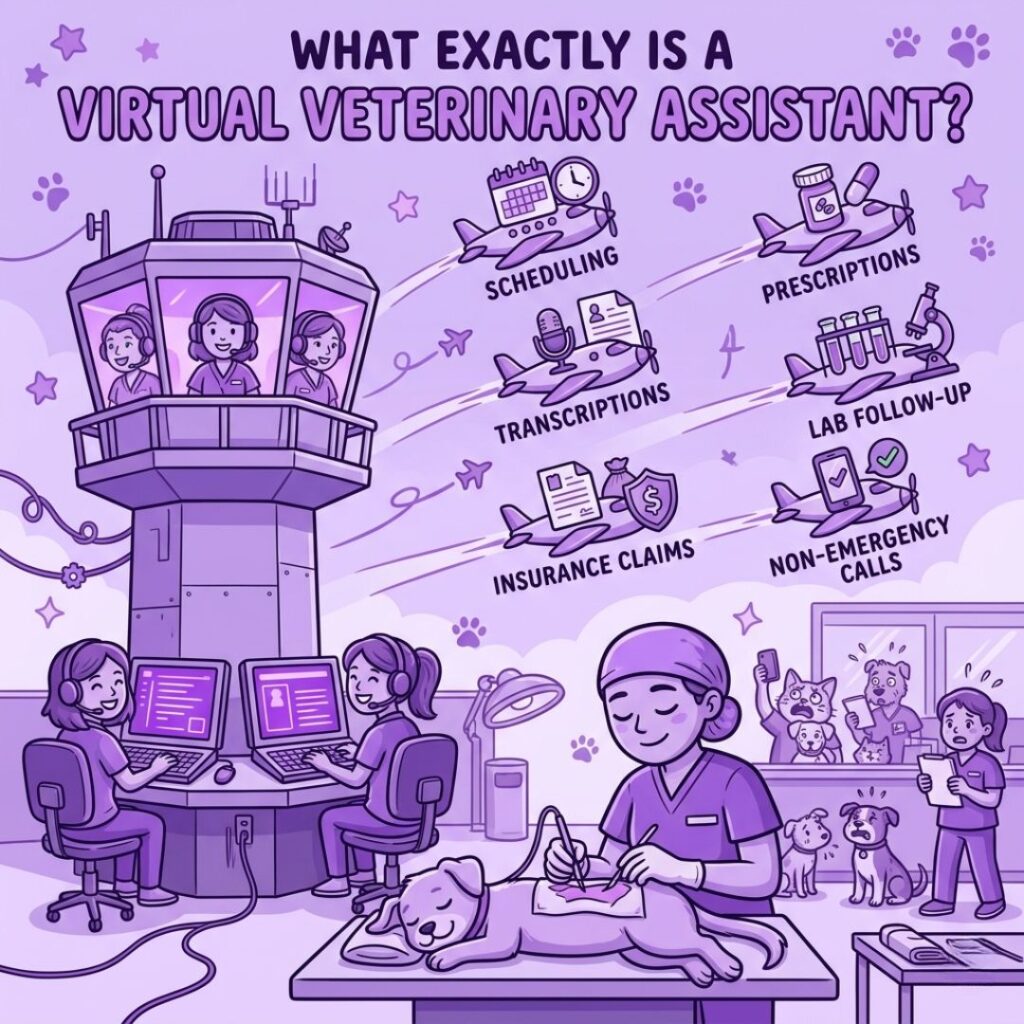
When people hear “remote support,” they usually think of a simple answering service. This is different. A Veterinary Virtual Assistant (VVA) is a trained professional who works as a part of your team, just from a different location.
A VVA handles all the “digital friction” that slows you down. They take care of things like:
- Real-time scheduling and managing the calendar.
- Getting prescription refills processed.
- Handling medical record transcriptions so you don’t have to.
- Following up on lab results or fighting with insurance claims.
- Sorting through non-emergency calls so your techs can stay focused on the patient on the table.
Think of them as air traffic control for your hospital. They keep the planes moving while you focus on the surgery.
Why “Just Hire More People” Isn’t Working Anymore

The vet industry is in the middle of a perfect storm. Right now, about 70 percent of vet techs say they are feeling major burnout, and a huge chunk of them are thinking about leaving the field entirely.
In the past, the fix was easy: “Just hire another receptionist.” But in 2026, the labor market has changed. Good talent is expensive, and turnover is brutal. Once you add up payroll taxes, health insurance, and the physical space a new person takes up, that “simple” hire starts to cost a lot of money.
Remote support lets you skip those hurdles. You get the help without the overhead. It lets you see more patients without needing a bigger building.
The Tech Side: How They Work Inside Your System
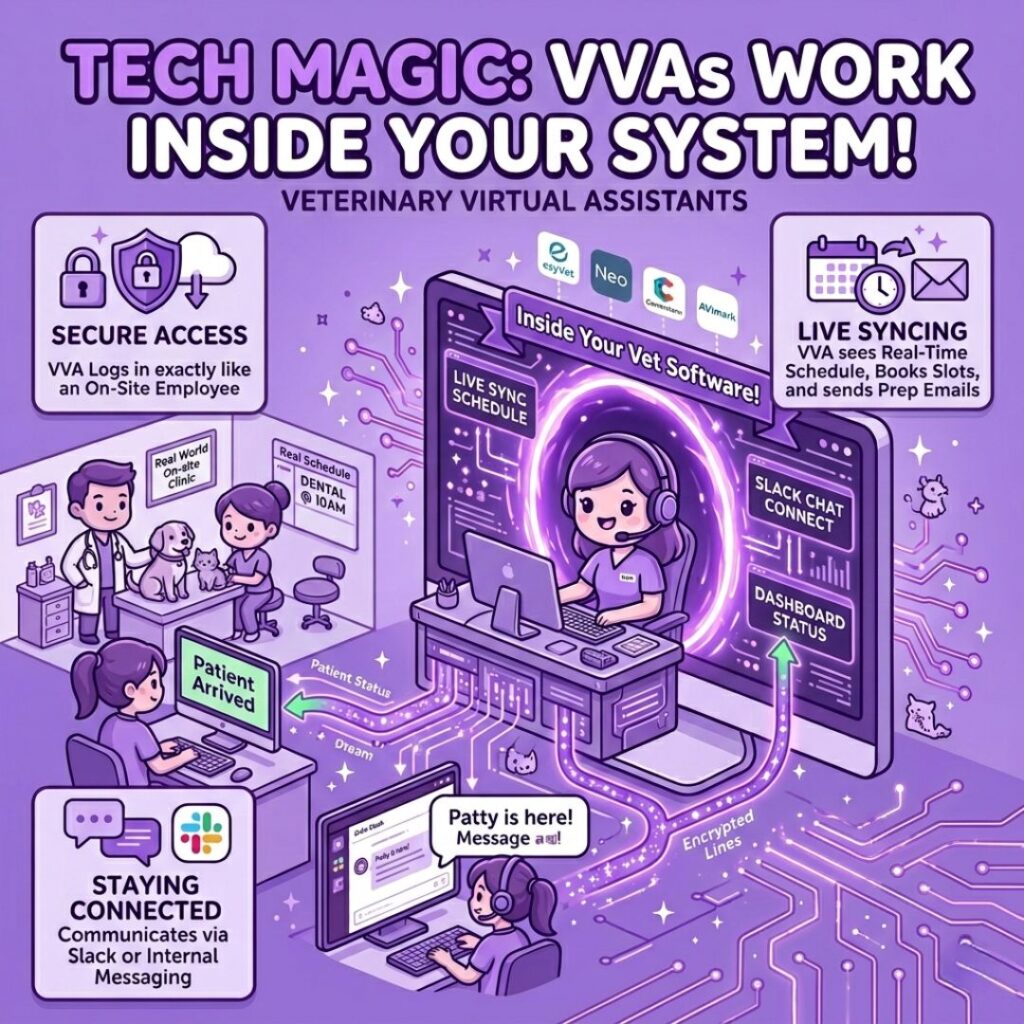
The question I get most often is: “How can they help if they aren’t here to touch the computer?”
Honestly, technology has made this pretty simple. Whether you use ezyVet, Neo, Cornerstone, or AVImark, a HelpSquad Health assistant can jump right into your workflow through secure, cloud-based logins.
- Secure Access: Your VVA logs into your software exactly like an on-site employee would, using encrypted connections.
- Live Syncing: When a client calls to book a dental, the VVA sees your schedule in real time. They book the slot, set the reminder, and email the prep instructions instantly.
- Staying Connected: They stay in touch with your on-site team through Slack or your internal messaging system. If a patient walks in for their 10:00 AM, the VVA can mark them as “arrived” on your dashboard from miles away.
Continue Reading:
The 2026 Guide to Veterinary Practice Management Software: Scaling with AI and Hybrid Staffing
Less Paper, More Paws: Taming the Administrative Beast with a Veterinary Virtual Assistant
Related Reading: Veterinary Virtual Assistant: Transform Your Practice Today | Explore our Dental Outsourcing Services for multi-disciplinary practices.
Comparing the Costs: On-Site vs. Remote
Let’s look at the actual math. A skilled vet receptionist in a big city is likely making between $18 and $25 an hour. When you add in the hidden costs like benefits, training, and equipment, that number is usually closer to $35 an hour.
| Feature | On-Site Staff | HelpSquad Remote Support |
| Hourly Rate | $18 to $25 (plus benefits) | Flat, competitive rate |
| Physical Space | Needs a desk and gear | Zero footprint |
| Training | Weeks of 1-on-1 time | Already trained in “Vet-Speak” |
| Scalability | Hard to change hours quickly | Very flexible |
| Turnover Risk | High in today’s market | Managed by the agency |
By moving just 20 hours of admin work a week to a remote assistant, a typical practice can save over $15,000 a year and actually see more patients.
A Better Day at the Clinic
Imagine your Tuesday morning for a second. Instead of walking into a pile of missed messages, you find that your VVA has already confirmed all the appointments for the day. They have organized the files for your three surgeries and even followed up with the owner of that diabetic cat you saw on Friday.
Because the phones aren’t ringing every thirty seconds at the front desk, the mood is calmer. Clients feel like they are being heard because they aren’t being put on hold. You finish your last appointment at 5:00 PM and your charts are already done because your VVA was transcribing your notes throughout the day.
Getting Started
Moving to this kind of “hybrid” model does not have to happen overnight. At HelpSquad Health, we usually follow a simple three-step process:
- The Audit: We look at your system and find where the bottlenecks are (like spending four hours a day on insurance).
- The Matching: We pair you with an assistant who knows veterinary terms and your specific software.
- The Hand-Off: We start with one task, like appointment confirmations, and add more as you get comfortable.
Give Your Team Their Passion Back
Nobody went to vet school because they loved doing data entry or arguing with insurance companies. Your technicians joined this field to help animals. By bringing in remote support, you are not just “outsourcing.” You are protecting your team from burnout and giving them the space to do the work they actually love.

Trending Now!
Veterinary medicine is hitting a major turning point, moving away from soul-crushing paperwork and into an era where AI handles the “boring” stuff. Instead of replacing doctors, these tools are becoming high-tech sidekicks that take over documentation and repetitive client questions, finally giving vets the freedom to focus on actual medicine and get home on time. It’s definitely not perfect, we still have to double-check for AI “hallucinations” and keep a tight grip on data privacy, but the shift is happening whether the industry is ready or not. The ultimate goal is simple: more time for pets, less time for keyboards, and a much better quality of life for the people behind the scrubs.
FAQ’s
1. Can a remote assistant handle emergencies?
Yes. We set up a “Red Flag” protocol with you. If someone calls about a pet that can’t breathe or ate something toxic, the assistant knows exactly how to transfer that call to your lead tech immediately.
2. Is my client data safe?
Definitely. We use enterprise-grade encryption and follow all the standard data privacy rules. They only have access to the specific software they need to do their job.
3. Do I need new software?
Usually, no. We work with the tools you already have, like ezyVet, Neo, or Covetrus.
4. Can they learn my “voice”?
Yes. During onboarding, we learn how you like to talk to your clients and what your specific protocols are. The client should never feel like they are talking to a stranger.
5. Do they understand medical terms?
Our assistants are specifically trained in veterinary terminology. They know the difference between a DHPP and a Rabies vaccine.
Ready to get some of your time back? Book a Free Clinic Workflow Audit with HelpSquad Health today.

Vlade Legaspi has spent over 6 years as an executive assistant. He loves getting creative with design, video editing, and writing. At HelpSquad, he’s part of the marketing team, helping the business grow and connect with more people. You can reach out to him on LinkedIn.