What Is a Medical Administrative Assistant and Why They Matter More Than You Think
08 Jul 2025 By: Maria Rush
Updated
A medical administrative assistant is the person who keeps a clinic or medical office running smoothly by handling the non-clinical work patients rely on every day. They schedule appointments, manage medical records, support billing and insurance, and answer patient questions, often in person or remotely. For example, they may verify your insurance, confirm your visit time, and make sure your chart is ready before you see the provider.
If you’re still wondering about the medical administrative assistant meaning it’s this: They’re the ones managing the behind-the-scenes magic so healthcare providers can focus on patients.
What is the Role of a Medical Administrative Assistant?
Also referred to as clinical administrative assistants or medical administrator assistants, these multitaskers manage a wide range of critical duties:
Scheduling Appointments
They coordinate provider calendars, reduce conflicts, and help minimize wait times. According to Synergy Advantage, automated scheduling systems alone can reduce no-shows by up to 30%.
Managing Medical Records
They update, organize, and safeguard both digital and paper records, ensuring HIPAA compliance and proper medical coding. As per CDC, over 88% of physicians now use electronic health records (EHRs).
Insurance and Billing
Medical admin assistants verify coverage, submit claims, and handle denials. These tasks directly affects cash flow in medical billing. Claritev reports that billing issues are one of the top administrative stressors in healthcare.
Patient Communication
They handle incoming calls, emails, and chats, acting as the front line for patient interaction. According to Harvard Business Review, strong communication and a helpful attitude significantly improve patient satisfaction.
Telehealth Coordination
As telemedicine becomes more common, MAAs help with remote appointment prep, troubleshooting tech issues, and supporting patients online. A JAMA study confirms that telehealth surged during the pandemic and is here to stay.
The Importance of Medical Administrative Assistants
Still wondering what is a medical administrative assistant and why they’re important? Let’s break it down further.
- They reduce provider burnout. MAAs take over repetitive and time-consuming tasks. This includes scheduling, paperwork, and billing follow-ups. According to a study published by Mayo Clinic Proceedings, administrative burden is one of the top contributors to physician burnout.
- They improve workflow efficiency. MAAs ensure a smoother daily flow by keeping records updated and coordinating between departments. Clinics with strong front-office support see more patients with fewer delays.
- They enhance the patient experience. First impressions matter. A warm, helpful administrative assistant who confirms appointments, provides clear instructions, and follows up builds trust with patients. According to a McKinsey report, positive patient experiences are directly tied to increased loyalty and better outcomes.
- They ensure compliance. Medical admin assistants help practices stay compliant with HIPAA regulations, insurance verification standards, and documentation requirements. This reduces the risk of fines or legal issues due to data breaches or missing paperwork.
The U.S. Bureau of Labor Statistics projects a 10% growth in medical administrative roles from 2022 to 2032, faster than average for all occupations.
TRENDING NOW
As Forbes recently pointed out, becoming a medical administrative assistant is a great way to break into healthcare and make a real impact, no degree required. Just solid organization skills and a calm presence when things get hectic. Medical administrative assistants are the ones making sure everything behind the scenes runs smoothly. They’re also usually the first person a patient talks to. This means they set the tone for the whole experience. And when something’s off (like insurance confusion or scheduling issues) they’re the ones who jump in to fix it.
Skills Required for a Medical Admin Assistant
To succeed in a medical administrative assistant role (in-office or remote). These are the most important skills:
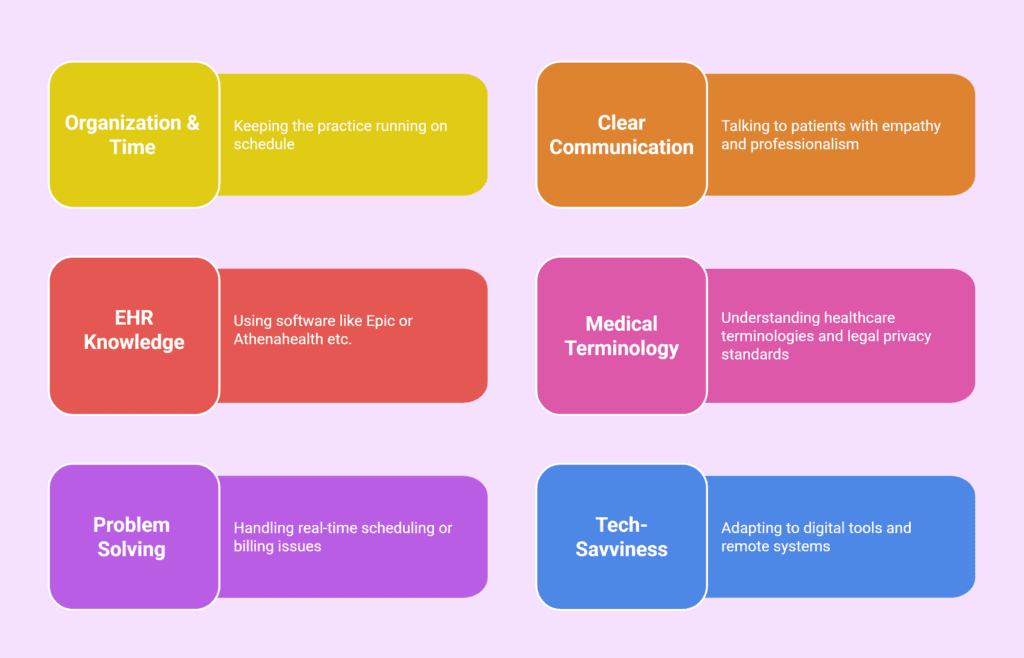
- Organization & Time Management: Keeping the practice running on schedule
- Clear Communication: Talking to patients with empathy and professionalism
- EHR Knowledge: Using software like Epic or Athenahealth etc.
- Medical Terminology & HIPAA: Understanding healthcare terminologies and legal privacy standards (HIPAA Journal)
- Problem Solving: Handling real-time scheduling or billing issues
- Tech-Savviness: Adapting to digital tools and remote systems
As TealHQ notes, a combination of technical and soft skills is what makes these professionals indispensable.
Can Medical Administrative Assistants Work Remotely?
Absolutely. Secure systems and cloud-based tools allows medical admin assistants to work from home. Just as effectively as on-site staff.
Remote online medical administrative support roles are increasingly common. HelpSquad’s trained, HIPAA-compliant VAs provide 24/7 support. We can seamlessly plug into your workflows without breaking the bank.
Challenges Faced by Medical Administrative Assistants
Even with their essential role, administrative medical assistants face few challenges:
Keeping Up with Tech: New healthcare tools and EHR systems roll out constantly. Staying current without proper training can be tough, but it’s necessary.
Heavy Workloads: Medical administrative assistants often juggle phones, records, and patient support all at once. In high-volume settings, this can lead to stress and burnout.
Difficult Patient Interactions: They deal with anxious or upset patients regularly. Staying calm and helpful under pressure is part of the job. But it can be emotionally taxing.
Conclusion
So, what is a medical administrative assistant in the bigger picture? They’re the quiet force behind every well-run clinic. Making sure patients feel heard, providers stay focused, and operations flow like they should.
“In the world of remote work, the key is not to prioritize what’s on your schedule, but to schedule your priorities.”
– Stephen Covey
Whether you call them medical administrative support, clinical administrative assistants, or just lifesavers, one thing’s for sure: you can’t afford to run a healthcare business without them.
Need help managing the back office while improving patient experience? Talk to us today to see how our virtual medical administrative assistants can support your team.
FAQ
What is a medical administrative assistant and what exactly do they do?
A medical administrative assistant is the person who keeps the front end of a healthcare practice running smoothly. They manage scheduling, medical records, insurance verification, billing follow-ups, telehealth coordination, and daily patient communication. If you’ve ever wondered “What is a medical administrative assistant in a real clinic setting?” they’re the ones making sure providers can focus on patient care while all the administrative details stay organized and compliant.
Why are medical administrative assistants so important in healthcare?
MAAs reduce provider burnout, maintain HIPAA-compliant documentation, improve workflow efficiency, and deliver great patient experiences. They help minimize wait times, prevent scheduling conflicts, handle insurance claims, and keep EHR systems updated. Their work directly affects clinic productivity, cash flow, and patient satisfaction.
Can medical administrative assistants work remotely?
Yes. Thanks to secure EHR systems, cloud-based tools, and digital communication platforms, many clinics now hire remote MAAs. Remote administrative assistants can manage scheduling, billing, records, and patient communication just as effectively as in-office staff. Companies like HelpSquad even provide HIPAA-compliant virtual medical administrative assistants who can support clinics 24/7.
What skills should a medical administrative assistant have?
Successful MAAs need strong communication skills, excellent organization, familiarity with EHR systems, knowledge of medical terminology, understanding of HIPAA requirements, and the ability to troubleshoot issues quickly. They must balance technical knowledge with empathy, patience, and professionalism. Especially when supporting anxious or confused patients.
Where does the information in this article come from?
This article is based on current data and reputable healthcare sources, including the CDC (EHR adoption statistics), Mayo Clinic Proceedings (burnout contributors), Harvard Business Review (patient experience research), McKinsey (patient satisfaction insights), and Claritev (billing stressors). It also includes observations from Forbes and industry-recognized trends. Additionally, HelpSquad’s experience providing HIPAA-compliant virtual MAAs informs many of the practical insights shared here.

Maria, a BPO industry professional for a decade, transitioned to being a virtual assistant during the pandemic. Throughout her career, she has held various positions including Marketing Manager, Executive Assistant, Talent Acquisition Specialist, and Project Manager. Currently, she is a member of the marketing team as a Content Writer for HelpSquad. You may contact Maria on LinkedIn.