How a Physical Therapy Virtual Assistant Can Transform Your Practice
15 Oct 2025 By: Mary Dellosa
Updated

Physical therapy clinics now face more pressure to give great care and manage admin work. Balancing both can cause burnout and lost income. New tech now links clinics with trained remote pros. New technology like Sprypt helps automate scheduling, documentation, and billing lightening the admin load for busy teams. A virtual assistants for physical therapy practices helps reduce workload and boost performance.
This remote expert handles tasks such as booking visits, billing, and sharing information with patients. They keep things running without delay. See how hiring a physical therapy virtual assistant can lift your clinic, improve care, and help you compete in today’s fast-changing market. For clinics ready to get expert support, you can explore our medical virtual assistant services to start streamlining your operations today.
Understanding the Role of a Physical Therapy Virtual Assistant
What Is a Physical Therapy Virtual Assistant?
A physical therapy virtual assistant (PT VA) is a trained remote worker. They help clinics with both admin and clinical support tasks. Unlike general VAs, PT VAs know the ins and outs of therapy work. They understand clinic flow, patient needs, and health rules.
They work off-site but act like part of your team. Their job is to cut admin work so therapists can focus on care. This matters in a field where quick, personal help improves outcomes. PT VAs boost clinic flow and help patients feel more supported.
Key Functions and Capabilities
Physical therapy virtual assistants typically handle a broad range of tasks, including:
- Appointment Scheduling and Reminders: Managing calendars, booking patient visits, and sending automated reminders to reduce no-shows.
- Patient Intake and Documentation: Collecting medical histories, consent forms, and insurance information digitally before appointments.
- Billing and Insurance Verification: Assisting with claims processing, verifying patient coverage, and following up on outstanding payments.
- Patient Communication: Answering common patient questions, providing educational materials, and facilitating telehealth sessions.
- Data Management and Reporting: Organizing patient records, tracking treatment progress, and generating reports for compliance and quality assurance.
By eliminating these time-consuming tasks, Physical Therapy Virtual Assistants enable practices to run more efficiently and enhance the overall patient experience. They may also help to manage patient engagement via follow-up communications that prompt adherence with care plans.
Such a proactive approach not only aids in monitoring patient change but also contributes towards enhancing therapeutic alliance between the patient and the therapist. And then, with telehealth becoming more common, PT Virtual Receptionist can help make certain virtual appointments go as smoothly as possible, from aiding in technical difficulties to equipping patients with proper resources for their at-home exercises.
The Growing Need for Efficiency in Physical Therapy Practices
What are the Current Challenges Faced by Physical Therapists?
Physical therapists do more than care for people. They also juggle paperwork, calls, and running the clinic every day. Admin work eats up hours and pulls them away from what matters most, helping patients feel better.
Rules change, insurance gets tricky, and patients want fast answers. It all adds pressure. It’s no wonder they feel drained. And when that happens, it’s tough to give patients the care they need.
What is the Impact on Patient Outcomes and Practice Growth?
Things take a toll when they don’t run smoothly. Staff is stressed and the patients begin to notice. Missed messages or late appointments can make patients feel forgotten. Some may stop coming back. When care feels rushed or confusing, trust fades and progress slows.
It’s also hard for small clinics to grow when others run faster and smoother. But with simple tools like online booking and telehealth, things feel easier. Patients feel seen, staff feels less stressed, and care becomes more personal.
How a Virtual Assistant Enhances Practice Efficiency?
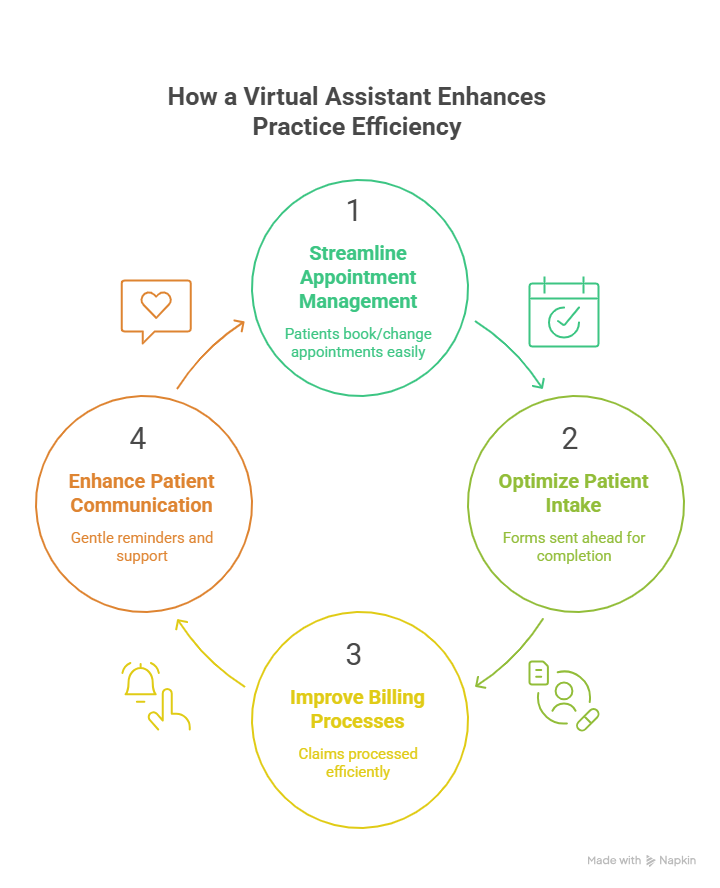
Streamlining Appointment Management
Keeping up with appointments is tiring. The phone rings all day, and your team feels stretched. A virtual assistant makes it easier. Patients can book or change visits anytime, no waiting, no stress. It sends kind reminders that help people show up and feel cared for.
Lower no-show appointments lead to increased time for genuine treatments and less stress on your workforce. Your reception gets a chance to relax and welcome patients with tranquility and kindness.With better planning, each day feels smoother for everyone.
Optimizing Patient Intake and Documentation
Collecting patient information is key, but it can slow things down. A virtual assistant makes it simple by sending forms ahead of time. Patients may fill them out at their convenience. This will reduce clinic wait times and allow the staff to concentrate on patient care, rather than paper work.
They also help keep records clean and updated, so everything’s in place and nothing gets missed. If something’s left out, they gently remind the patient before their visit. It keeps things smooth, helps patients feel more involved, and lets therapists focus on what matters most, care.
Improving Billing and Insurance Processes
Billing and insurance issues can slow everything down and stress your team. A physical therapy virtual assistant helps by checking coverage, sending claims, and following up on missed payments.
This means fewer errors, faster payments, and less time spent fixing problems. It also means more money coming in and less worry for you. They can track payment trends and give simple reports, so you know what’s working. With their help, billing feels easier and your clinic runs more smoothly.
Enhancing Patient Communication and Engagement
We all want to be loved, even if the feelings differ. Actually, a kind simple suggestion can help others remember, “I am not alone”. Virtual assistants help by being that gentle support. They answer questions, share easy tips, and make care feel simple and calm.
People who feel acknowledged and backed-up will most probably continue with their treatment and even start to recover. In addition, the Virtual Assistants send a check-up message in a friendly manner after the visit to just find out how the patient is doing. Those small, caring moments build trust and bring people back, because they know you truly care.
How to Choose the Right Physical Therapy Virtual Assistant for Your Practice?
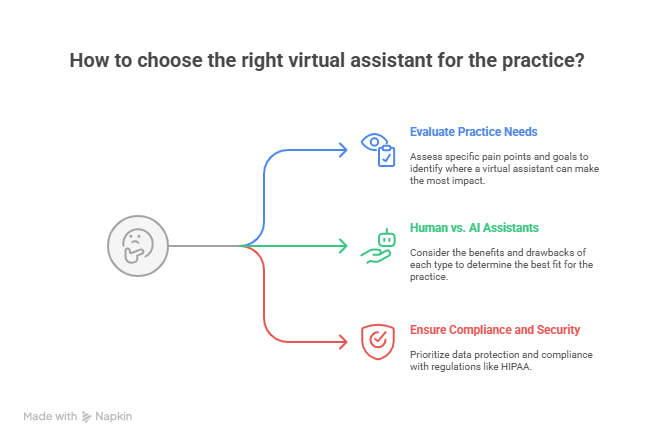
Evaluating Your Practice Needs
Before selecting a virtual assistant, it’s important to assess your practice’s specific pain points and goals. Consider factors such as:
- Volume of administrative tasks
- Patient demographics and communication preferences
- Integration needs with existing software
- Budget and scalability requirements
You can do a workflow analysis to figure out what is holding up your operation and where it may be inefficient. Also let the team members help you pinpoint tasks that take too much time. You will not just be able to recognize where a virtual assistant can make the most impact, but also where one cannot. With a clear picture of how your practice works, then and only then can you find a virtual assistant who fits the needs of your current setting and adapts well over time.
Human vs. AI-Powered Virtual Assistants
Human virtual assistants offer personalized service and can handle complex patient interactions, but they come with higher costs and scheduling constraints. AI-powered assistants provide 24/7 availability, instant responses, and cost efficiency but may lack nuanced understanding in certain scenarios.
Using both AI and real people can make your clinic work better. AI handles the small stuff like booking, reminders, and quick answers. That gives your team more time to focus on patients and build real connections.
Patients get fast help and still feel cared for by real people when it matters. It makes things easier for everyone and helps your clinic give better care. As tech improves, this team-up of AI and people will only get stronger.
Ensuring Compliance and Security
Patient info is private and keeping it safe really matters. Any virtual assistant you choose should follow HIPAA and protect that data with care. They should use strong tools to lock things down, like encryption and secure storage.
Their team should be trained to handle info safely and follow clear rules. Moreover, it is a good practice to regularly check their systems just to be certain that everything is functioning properly. In case of any issues, there must be a simple method of reporting it. When patients are assured of the safety of their information, they have more trust in you and this trust continues to draw them to you.
How to Implement a Virtual Assistant: Best Practices for Success
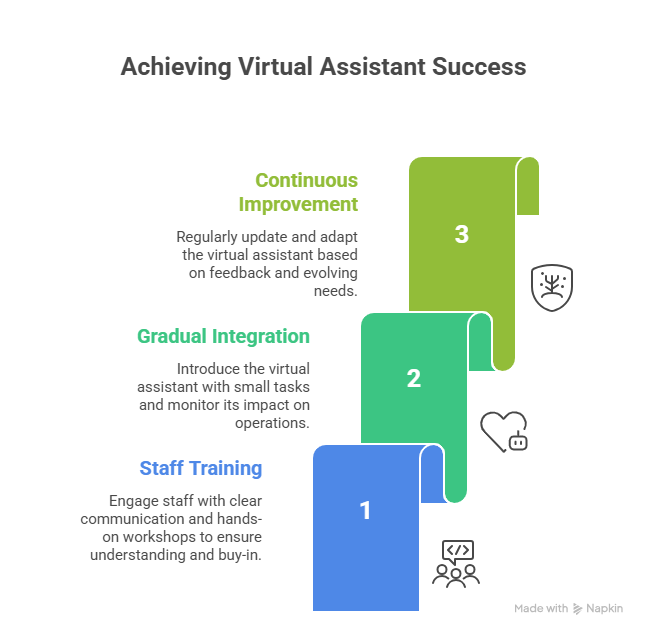
Staff Training and Buy-In
Bringing in a physical therapy virtual assistant starts with clear, honest talk with your team. Make sure everyone knows how it works and how it can help not replace them.
Give training and space to ask questions or share worries. Everyone should feel heard. Try hands-on workshops so your team can see how the assistant works in real time. This helps ease fears and shows how it can make their day easier. Share real stories from other clinics who’ve seen success using a virtual assistant. Let your team share ideas too, you might find new, better ways to use it together.
Gradual Integration and Monitoring
Start simple. Let the physical therapy virtual assistant take on a few small tasks at first. Give your team time to get used to it before adding more. Let them ease in. Watch how things go. Look at no-shows, billing, and how patients respond.
You can also run a small test with just a few team members. The team members will test the system to identify problems and assist other users in their work. The process enables your team to manage change because it decreases associated fears. Keep talking with your staff. You need to ask about someone complete well-being with your request. Your team and your patients will benefit from continuous progress assessment through minor adjustments to your work process.
Continuous Improvement and Updates
Technology changes fast, so your virtual assistant should grow with you. As your team and patients’ needs change, make small updates to keep things working well. Ask your staff and patients what helps and what doesn’t. Their feedback makes it better and shows you’re listening.
When people feel heard, they care more and stay engaged. Keep learning too. New tools come out all the time that can make life easier. Little changes can make a big difference. When your assistant grows with you, everyone wins.
The Future of Physical Therapy Practices with Virtual Assistants
Healthcare is changing, andvirtual assistants are becoming a big help. New tools will let them give even more personal support. Clinics that start now will save time, lower stress, and make patients feel more cared for. Best of all, physical therapy virtual assistants free you up to focus on what matters most, helping people heal.
Trending Now
Over half of physical therapists in the study reported feeling burned out due to work-related stress. Both personal and organizational factors played a role. The study found that burnout not only affects therapists’ well-being but also impacts patient care and clinic performance.
Conclusion
Running a clinic is hard. You’re helping people while juggling calls, forms, and a full schedule. A physical therapy virtual assistant can take some of that load off your team. They handle the little things, so you have more time for your patients.
Your day feels calmer. Your team feels less stressed. Your care stays personal. It’s not just about saving time, it’s about making space to do what you love. Adding a physical therapy virtual assistant helps you build a clinic that feels good for everyone.
The virtual assistants at HelpSquad Health manage the daily tasks that hinder your workflow, such as responding to messages, scheduling appointments, and following up. Their round-the-clock support helps minimize absenteeism, enhance communication with patients, and make the practitioner’s day a bit less hectic. For clinics ready to boost efficiency and focus on care, you can hire your medical virtual assistant through HelpSquad Health and see how seamless support makes a difference.
What is a physical therapy virtual assistant (PT VA)?
A physical therapy virtual assistant is a trained remote professional who supports a PT clinic with administrative and patient-support tasks. Unlike a general VA, a PT VA understands common therapy workflows, patient expectations, and basic healthcare rules, helping the clinic run smoothly while therapists focus on care.
What tasks can a physical therapy virtual assistant handle for a clinic?
A PT virtual assistant can support appointment scheduling and reminders, patient intake and documentation prep, billing support and insurance verification, patient communication (questions, updates, education), and data organization and reporting for clinic performance and compliance.
Why are physical therapy clinics hiring virtual assistants now?
Clinics are under pressure to deliver great care while managing rising admin demands, paperwork, insurance complexity, and fast patient response expectations. A physical therapy virtual assistant reduces workload, improves consistency, and helps clinics stay competitive without burning out staff.
How does a PT virtual assistant reduce no-shows and improve scheduling?
They manage bookings, reschedules, and automated reminders so patients stay informed and show up. Fewer missed appointments means steadier revenue, smoother daily schedules, and less front-desk stress.
How can a virtual assistant improve patient intake and documentation?
A PT VA can send intake forms ahead of time, collect histories and consent paperwork digitally, confirm missing information, and keep records organized. That reduces waiting room delays, improves documentation readiness, and helps therapists start visits with clearer context.

Mary is an executive assistant with over 3 years of experience. She enjoys doing various tasks such as graphic design, video editing and content writing. She is on HelpSquad's marketing team and helps leverage the company's business for growth. You may contact Mary on LinkedIn: https://www.linkedin.com/in/gelai-dellosa/