Top AI in Healthcare Courses to Enhance Your Medical Career
Five AI in healthcare courses compared on cost, length, and whether they need Python: Stanford, DeepLearning.AI, Harvard Medical School, Manchester, and Udacity.
Most roundups of AI in healthcare courses list programs without answering the two questions that decide whether you can take them: does it require Python, and what does it cost. This one leads with both.
The programs below are the ones still running as of September 2026. Names and providers change more often than you would expect in this category, so check the provider’s page before you commit, and be skeptical of any list that has not been updated in a year.
The five programs at a glance
| Course | Provider | Coding needed | Cost | Best for |
|---|---|---|---|---|
| AI in Healthcare Specialization | Stanford University via Coursera | No | Subscription, around $79 per month | Clinicians and administrators who want the clinical deployment view |
| AI for Medicine Specialization | DeepLearning.AI via Coursera | Yes, Python | Coursera subscription | Researchers and clinicians who can already code |
| AI for Healthcare: Equipping the Workforce | University of Manchester via FutureLearn | No | Free to audit | Nurses, allied health, and anyone wanting a first look |
| AI in Health Care: From Strategies to Implementation | Harvard Medical School Executive Education | No | $3,150 | Leaders who need to pitch and run an AI project |
| AI for Healthcare Nanodegree | Udacity | Yes, Python | Udacity subscription pricing | People moving into health data science |
1. AI in Healthcare Specialization, Stanford University
Five courses delivered through Coursera, ending in a capstone that works through the regulatory and ethical questions raised by using AI in care decisions. The material is built for both clinicians and computer scientists, with the explicit goal of getting the two groups able to work together.
No coding is required, which makes it the strongest option for a practicing clinician who wants to evaluate AI tools rather than build them. Stanford University School of Medicine is accredited by the ACCME to provide continuing medical education, so it carries weight on a CV in a way most platform certificates do not.
Note that this is the course frequently miscited elsewhere as “Machine Learning for Healthcare.” That is not its name.
2. AI for Medicine Specialization, DeepLearning.AI
Three courses: AI for Medical Diagnosis, AI for Medical Prognosis, and AI for Medical Treatment. You work with 2D and 3D medical image data, classify disease in X-rays, segment tumors in 3D MRI, build a treatment effect predictor, and use natural language processing to pull structured information out of radiology reports.
This one genuinely requires Python plus a working grasp of statistics and probability. The Deep Learning Specialization is recommended background but not mandatory. If you cannot code, start with Stanford or Manchester instead. The projects are the point here, and you cannot do them by watching.
3. AI for Healthcare, University of Manchester
Officially titled “AI for Healthcare: Equipping the Workforce for Digital Transformation,” delivered over five weeks on FutureLearn and built with Health Education England. It covers what AI is, how data works in healthcare, real applications in radiology, pathology, and nursing, and what it takes to support a workforce through the change.
It is free to audit and needs no technical background, which makes it the sensible first step if you are unsure whether this field is for you. The framing is built around the UK health system, so some of the governance content will not map directly if you work in the US, though the clinical examples travel fine.
4. AI in Health Care: From Strategies to Implementation, Harvard Medical School
A two-month online program from Harvard Medical School Executive Education, priced at $3,150. It is aimed squarely at people who have to make AI happen inside an organization: designing a solution, making the case for it internally, and implementing it.
This is a leadership program rather than a technical one. If your problem is that you can see the clinical case for a tool and cannot get it approved or adopted, this is the relevant option. If you want to understand the technology itself, it is expensive for the purpose.
Harvard Medical School also runs AI in Clinical Medicine as a live online course, and Harvard Online offers a Digital Health and AI certificate. All three are separate offerings on Harvard’s own platforms. Harvard does not currently run an AI in healthcare course on edX, despite a number of course roundups saying otherwise.
5. AI for Healthcare Nanodegree, Udacity
Project-based work on classifying and segmenting medical images and modeling patient outcomes from electronic health record data, with mentorship and career support attached. Python is required.
This is the one to check most carefully before enrolling, because Udacity’s catalog changes and the program is sometimes cited under the older name “Deep Learning for Healthcare,” which is not what it is called. Confirm the current name, syllabus, and price on Udacity’s own page.
How to choose
Start with whether you can code. It eliminates half the list immediately. Stanford, Manchester, and Harvard need no programming. DeepLearning.AI and Udacity do, and there is no way around it because the assignments are the substance.
Then decide what you want to be able to do afterwards. Evaluating a vendor’s claims, building a model, and getting a project funded are three different capabilities, and no single course delivers all three. Clinicians assessing tools should look at Stanford. Anyone building them should look at DeepLearning.AI. Anyone trying to get one adopted should look at Harvard.
Test cheaply first. The Manchester course costs nothing to audit and takes five weeks. Doing it before you spend $3,150 or commit to a Python-based specialization is a reasonable way to find out whether the subject holds your interest.
Check the credential actually means something. A certificate from a named university carries more weight than a platform badge. CME accreditation, where it exists, matters more than either.
Where AI is actually changing healthcare jobs first
One thing worth noting if your interest is career rather than research. The clinical applications get the attention, but the administrative layer is where AI has moved fastest and where roles are changing now: scheduling, intake, insurance verification, prior authorization, and documentation.
That is a less glamorous answer than diagnostic imaging, and it is where most of the current hiring sits. Our piece on what AI can and cannot do at a medical front desk is an honest account of where the tooling currently stops, and AI to human escalation covers the handoff problem that nobody has fully solved.
Frequently Asked Questions
What is the best AI in healthcare course for someone with no coding background?
Stanford’s AI in Healthcare Specialization on Coursera is the strongest option, because it covers clinical deployment and evaluation without requiring programming, and it carries CME accreditation through Stanford University School of Medicine. If you want to test the subject first at no cost, the University of Manchester’s five-week FutureLearn course is free to audit and assumes no technical background.
Which AI healthcare course should I take if I already know Python?
The DeepLearning.AI AI for Medicine Specialization is the most substantial option. It covers diagnosis, prognosis, and treatment across three courses, with hands-on work on medical imaging and natural language processing applied to radiology reports. Udacity’s AI for Healthcare Nanodegree is the alternative if you prefer a project portfolio with mentorship attached.
Is there a Harvard AI in healthcare course on edX?
No. Harvard’s AI in healthcare programs run on its own platforms rather than edX: AI in Health Care: From Strategies to Implementation through Harvard Medical School Executive Education at $3,150, AI in Clinical Medicine as a live online course, and a Digital Health and AI certificate through Harvard Online. A number of course roundups still list an edX version that does not exist.
Are any AI in healthcare courses free?
Yes, in part. The University of Manchester course on FutureLearn can be audited free. Coursera specializations can generally be audited for the lesson content, with payment required only for graded assignments and the certificate. The pattern across the category is that learning is cheap and credentials are not.
Do AI in healthcare courses help with career advancement?
They help most when the credential is specific and the provider is recognized. A CME-accredited specialization from a medical school carries weight in clinical settings, and a project portfolio carries weight in data roles. A platform certificate with no institution behind it carries very little. Be clear about which of the three you are buying before you enroll.
How long do these courses take?
The Manchester course runs five weeks. Harvard’s executive program runs two months. The Coursera specializations from Stanford and DeepLearning.AI are self-paced and typically take three to six months depending on how much time you give them. Udacity’s nanodegree is similarly self-paced with a recommended schedule.
Interested in the operational side rather than the clinical one? HelpSquad Health hires and trains remote medical virtual assistants who run scheduling, intake, and insurance workflows alongside AI tools. Current openings are on our careers page, or see how practices put the work in place.
AI in Primary Care: Transforming Diagnosis, Treatment, and Patient Experience
AI in primary care splits into three layers at very different maturity levels: ambient documentation, clinical decision support, and patient triage. What works now and what does not.
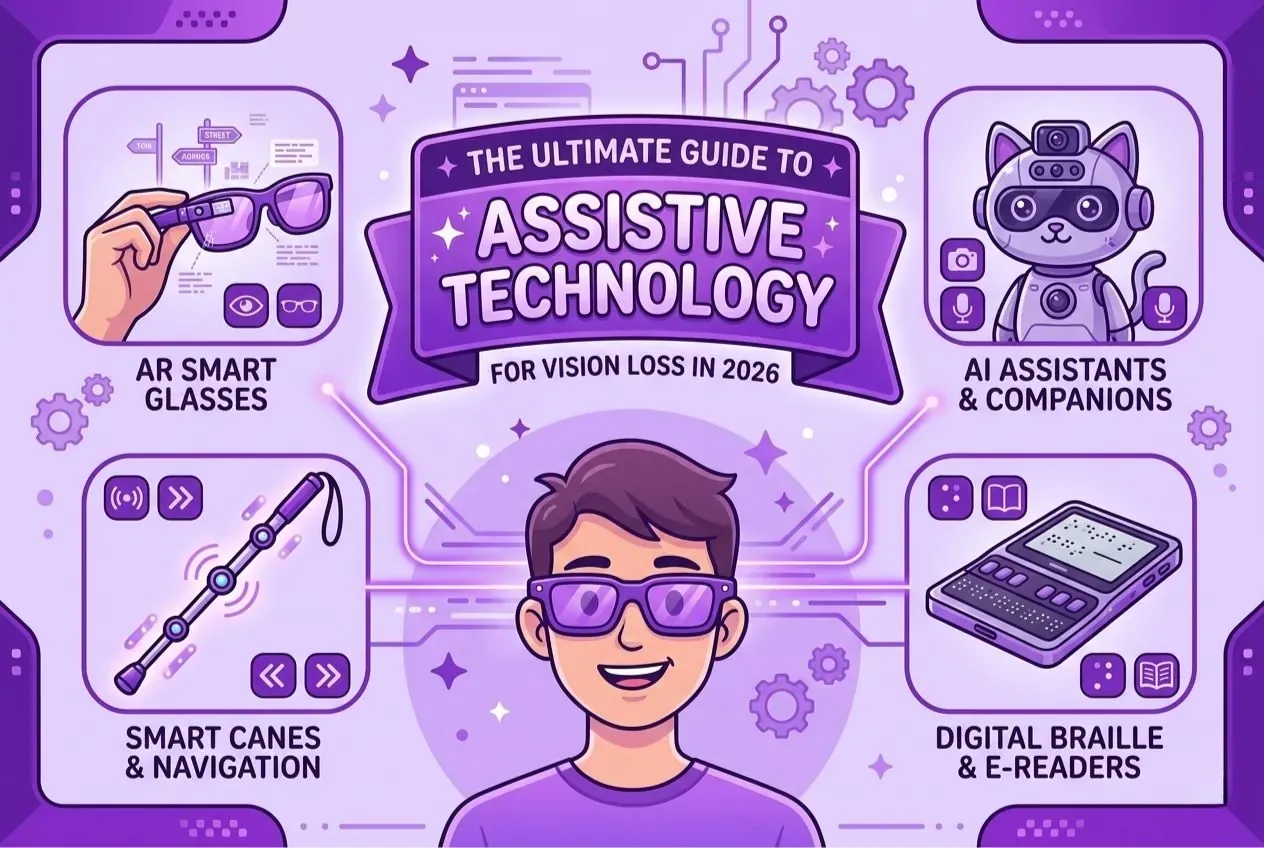
The Ultimate Guide to Assistive Technology for Vision Loss in 2026
A look at vision loss tech in 2026, from OrCam MyEye 3 and eSight Go to AI glasses that read menus aloud, plus how healthcare is adapting to 13M+ users.

Five Reasons Students Respond to Proactive Outreach
In the modern-day educational system, proactive outreach causes students to be successful. Educators can meet students' needs and provide them with academic and personal support by getting in touch with them even before the issues crop up. The article below discusses five reasons
Let's talk about what your practice actually needs.
A 30-minute call. No sales pressure. We'll tell you honestly whether we're a fit.