Endocrinology Virtual Medical Assistant: Prior Auth, Refill Triage, and Tebra EMR
Key Points
- A May 2026 American Medical Association survey found physicians spend an average of 13 hours each week managing prior authorization and complete 40 requests weekly .
- CMS's 2024 interoperability rule covered only non-drug items and services; proposed rule CMS-0062-P would extend many of those requirements to drugs, but those provisions are not yet in force.
- CMS estimates prior authorization costs each provider about $34,000 and 700 hours a year; at HelpSquad's suggested $12 hourly budget, those hours would cost about $8,400 .
Quick Answer
An endocrinology virtual medical assistant is a remote team member who handles prior authorizations, GLP-1 refill triage, eligibility checks and diabetes scheduling inside Tebra, freeing in-clinic staff for patient education and diagnostic care.
Automation won't replace that role soon. One industry analysis describes AI that could compile clinical data and draft a prior authorization request with its justification, but a person still reviews and submits it. Drug approvals remain largely manual. That review, submission and follow-up is the work a dedicated assistant owns.
Clinical staff give patients their full attention while routine paperwork is handled behind the scenes.
Why does endocrinology feel prior authorization more sharply than most specialties? Because so much of what the specialty prescribes on repeat, from GLP-1 medications to insulin and CGM and insulin pump supplies, can trigger a payer review, and every renewal starts the process again. One missed fax can stall a patient's therapy.
Relief is coming, but slowly. The Centers for Medicare & Medicaid Services notes that the prior authorization requirements in its 2024 interoperability rule applied only to non-drug items and services. Its 2026 proposed rule would carry many of those requirements over to drugs, the category that matters most to a prescription-driven specialty like endocrinology. Until that rule is final and payers comply, the work stays manual. Fax, phone, portal, repeat.
So who carries the queue in the meantime? In most clinics it falls on the same medical assistants and nurses who should be teaching a newly diagnosed patient how to read a glucose log. Ask who opened your last pharmacy fax, and which patient conversation waited while they did. I think that's the wrong trade.
The direction of the industry points the same way. Regulators encourage gold-card programs that waive prior authorization for providers with high approval rates, and AI tools can now draft a request from the patient's record. Both reward a practice whose requests are complete and consistently documented, and that consistency comes from one person owning the queue every day.
In this guide I'll walk through how much authorization work actually lands on an endocrinology practice, why rules and pledges won't remove it soon, what it costs when clinical staff absorb it, and exactly what a virtual medical assistant does inside Tebra, from the first fax to the approved refill. The weekly request count is where the case starts.
An endocrinology virtual medical assistant is a remote team member who works inside your EHR (Tebra, in this guide) to move prior authorizations, refill requests, eligibility checks and diabetes follow-up scheduling from inbox to done. Why focus on endocrinology? Because almost every visit ends in a prescription that a payer wants to review, renew or question.
The damage is clinical, not clerical. In recent national polling, 92% of physicians said prior authorization negatively affects clinical outcomes. More than one in four said it had led to a serious adverse event for a patient, including hospitalization, permanent impairment or death. Nearly one-third said their requests are often or always denied.
The research section below walks through these findings. In 2023, one practice reported a 99.87% approval rate and still had to hire three additional full-time staff within a year just to handle the requests. Ask your team how many hours last month went to requests that were approved anyway. That number is the one to plan around.
So the real question is ownership. Picture one GLP-1 refill request arriving as a pharmacy fax on Monday morning. I'll follow that single request from eligibility check to approval, showing where a dedicated assistant takes over and where your clinical team stays put.
Even the federal government's advice ends up on someone's to-do list. CMS tells practices to ask their EHR vendor whether it supports electronic prior authorization for Part D prescription drugs, and somebody has to make that call.
How much prior authorization work lands on an endocrinology practice?
Physicians now complete an average of 40 prior authorizations each week, and an endocrinology practice built on repeat, high-cost prescriptions feels that load on every refill cycle.
Before deciding who should carry this work, I'd measure it. Four numbers tell you most of what you need:
- How many prior authorizations your team submits in a typical week, split by drug and by payer.
- How many hours nurses and medical assistants spend on them, including phone holds and fax follow-up.
- How many requests had to be resubmitted or appealed.
- How many refills stalled while an approval was still pending.
The national baseline is not small. A May 2026 American Medical Association survey, reported by the California Medical Association, found physicians spend an average of 13 hours each week managing prior authorization and complete 40 requests weekly. The same survey found 79% of physicians say patients abandon treatment because of authorization hurdles. Earlier counts looked much the same: in 2022, practices completed an average of 45 prior authorizations per physician every week, with physicians and staff spending about 14 hours on them.
The federal government has put a price on those hours. CMS estimates that requesting prior authorizations costs providers $20-50 per hour, which the agency says adds up to roughly $34,000 and 700 hours of administrative time per provider each year. That is a part-time job hiding inside every physician's week.
Why does it land harder on endocrinology? Because the work repeats. Diabetes, thyroid and weight-management patients stay on therapy for years, and the California Medical Association notes that many health plans limit approvals to 60 or 90 days. So the same patient on the same drug can need the same approval again and again. Weight-loss drugs have been a coverage fight for a long time, too: a 2014 trade report quoted an internist who often struggled to get payers to cover them at all.
The common assumption is that prior authorization is a doctor's chore. In practice, the hours land on whoever answers the fax, often a nurse or medical assistant who should be with patients. Set side by side, 5 sources point the same way: the hours are high, they are expensive, and they can be staffed differently.
That last point is where cost comes in. HelpSquad bills by the hour for hours actually worked, invoiced monthly, and tells practices to budget about $12 an hour per assistant. If you are still sorting which tasks belong outside the clinic, our overview of what to outsource in your medical practice is a useful starting map. And the obvious hope, that new federal rules will soon make this workload disappear, deserves a harder look.
Will CMS rules, payer pledges or AI remove the need for prior auth staff?
Not anytime soon. Federal electronic rules still leave drugs out, insurer pledges have barely moved practice volume, and AI tools still need a person to check and submit.
Start with the rules. CMS released its Interoperability and Prior Authorization final rule, CMS-0057-F, on January 17, 2024. Impacted payers had to implement certain provisions by January 1, 2026, but the agency gave them until primarily January 1, 2027 to meet the rule's API requirements, a later date set in response to stakeholder comments. That sounds like relief is close.
Here is the catch for endocrinology. According to CMS, the prior authorization requirements in that 2024 rule focused on non-drug items and services. A 2026 proposed rule, CMS-0062-P, would extend many of those requirements to drugs, with electronic submission, shorter decision timeframes and more transparency. It is still a proposal. The comment period closed on June 15, 2026, and the drug provisions are not yet in force.
For a GLP-1 or insulin request, nothing federal has changed yet. Your fax queue is still your fax queue.
Insurer promises have not filled the gap either. More than 60 major health insurers pledged in 2025 to streamline prior authorization, and UnitedHealthcare committed to cutting commercial requirements by 30%. Yet only 16% of physicians working with UnitedHealthcare said those reductions actually lowered the number of requests they complete. Conventional wisdom says the burden is about to ease, but the volume data points the other way: 84% of physicians said prior authorizations for prescription medications increased over the past five years, and only 10% contract with plans that offer gold card or exempt programs.
What about AI? Tools are being described that could compile clinical data and draft a request, justification included, from guidelines and the patient record. In 2025, an analysis of payer utilization management pointed out that regulators mandate human oversight of AI-driven decisions, and that 75% of contested Medicare Advantage denials were reversed on appeal. Drafting may get faster. Checking, submitting, chasing and appealing still need a person.
My read is simple. A practice that trims its prior authorization capacity now, expecting relief, is betting on a rule that does not exist yet for drugs. Before you plan around relief, ask your top payers which GLP-1 and insulin requests they accept electronically today, and decide who submits the rest, whether in-house staff or a virtual medical assistant service. So what does that person actually do all day, and inside which system?
What does prior authorization really cost when clinical staff carry it?
Federal regulators have put a price on prior authorization paperwork. Hold that price up against who actually does the work, and the biggest variable turns out to be one that practices control.
Start with the regulator's math. In an electronic prior authorization overview published in October 2026, the Centers for Medicare & Medicaid Services estimates that requesting prior authorizations costs providers $20 to $50 an hour and takes an average of 13 hours a week. For each provider, CMS says, that adds up to "approximately $34,000 and 700 hours of administrative time each year that could otherwise be used to take care of patients."
Look at which number stays fixed. The 700 hours describe the work. The dollar figure depends on whose time fills those hours, and CMS's $34,000 sits close to the top of its own wage range. The American Medical Association's 2025 physician survey counts those 13 weekly hours as time spent by physicians and their staff together, and the mix of people is the part a practice can change.
A strong approval rate might look like the way out. One practice described in the American Academy of Family Physicians' journal, Family Practice Management, in 2023 suggests otherwise.
99.87%
One practice's prior authorization approval rate, as reported in Family Practice Management in 2023. Within one year, the same practice still had to hire three additional full-time staff to handle prior authorizations.
An approval comes at the end of the process, and every step before it still takes staff time. The article's authors, physicians Steven Waldren and Edmund Billings, call much of the approval and appeal burden "payer driven." For practices that prescribe, the load is also growing. In the AMA's 2025 survey, 84% of physicians said prior authorizations for prescription medications had increased over the past five years.
So the work stays. The AAFP authors list steps a practice can take, and two stand out. Delegating prior authorizations to dedicated staff is rated "++" for impact and "$$" for cost. Prescribing mindfully, which means choosing generics or cheaper alternatives that skip prior authorization, scores higher still at "+++" without that added cost. Many practices have already taken the first route: 40% of physicians in the AMA's 2025 survey said they have staff who work exclusively on prior authorization.
Who should that dedicated person be? A cost guide on Physician Side Gigs, an online physician community, draws on material contributed by a company that places virtual healthcare assistants. It says prior authorization requires "specific knowledge of payer rules," and that "they don't require a physician or even a clinician." Yet the work often falls to clinical staff. The chief executive of an offshore medical assistant firm told the Healthcare Boss Academy Podcast in 2022 that nurses and medical assistants can spend an hour and a half on a single prior authorization or insurance verification. Both sources sell the alternative, so read their framing as an industry view. The AAFP's independent advice to use dedicated staff points the same way.
Seen side by side, the findings narrow the question. Approvals do not shrink the hours, and drug requests keep growing. A practice controls two things: which prescriptions trigger a request in the first place, and whose time handles the requests that remain. Payer rules can be learned by a trained non-clinician, and every hour moved off a nurse or medical assistant goes back to clinical care.
We have an obvious interest in the second lever. HelpSquad tells practices to budget about $12 an hour for a dedicated assistant. At that rate, CMS's 700 hours would cost about $8,400 a year, under a quarter of the agency's estimate. Treat that as the most that could move. CMS's hours include physician time, and some steps, such as a required peer-to-peer call with a health plan's clinician, stay with your physicians. What you save depends on how many of your own hours a trained non-clinician can take over.
Before you restaff the queue
- For one typical week, log every prior authorization hour and who spent it: physician, nurse, medical assistant or front desk.
- Treat a high approval rate as a quality signal and leave staffing out of it. Track requests per week and hours per request instead.
- Build the AAFP's master list: by insurer, the medications that need prior authorization and the alternatives that do not, and review it with your prescribers.
- Give the queue one named owner, and ask any candidate, us included, which steps they will handle from start to finish and which must stay with a clinician.
- Multiply the clinical hours you logged by what those staff really cost per hour, then compare that with a dedicated assistant covering the same hours.
How we checked this
We used a CMS policy page, the AMA's 2025 physician survey (the original report and a trade press summary), a peer-reviewed practice journal article from the AAFP, a physician community cost guide and a 2022 industry podcast. The $12 hourly budget and the $8,400 comparison are ours, and we sell dedicated virtual medical assistants, so we have a stake in the result. CMS's figures are national averages across providers and are not specific to endocrinology. The AMA survey is based on what physicians report themselves. The 99.87% practice is a single example. The cost guide and the podcast come from companies that sell assistant services. Still unknown: how many prior authorization hours an endocrinology practice spends, and what share a non-clinician can take on. None of our sources measured either.
- Centers for Medicare & Medicaid Services, electronic prior authorization overview, October 2026.
- American Medical Association, 2025 prior authorization physician survey, retrieved November 2026.
- Becker's Payer Issues, summary of prior authorization updates and AMA survey results, June 2026.
- Steven Waldren, MD, and Edmund Billings, MD, Family Practice Management article on prior authorization, November 2023.
- Physician Side Gigs, virtual medical assistant cost guide, April 2026 (contains affiliate and partner content).
- Healthcare Boss Academy Podcast, episode 299 on medical virtual assistants, December 2022, at 14:43.
- HelpSquad, hourly pricing for healthcare virtual assistants, February 2026.
What does an endocrinology virtual medical assistant do inside Tebra?
A dedicated assistant logs into your Tebra system through an isolated virtual desktop and owns every prior authorization, refill request and eligibility check from intake to decision, with patient data staying in your system.
The easiest way to see the job is to follow one request. A pharmacy faxes a refill for a patient's GLP-1 prescription, and the plan wants a fresh approval. Here is how the assistant carries it:
- Files the fax to the right patient record and runs an eligibility check. Tebra describes its check as a real-time connection to the insurer that returns eligibility status, coverage type, copay and plan-specific limits, and flags missing details when a check fails.
- Confirms whether the current approval is still valid. If it is not, prepares the request on the payer's form with the supporting chart notes and routes it to the clinician for clinical sign-off.
- Submits the request, logs its status and follows up until there is a decision.
- If approved, releases the refill and books the follow-up visit, using recurring appointments and automatic reminders.
- If denied, assembles the appeal packet for the clinician and keeps the patient informed so therapy does not quietly stop.
Before day one, decide which Tebra screens and payer portals the assistant can open, and who they escalate to. Put those rules on a one-page handoff sheet the assistant can follow without asking.
Billing is where Tebra fluency really pays off. By the vendor's own account, its claims tracking offers real-time updates, color-coded alerts and built-in claim scrubbing, and secure direct messaging through Updox lets a practice send referrals and protected health information to verified providers. Tebra itself does not do billing, though; it matches practices with outside billing partners. An assistant who already knows those screens can work the front desk and the claims queue without someone looking over their shoulder.
Security is the first objection I hear, and it has a concrete answer. At HelpSquad, the Business Associate Agreement is signed between the practice and our company, never with individual agents, because the obligations belong to the entity that hires, trains, supervises and controls access. Our agents work inside an isolated Microsoft virtual desktop with a unique login and multi-factor authentication on every session. Copying, drive mapping, USB devices and printing are disabled, sessions are logged and monitored, and patient information stays in your systems rather than ours.
Then there is cost. Our comparison baseline puts a full-time in-house medical receptionist at $55,000 to $70,000 a year fully loaded, or about $4,600 to $5,800 a month once salary, benefits, payroll taxes and overhead are counted. Our rates as of February 2026 are $11.50 an hour per assistant for up to 3 assistants, $11.00 an hour from 4 assistants and $12.00 an hour for training and support, and full-time staffing across our services runs $8-$13 an hour. Those are two very different cost structures. The in-house figure is fixed. The hourly invoice covers only hours actually worked, so a slow week costs less than a busy one.
Where does endocrinology prior authorization go from here?
Drug prior authorization is heading toward electronic submission, but the workload is not shrinking, so practices that give one dedicated person ownership of the queue will keep patients on therapy.
This cost is not new. A 2011 study in Health Affairs found physicians spent an annual average of nearly $83,000 interacting with insurance plans, putting the total cost of prior authorization at around $69 billion a year. By 2013, 21% of brand-name Medicare Part D drugs already required prior authorization, up from 8% in 2006.
Some practices answered with headcount long ago. In 2014, Ortho NorthEast in Fort Wayne, Indiana, kept about 200 requests outstanding at any time and needed six full-time employees, at about $180,000 a year including benefits, just to keep up.
Here's my read. Electronic rails will change the tools, not the need for an owner. Back in 2023, delegating prior authorization to dedicated staff was rated a "++" impact fix, a notch above simply streamlining workflows. Why does that advice hold up? Because a portal or an API still needs someone to pull the chart notes, chase the pharmacy and notice when an approval is about to lapse.
Back to that Monday GLP-1 fax. A practical first step is to track, for one month, how many approvals lapse before a renewal is filed, because that count shows how much follow-up your queue really needs.
Only about one-third of physicians expect insurers' latest reform pledge to make a meaningful difference. I wouldn't build next year's staffing plan on the hope that the other two-thirds are wrong.
Frequently Asked Questions
What else do people ask about endocrinology virtual medical assistants?
Most questions come down to scope, systems, cost and compliance: what the assistant handles, whether it works inside Tebra, what it costs, and how a practice gets started.
What is an endocrinology virtual medical assistant?
An endocrinology virtual medical assistant is a remote administrative team member who works inside your EMR on prior authorizations, refill requests, eligibility checks and diabetes follow-up scheduling. They handle the paperwork. Your clinicians keep every clinical decision.
Can a virtual assistant handle GLP-1 refill triage safely?
Yes, as long as the line is clear. Refill triage means sorting incoming refill requests, checking whether a current authorization covers the fill, and routing anything that needs clinical judgment to the provider. The assistant prepares and routes; the clinician approves.
Do we have to change EMRs to use one?
No. The assistant logs into your existing Tebra account through a secure virtual desktop and works your queue as it stands. I'd still ask any provider how much Tebra training their assistant has had before day one, because charting and billing both live there.
Will electronic prior authorization make this role unnecessary?
Not in my view. CMS urges providers to start submitting prior authorization requests electronically beginning January 1, 2027, but electronic submission is still submission. Someone has to gather the records, send the request and chase the answer.
How much does a HelpSquad assistant cost?
HelpSquad bills by the hour, starting at $8 per hour, for hours actually worked. It is a fully managed service with transparent pricing and dedicated account management.
Is the service HIPAA compliant, and are bilingual assistants available?
Yes to both. HelpSquad delivers HIPAA-compliant support with bilingual agents across the US, Europe, Central America and South Africa, and coverage is available 24/7.
How do we get started?
Book an intro call through helpsquad.com/contact or call 877-775-3667. We'll walk through your prior auth and refill volume and match you with an assistant trained for your workflow.
Written by
Maria Rush
Marketing Team Lead, HelpSquad
Maria De Jesus-Rush is Marketing Team Lead at HelpSquad, a healthcare business process outsourcing company, with a background in content development, digital marketing, and project management.
Connect on LinkedIn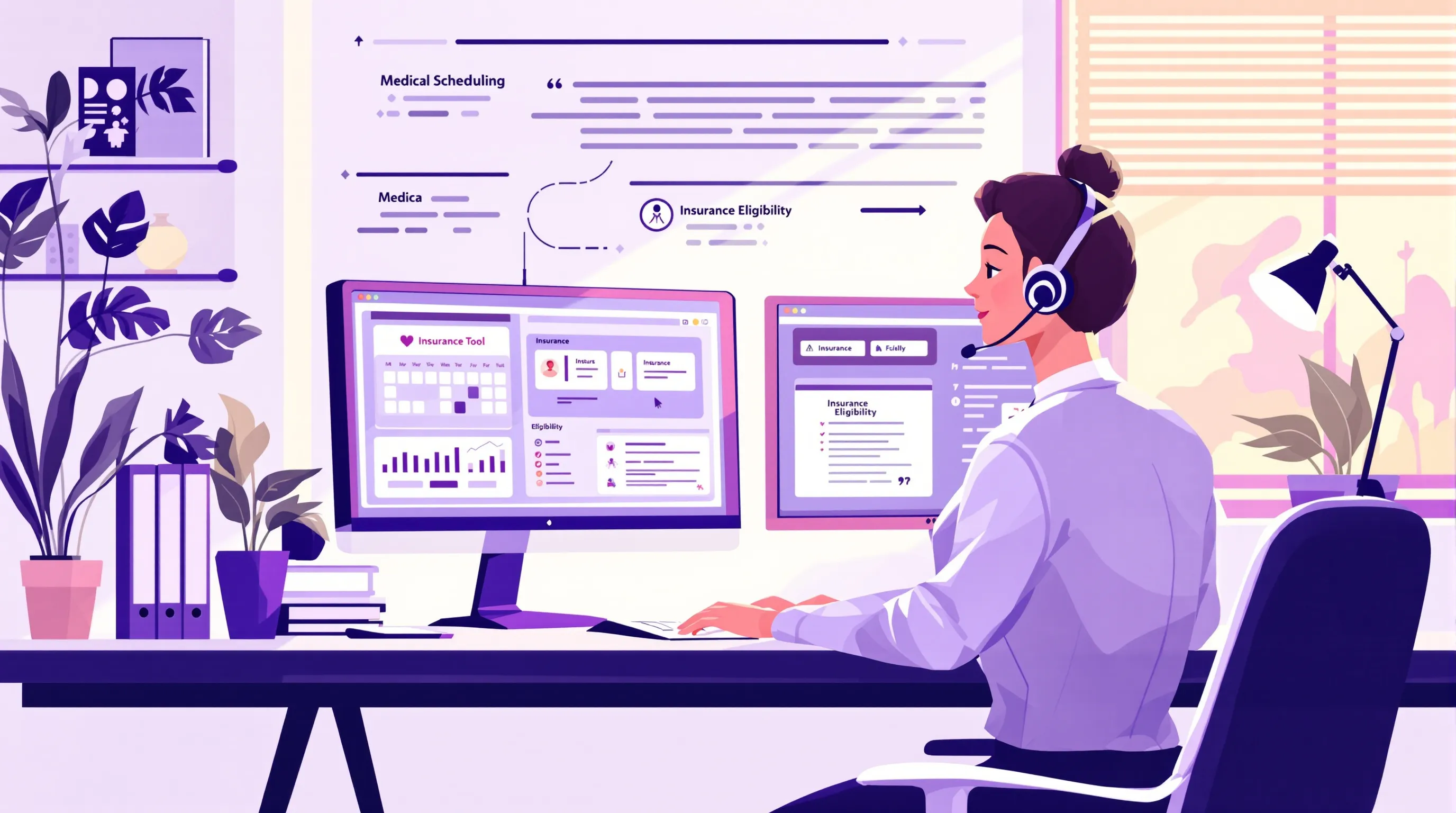
Healthcare Virtual Assistant ROI: Hours Saved by Specialty in 2026
Three things practice owners believe. Myth or fact? Call each one, then see how other readers called it.
Prior Authorization Outsourcing for Medical Practices: A Practical Workflow Checklist
Practices lose 13 hours a week chasing insurance approvals. This healthcare guide lays out a prior auth outsourcing workflow that frees front-desk and billing staff.
Orthodontic Treatment Coordinator: Role, Pay, and When to Hire a Virtual One
An orthodontic treatment coordinator turns consults into signed contracts by explaining fees, insurance and payment terms. Salary.com puts Chicago pay at $85,389 a year, well above receptionist wages.
Let's talk about what your practice actually needs.
A 30-minute call. No sales pressure. We'll tell you honestly whether we're a fit.