Mastering Medical Appointment Scheduling Guidelines: A Practical Guide to a Stress-Free Clinic
03 Mar 2026 By: Vlade Legaspi
Updated
Medical appointment scheduling guidelines are simple rules that help a clinic run on time, reduce no-shows, and improve the patient experience. They cover how to book common visit types, protect time for urgent cases, and send reminders so patients show up. For example, many clinics keep a couple of short “buffer” slots open each day for same-day needs or last-minute changes.
Why Structure Beats Intuition Every Time
In the old days, a veteran receptionist just “knew” how to squeeze people in. But intuition doesn’t scale. As practices grow and healthcare becomes more data-driven in 2026, you need a repeatable framework.
Following strict medical appointment scheduling guidelines ensures that you aren’t just reacting to the loudest person on the phone. It allows you to be proactive. When you have a set of rules, you eliminate the “favors” that end up pushing your 2:00 PM appointment into the 3:30 PM slot. It’s about creating a predictable flow that respects everyone’s time.
The Core Pillars of Effective Scheduling
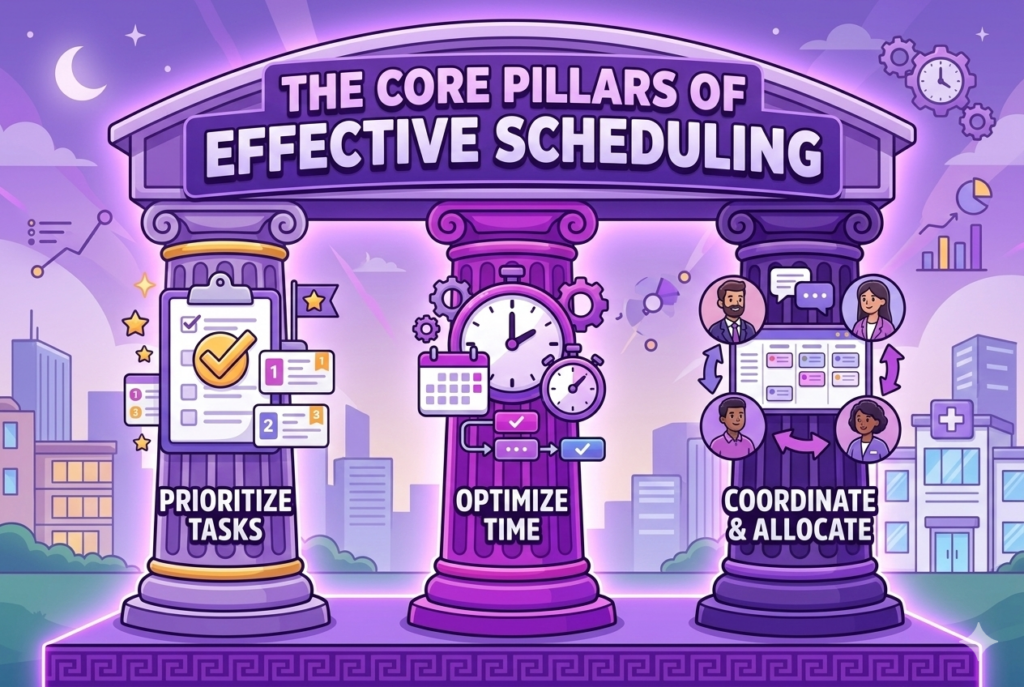
I like to break down our medical appointment scheduling guidelines into a few non-negotiable pillars. If you get these right, the rest of the day usually takes care of itself.
1. Patient Self-Scheduling
This was a hard one for me to let go of. I thought, “How can a patient know how much time they need?” But the truth is, most patients just want a standard follow-up or a wellness check.
- It reduces phone traffic by up to 60%.
- It allows for 24/7 booking, which is what the modern patient expects.
- It integrates directly with your EHR, reducing manual entry errors.
2. Strategic Time-Blocking
One of the most important medical appointment scheduling guidelines we implemented was “Modified Wave Scheduling.” Instead of booking one person every 15 minutes, we book three people at the top of the hour. One is for a quick check, one for a standard visit, and one for a complex case. This accounts for the fact that some people show up early and some show up late.
3. The “Urgency Triage” Protocol
Your front desk shouldn’t be playing doctor, but they do need a script. Our medical appointment scheduling guidelines include a clear list of symptoms that require a same-day slot versus those that can wait until next week.
- Tier 1: Chest pain, high fever, acute injury (Same day or ER).
- Tier 2: Persistent cough, medication refills, new minor pain (24–48 hours).
- Tier 3: Annual physicals, routine screenings (2–4 weeks).
Mastering the No-Show Monster
Nothing kills a clinic’s morale faster than a provider sitting in an empty room because a patient forgot their appointment. This is where your medical appointment scheduling guidelines need to get tough but fair.
We used to just call people the day before. Now, we use a multi-channel approach. We send a text 48 hours out, an email 24 hours out, and a final “On our way?” text two hours before. This isn’t nagging; it’s helpful.
“A well-enforced cancellation policy isn’t about the money; it’s about the missed opportunity for another patient to get care.”
If you don’t have a clear policy in your medical appointment scheduling guidelines, patients won’t value your time. We started charging a modest fee for no-shows, and surprisingly, our patient satisfaction actually went up. Why? Because the patients who did show up weren’t waiting behind a backlog caused by morning chaos.
The Role of AI and Automation in 2026
We can’t talk about medical appointment scheduling guidelines today without mentioning AI. We recently started using an AI-based “Smart Waitlist.”
If a patient cancels their 10:00 AM slot at 8:00 AM, the system automatically texts five people who have similar appointments later in the month and asks if they want to move up. It’s like a puzzle that solves itself. This kind of automation is a cornerstone of modern medical appointment scheduling guidelines. It takes the burden off the staff and keeps the revenue stream steady.
Training Your Team to Hold the Line
You can have the best medical appointment scheduling guidelines in the world, but if your staff caves the moment a patient complains, the system breaks.
I spent a lot of time role-playing with my team. We practiced how to say “No” without sounding mean. For example, instead of saying, “We don’t have anything today,” we teach them to say, “The doctor wants to give you his full attention, and his next available time for a comprehensive visit is tomorrow at 9:00 AM. Does that work for you?” It’s a subtle shift, but it makes the medical appointment scheduling guidelines feel like a tool for better care rather than a barrier to access.
Dealing with the “Squeeze-In” Request
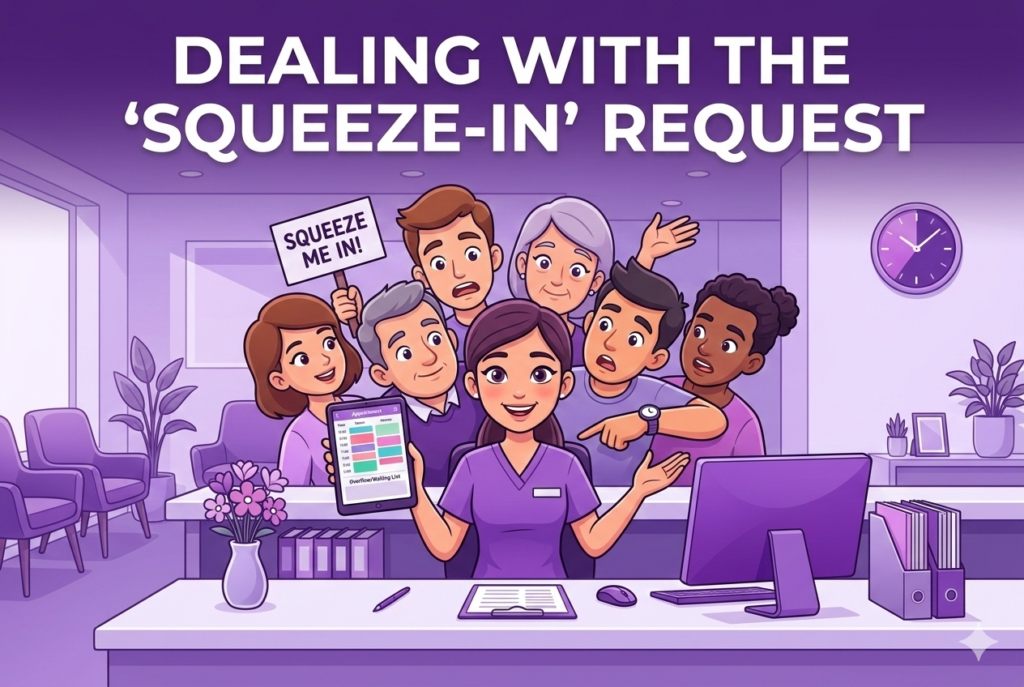
We’ve all had that one patient who calls every Monday morning demanding to be seen. Without firm medical appointment scheduling guidelines, these “squeeze-ins” will destroy your afternoon.
We created a “Buffer Slot” system. We leave two 15-minute slots open, one at 11:00 AM and one at 3:00 PM. These are only for urgent needs. If they aren’t filled by two hours prior, we use them for administrative catch-up. This keeps the doctor from running an hour late and keeps the staff from burning out.
Why Data is Your Best Friend
Every month, I pull a report on our scheduling efficiency. If I see that every Tuesday we are running 30 minutes late, it means our medical appointment scheduling guidelines for Tuesdays are flawed.
Maybe that’s the day we see more elderly patients who need more time for mobility. Or maybe it’s the day we do more procedures. You have to be willing to tweak your medical appointment scheduling guidelines based on the reality of your data. A rigid system that doesn’t adapt is just as bad as no system at all.
Checklist: Auditing Your Current System
If you feel like your clinic is losing control, take a look at this quick checklist. Are you following these basic medical appointment scheduling guidelines?
- Is your online booking link visible on your homepage?
- Do you have a scripted triage process for the front desk?
- Are you using automated reminders (Text, Email, Phone)?
- Do you have a “Smart Waitlist” to fill cancellations?
- Is there a clear, signed cancellation policy for every patient?
- Do you leave “buffer” time for emergencies?
The Human Side of the Calendar
At the end of the day, these medical appointment scheduling guidelines are there to serve people. When a patient is sick, they are scared. They don’t want to feel like a number in a machine.
But ironically, the more “machine-like” your backend scheduling is, the more “human” you can be in the exam room. When a doctor isn’t rushing because they are three patients behind, they can actually listen. They can look the patient in the eye.
I’ve seen it firsthand: a practice that masters its medical appointment scheduling guidelines is a practice that provides better medicine. It’s about creating space for the moments that matter.
TRENDING NOW!
Efficient patient scheduling prevents overcrowding and delays, and hospitals can use HCAHPS survey feedback to improve the process. Key tactics include consolidating similar visits, booking ahead, automating scheduling and reminders, using waitlists, tracking no-shows, and offering self-scheduling. The content also promotes patient activation resources like motivational guidance, nurse triage, and readmissions/TCM support.
Final Thoughts
Building out your medical appointment scheduling guidelines is a bit of a grind at first. You’ll get pushback from staff who like the old way, and you’ll have a few grumpy patients. But stick with it.
The peace of mind that comes with a smooth-running day is worth every minute of planning. You’ll see your “no-show” rates drop, your staff retention rise, and your patients will thank you for finally respecting their time.
If you’re still using a paper book or a basic digital calendar without automation, 2026 is the year to upgrade. Your practice, and your sanity, will thank you.

Vlade Legaspi has spent over 6 years as an executive assistant. He loves getting creative with design, video editing, and writing. At HelpSquad, he’s part of the marketing team, helping the business grow and connect with more people. You can reach out to him on LinkedIn.