One Calendar, Four Systems: Scheduling for a Behavioral Health Telehealth Practice
Behavioral health telehealth practices typically manage patient intake from 3 to 4 separate platforms simultaneously (directory listings like Psychology Today, payer-network portals like Headway and Alma, direct booking tools like Zocdoc, and their core EHR) with no native...
Quick Answer
The Short Answer
Behavioral health telehealth practices typically manage patient intake from 3 to 4 separate platforms simultaneously (directory listings like Psychology Today, payer-network portals like Headway and Alma, direct booking tools like Zocdoc, and their core EHR) with no native cross-platform sync. The result: clinicians become the manual integration layer, prone to double bookings and un-backfilled same-day cancellations that silently drain revenue. The fix is to designate your primary EHR (SimplePractice or NextGen) as the single source of truth, establish strict update protocols for every external channel, and assign a dedicated part-time virtual assistant (approximately 20 hours per week) to serve as the human bridge between them. This approach stops the double bookings, catches cancellations before the slot goes dark, and frees you to focus on patients rather than calendars.
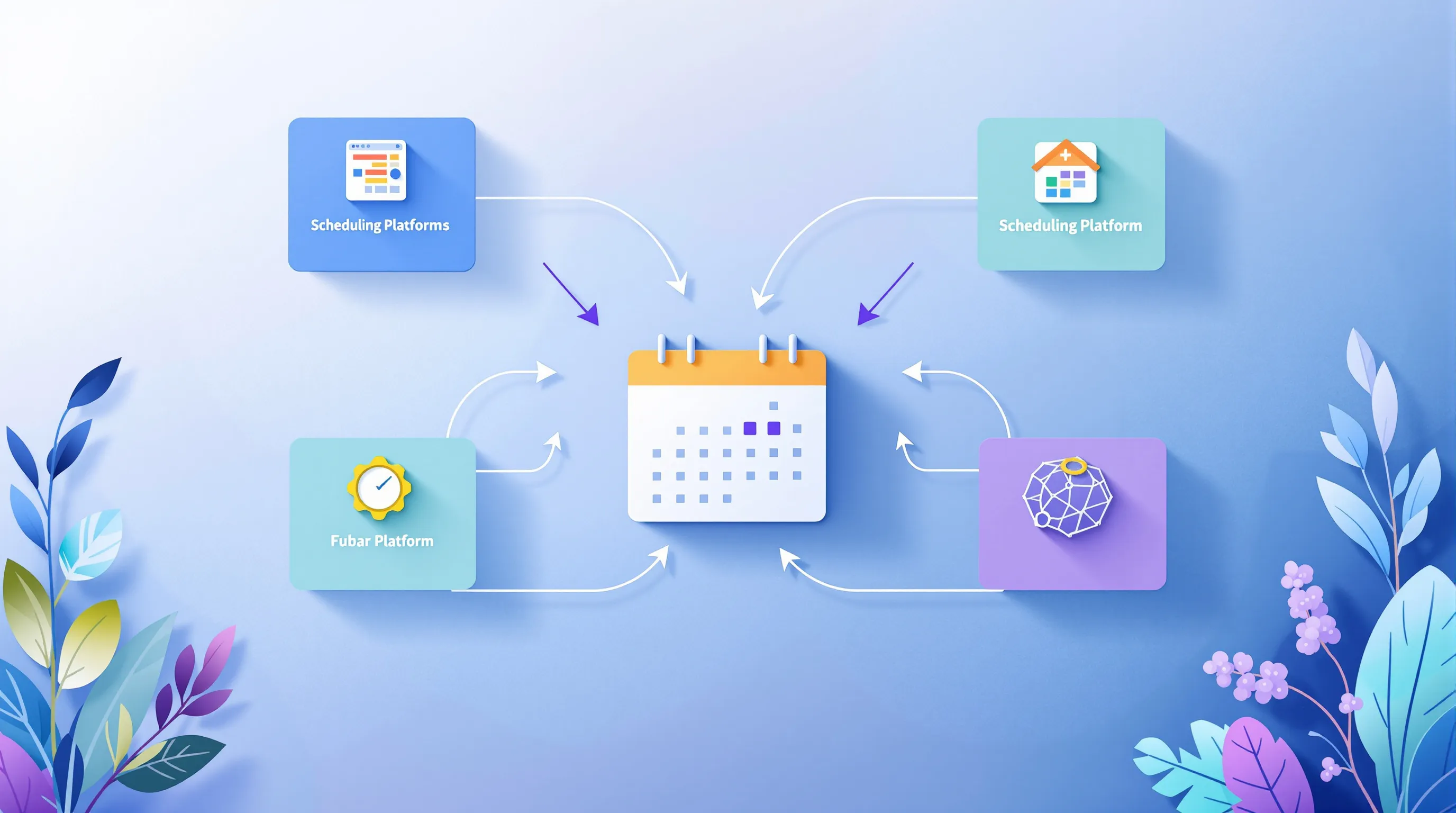
If you run a behavioral health telehealth practice, you already know the calendar problem. Patients find you through Psychology Today. They book through Zocdoc. Their insurance routes them via Headway or Alma. And your actual clinical schedule lives in SimplePractice or NextGen. That is four systems, none of which talk to each other natively, and somewhere in the middle stands you (or a stretched administrator) doing the manual work of keeping them all in sync.
In this piece, I want to walk through exactly why that setup breaks down, where the real revenue losses hide, and what the right-sized operational fix actually looks like. Spoiler: it is not a $50,000 enterprise scheduling suite. It is something much more practical.
Questions this article answers
- How do I avoid double booking across my Headway and SimplePractice calendars?
- Who manages intake and scheduling when patients come from three different referral sources simultaneously?
- Why does my telehealth practice still need front-office phone coverage if all care is delivered remotely?
Quick Answer
Behavioral health telehealth practices running 40 to 60 patient visits per week now operate across an average of 3 to 4 separate scheduling platforms simultaneously, none of which sync natively with their core EHR. In my experience supporting healthcare practices at HelpSquad, same-day cancellations that go un-backfilled account for the largest single category of preventable revenue loss in these practices. A dedicated virtual assistant working 20 hours per week eliminates the manual reconciliation burden entirely and recovers those slots before the day closes.
I have spent years working at the intersection of complex back-office systems and patient-facing operations. At UnitedHealth Group (Optum), I handled member inquiries, provider locator tools, and insurance coverage verifications on a daily basis. What became crystal clear in that environment was this: administrative disconnects do not stay administrative. They hit revenue, they hit patient access, and in behavioral health specifically, they hit people who were already struggling to get an appointment in the first place.
Now, leading content and marketing at HelpSquad, I see the same operational gap from a different angle. Practices come to us not because their clinical care is broken but because their scheduling infrastructure has quietly become a second job for the clinician. The four-system calendar problem is not a technology failure. It is an operations design failure. And it has a practical, right-sized solution that does not require a budget overhaul.
The Modern Behavioral Health Calendar Trap
Here is the situation I see most often when a behavioral health practice reaches out to HelpSquad for scheduling support.
The clinician is a skilled therapist or psychiatric provider running a fully remote practice. They have done everything right on the clinical side. The problem is their patient pipeline, as of .
In 2026, a behavioral health telehealth practice does not have one intake channel. It has three or four running at the same time:
- Directory listings (Psychology Today, Therapy Den) where patients browse profiles and request consultations directly
- Payer-network platforms (Headway, Alma) where insurance-credentialed providers receive referrals from the platform's own patient-matching system
- Direct booking tools (Zocdoc, the practice's own website intake form) where patients self-schedule
- The core EHR (SimplePractice, NextGen) where the actual clinical calendar lives
Each of these platforms maintains its own internal availability calendar. None of them sync natively with each other. Headway has no real-time API handshake with SimplePractice. Zocdoc does not push confirmed bookings to NextGen. When a patient books through Psychology Today, the clinician's EHR does not know about it until the clinician manually updates it.
What happens next is predictable. The clinician, squeezed between back-to-back sessions, updates one calendar and forgets the others. Or they update them all correctly today, but tomorrow a Headway patient reschedules inside the Headway portal, and the EHR never gets the memo. In my back-office operations experience, this is the classic multi-system reconciliation failure: when you have entries coming from disparate platforms that do not communicate, expecting any human to manually sync them "in between appointments" guarantees errors.
I want to be clear about what "guarantees errors" looks like in behavioral health scheduling specifically. It looks like this:
- A Zocdoc patient books the 2:00 PM slot
- A Headway referral is accepted for the same 2:00 PM slot because Headway's view of the calendar has not been updated
- The provider discovers the conflict at 1:55 PM
That is a double booking. 64% of practices report challenges balancing hybrid and multi-platform care workflows, per industry surveys on telehealth adoption. In behavioral health, where a missed appointment is not just a revenue event but a care-access event, that number should alarm every practice owner.
It is worth noting that this is not a problem unique to inexperienced or disorganized practitioners. It is a structural problem created by a market ecosystem that built multiple patient-matching platforms without building the interoperability layer between them. The clinician did not design this architecture. They inherited it.
Why the Clinician Becomes the Integration Layer
In a well-designed system, a middleware layer or integration API would handle the synchronization work automatically. In most behavioral health telehealth practices, that layer does not exist. The EHR is not the hub feeding the platforms. The platforms are independent channels, each with their own scheduler, and the clinician is the only entity with visibility into all of them.
This is the calendar trap. The provider becomes a human API, responsible for ensuring that every external platform reflects their current availability in real time. It is unsustainable at any volume above 20 or so patients a week. For practices running 40 to 60 visits a week, it is a daily operational crisis waiting to happen.
Where Double Bookings and Ghost Cancellations Actually Come From
Everyone talks about double bookings as the scheduling villain. They are embarrassing and disruptive, yes.
But in my experience, double bookings are not the primary revenue threat for a busy telehealth behavioral health practice. Ghost cancellations are.
A ghost cancellation is a same-day cancellation or no-show that goes un-backfilled. The slot opens up, nobody fills it, and the day ends with that revenue simply not existing. For a practice running 40 to 60 patient visits a week, where a session might run $150 to $250 depending on the service and payer, three un-backfilled slots per week represents $450 to $750 in weekly revenue that evaporated without anyone noticing. Over the course of a year, that is a material number.
Here is why ghost cancellations are so common in multi-platform practices. When a patient who came through Headway cancels inside the Headway portal, the Headway portal updates Headway's internal calendar. It does not notify the clinician's EHR. It does not send an alert to whoever handles the practice's scheduling. If the clinician is mid-session when the cancellation comes in, they may not see it until the end of the day. By then, the slot is gone.
From my time at UnitedHealth Group (Optum), I learned a hard operational truth about disconnected administrative systems: you cannot manage what you cannot see. When a cancellation exists only in a platform-specific portal that nobody is actively monitoring, it is invisible to the people who could act on it. That is not a workflow failure. It is a visibility failure.
The Double Booking Mechanics
Double bookings in multi-platform practices typically follow one of two patterns:
- Lag-based conflict: A patient books through Zocdoc. The clinician intends to update SimplePractice but gets pulled into a session. A Headway referral comes in an hour later for the same slot. Both bookings are confirmed because neither platform knows about the other.
- Reschedule-blind conflict: A patient who originally booked through one platform reschedules inside that platform. The reschedule is not reflected in the EHR. A new patient is booked into the original slot through a different channel. Two patients now have the same time.
Both patterns have the same root cause: no single platform has full visibility into the practice's true availability in real time. The solution to this is not better calendar software. It is a human process built around one authoritative calendar system.
Why Telehealth Practices Still Face Front-Office Friction
There is a common assumption that a 100% telehealth practice does not need front-office support. If everything is remote, what is there to manage? The answer, in practice, is quite a lot.
Even when all care is delivered virtually, patients still call (or need someone to call them) for several important reasons:
- Intake confirmation: First-time patients need to confirm they have the correct video link, understand the consent process, and complete any intake paperwork before their first session.
- Tech troubleshooting: "I cannot get the link to work" is one of the most common pre-session calls in telehealth. Somebody needs to answer it and solve it in real time, or the session does not happen.
- Coverage verification: Patients booking through Headway or Alma often have questions about what their insurance will actually cover before they commit to an appointment. At Optum, I fielded hundreds of these calls. They do not resolve themselves without a human on the line.
- Reschedule requests: Patients frequently call to reschedule rather than using the platform portal, especially when they booked through a directory like Psychology Today rather than a self-service tool.
According to patient experience research, adults spend the equivalent of a full eight-hour workday every month coordinating their own healthcare. Phone scheduling and administrative friction are the top complaint categories. A telehealth practice that eliminates the in-person visit but leaves the administrative friction intact has only solved half the problem.
Establishing a Single Source of Truth
The foundational fix for multi-platform behavioral health patient scheduling is conceptually straightforward. One system must be the master calendar. Everything else feeds into it. Nothing else is trusted as authoritative.
In practice, that system should almost always be the core EHR, either SimplePractice or NextGen for most behavioral health practices. The EHR is where appointments become clinical encounters. It is where notes are written, billing is initiated, and telehealth links are generated. It already IS the calendar that matters most for the practice's actual operations. The question is simply whether it reflects reality.
How to Sync Headway with Your EHR Calendar
Headway does not offer a direct two-way sync with SimplePractice or NextGen via a native integration as of 2026. What it does offer is a provider-facing portal where appointments, cancellations, and reschedules appear. The operational solution is to establish a daily (or twice-daily) reconciliation process: someone checks the Headway portal and mirrors any changes into the EHR within a defined time window. The KEY is that this check must happen on a schedule, not on a "when I get a chance" basis.
Managing Patients from Psychology Today and Zocdoc Simultaneously
Psychology Today sends consultation requests via email or direct message. Zocdoc generates confirmed booking notifications. Both channels need a single point of contact who acknowledges each request, checks the EHR calendar for actual availability before confirming, and then updates the EHR with the confirmed appointment.
Here is the protocol I recommend for practices running multiple intake channels:
| Platform | How Bookings Arrive | Required EHR Update Action | Update Timing |
|---|---|---|---|
| Psychology Today | Email/direct message request | Confirm availability in EHR, then reply; block the slot | Within 2 hours of request |
| Headway | Portal notification | Mirror confirmed appointment or cancellation into EHR | Morning and afternoon check |
| Alma | Portal notification | Mirror confirmed appointment or cancellation into EHR | Morning and afternoon check |
| Zocdoc | Automated confirmation email | Immediately block slot in EHR upon confirmation | Real-time, within 30 minutes |
| Practice website | Form submission or direct booking | Confirm availability, block slot in EHR | Within 2 hours of submission |
This table represents a real operational SOP (standard operating procedure), not just a philosophy. When every channel has a defined incoming-format, a responsible action, and a maximum response window, the reconciliation process becomes consistent and auditable. It can be taught to a new team member in under an hour.
How to Avoid Double Booking Across Two Schedules
The answer to "how do I avoid double booking across two schedules?" is: do not maintain two authoritative schedules. The EHR is the schedule. Everything else is a notification channel that feeds into it. Any time a patient books, cancels, or reschedules on any external platform, that event must trigger an update to the EHR within a defined time window. If you cannot guarantee that window, you need a person whose job includes making it happen.
This also solves the HIPAA compliance concern that comes up in discussions about multi-platform scheduling. Therapists on Reddit and in clinical forums regularly ask whether tools like Calendly (which does not offer a Business Associate Agreement for most plans) are appropriate for behavioral health intake scheduling. The short answer is that your EHR, not a consumer scheduling tool, should be the authoritative system for all confirmed patient appointments. Tools like Headway, Alma, SimplePractice, and NextGen are all built to HIPAA-compliant standards and should form the backbone of your workflow.
Right-Sizing the Fix: Why a 20-Hour Assistant Beats Manual Reconciliation
Once a practice owner understands the single source of truth framework, the next question is always: who does this work? Who monitors the Headway portal, reconciles the Zocdoc confirmations, and catches the Psychology Today requests before they expire?
It is not the clinician. The moment a provider spends between sessions checking three different platform portals is a moment of cognitive switching that degrades both the administrative work and the clinical recovery time. In my view, this is one of the most underappreciated costs of the multi-system scheduling problem: it is not just the revenue lost to double bookings and ghost cancellations. It is the mental overhead imposed on the person who is supposed to be showing up fully present for every patient session.
The question I get asked most often is whether solving this problem requires hiring a full-time front desk person. The answer, for most behavioral health telehealth practices, is no. A dedicated, part-time virtual medical assistant working approximately 20 hours per week is the exact right-sized solution.
Who Manages Intake When Patients Come from Three Referral Sources?
This is a question I hear constantly from solo and small-group behavioral health providers: "Who manages my intake when patients come from three different referral sources?" The answer is one person, working a consistent schedule, with access to all platform portals and the EHR.
Here is what a 20-hour per week virtual assistant actually handles in this model:
- Morning calendar reconciliation (30 to 45 minutes daily): Check Headway, Alma, Zocdoc, and Psychology Today portals. Mirror any overnight changes (new bookings, cancellations, reschedules) into the EHR. Flag any conflicts for the provider.
- Incoming request management (1 to 2 hours daily): Respond to Psychology Today consultation requests within the 2-hour window. Confirm Zocdoc bookings in the EHR in real time. Handle intake form follow-ups from the practice website.
- Cancellation backfill (as needed): When a same-day cancellation comes in, immediately reach out to the practice's waitlist to backfill the slot. This is the function that directly recovers the lost revenue from ghost cancellations.
- Pre-session patient support (daily): Send or confirm telehealth links for the day's appointments. Handle tech troubleshooting calls or messages before session start time. Confirm insurance coverage for first-time patients from Headway or Alma.
- End-of-day check (15 to 20 minutes): Verify EHR calendar accuracy against all platforms. Confirm tomorrow's appointments are fully reflected and any open slots are accurately available on external platforms.
At HelpSquad, I have worked with practices where this model transformed the owner's daily experience. Not because the technology changed. Because there was finally a person whose job it was to hold the systems together. The clinician went back to being a clinician. The assistant became the human API that the platforms were missing.
It is also worth noting what this model does NOT require. It does not require an enterprise-level scheduling integration suite. It does not require a full-time hire with benefits and overhead. It does not require replacing any of the platforms already generating patient referrals. The practice keeps its Psychology Today listing, its Headway and Alma network participation, its Zocdoc presence. It just adds the operational layer that keeps them all aligned.
For practices that are evaluating scheduling software as part of this solution, it is worth reviewing a comparison of the top patient scheduling platforms to understand which EHR-adjacent tools offer the best notification and integration features. But my experience consistently shows that the human layer matters more than the software layer. A good SOP executed by a reliable person outperforms a sophisticated software stack executed inconsistently by a busy clinician.
Forecast Watch: 12-24 months
Where Behavioral Health Scheduling Is Headed
Three forecasts on how calendar sync, staffing, and compliance shape multi-system scheduling for behavioral health telehealth practices.
What Changes Next for Multi-System Scheduling
Each forecast is weighted by supporting and contrary evidence to show how confident to be in it.
Despite large AI investments elsewhere in healthcare administration, most behavioral health telehealth practices juggling multiple calendars will keep relying on outsourced staff or virtual assistants to reconcile double-booking risk across separate agency EHR instances, rather than fully automating scheduling.
Over the next 12-24 months, more behavioral health telehealth practices will move away from standard Calendly and route booking through their EHR (such as SimplePractice's paid scheduling upgrade), since Calendly's lack of a BAA on most plans keeps it non-compliant for clinical use.
Practices that integrate scheduling, documentation, and billing into one hybrid-care workflow will pull ahead on error rates and reimbursement speed, pushing more behavioral health telehealth practices to unify their calendar systems over the next 12-24 months.
Weak signals watched: Multiple therapist threads report Calendly does not offer a Business Associate Agreement on standard plans, while practices route around it using SimplePractice's paid HIPAA-compliant scheduling feature instead. Therapists report needing IT involvement to sync calendars across two separate agencies' SimplePractice accounts, and one practitioner still manually locks clients into repeating slots because automated sync doesn't reliably work. 64% of practices report challenges balancing hybrid-care workflows, while 95% of practices with integrated telehealth systems report fewer errors and faster reimbursements.
Supporting and Contrary Evidence
Sources backing and challenging each forecast, drawn from practitioner threads and industry data.
- need help with syncing calendars points the same way. [Community / Forum]Original poster (u/EconomicsCalm) works for two separate behavioral health agencies ("Agency A" and "Agency B"), both of which use SimplePractice as their EHR/scheduling platform. “I am confused as to how to sync my calendars in this situation. When I log in to Agency A (for example) I'd like to be able to see if an appointment time is…”
- The case rests on Calendar management. [Community / Forum]Post author (u/Imaginary_Dream_6517) reports that calendar platforms often provide only one-way sync, causing double-booking risk and outdated availability across platforms. “how do you keep the different platforms from double booking you constantly and or keep all of your availability up to date on the one way sync calendars????”
- How to Master Optometry Practice Management: A Step-by-Step Guide to Scaling Your Clinic is the strongest public backing for this call. [Industry Publication]By 2030, 53,000 full-time-equivalent optometrists will each manage around 2,400 patient encounters per year, equivalent to 127 million optometry visits, per the Review of Optometric Business. “This is where optometry practice management becomes critical.”
- The next challenge for AI in healthcare isn’t adoption. It’s connection. is the strongest argument against it. [Industry Publication]Elevance Health has invested more than $1 billion in digital and AI-enabled capabilities. “The opportunity is not simply to digitize those processes. It is to redesign them.”
- [US] Can I use Calendly to schedule consult calls? supports this forecast. [Community / Forum]
- Using Calendly to book initial consult calls? is the strongest public backing for this call. [Community / Forum]Original poster (u/AAY_8179) states Calendly does not enter into a Business Associate Agreement (BAA) with users, making it non-HIPAA-compliant. “my org uses calendly for screening calls so it's probably fine?”
- The case rests on need help with syncing calendars. [Community / Forum]Poster's core problem: no way to see, while logged into Agency A's SimplePractice account, whether an appointment slot is already taken in Agency B's SimplePractice account (and vice versa) - creating double-booking risk across the two…
- Against it: Calendar management. [Community / Forum]u/Imaginary_Dream_6517 states they attempt to lock clients into a "repeating slot" but this doesn't always work.
- Telehealth & In-Person Visits: How to Master Hybrid Care points the same way. [Video]64% of practices reported challenges balancing hybrid care workflows (per source). “Hybrid care isn't going away, but the stress can.”
- Why I'm always running late - Your Doctor Friend by Mara Gordon supports this forecast. [Substack / Newsletter]Author Mara Gordon, MD, sees 20-30 patients in a typical clinic day. “The longer you're in medicine, the more you realize everyone is always running late. You just get stuff done when you can.”
- need help with syncing calendars is the strongest argument against it. [Community / Forum]Commenter TheNewGuy2019 notes that calendar-sync functionality is not available on all SimplePractice plan tiers/versions ("not all support syncing calendars"), implying feature availability is version-dependent.
What Could Change These Forecasts
Regulatory shifts, new HIPAA-compliant tools, or staffing cost changes could alter this outlook.
Either Way, Plan For This
Why hold both 77 and 77 in mind? Because confidence is not certainty, and the gap between them is where 77 could still prove right.
- If regulators or buyers move in the opposite direction, Outsourced Human Coordination, Not Full Automation would weaken first.
- If the source mix shifts toward stronger contrary evidence, Outsourced Human Coordination, Not Full Automation could become the more durable forecast.
How HelpSquad Can Help Behavioral Health Practices Solve the Calendar Problem
At HelpSquad, we work specifically with behavioral health practices that need dedicated administrative support without the overhead of a full-time in-house hire. Our virtual medical assistants are trained to operate across multiple scheduling platforms, including Headway, Alma, Zocdoc, Psychology Today, SimplePractice, and NextGen, following the single-source-of-truth protocols described in this article.
The model is straightforward: a dedicated assistant, assigned to your practice, working consistent hours that match your clinic's operational needs. They handle the morning reconciliation, the incoming request management, the cancellation backfill, the pre-session tech support, and the end-of-day calendar check. You review a daily summary and see patients.
In summary: the multi-platform behavioral health scheduling problem is real, it is structural, and it has a clear operational solution. One master calendar (your EHR). Clear update protocols for every external platform. One dedicated person executing those protocols consistently. If you are spending significant time between sessions managing four different portals, or if you have discovered a double booking at 1:55 PM, it is time to add the human layer that makes the system work the way it should.
Written by
Maria Rush
Marketing Team Lead, HelpSquad
Maria De Jesus-Rush is Marketing Team Lead at HelpSquad, a healthcare business process outsourcing company, with a background in content development, digital marketing, and project management.
Connect on LinkedInFrequently Asked Questions
How do I sync Headway with my EHR calendar?
Headway does not currently offer a direct, real-time two-way sync with EHR platforms like SimplePractice or NextGen. The practical solution is to establish a twice-daily reconciliation process: check the Headway provider portal each morning and afternoon, then manually mirror any new bookings, cancellations, or reschedules into your EHR. A dedicated virtual assistant can handle this check on a consistent schedule so the clinician never needs to do it manually between sessions.
How do I avoid double booking across two schedules?
The answer is to stop maintaining two authoritative schedules. Designate your core EHR (SimplePractice or NextGen) as the single source of truth for your clinical calendar. Every external platform (Headway, Alma, Zocdoc, Psychology Today) is then treated as a notification channel: when a booking, cancellation, or reschedule comes in through any of those platforms, it triggers an update to the EHR within a defined time window. No booking is considered confirmed until it exists in the EHR.
Who manages my intake when patients come from three referral sources?
One dedicated person, working a consistent schedule, with access to all platform portals and the EHR. For most behavioral health telehealth practices running 40 to 60 visits per week, a part-time virtual assistant working approximately 20 hours per week is sufficient to cover morning reconciliation, incoming request management, cancellation backfill, and pre-session patient support across all channels.
Why does my telehealth practice still need phone coverage if all care is delivered remotely?
Even in a 100% telehealth practice, patients call for intake confirmation, video link troubleshooting, insurance coverage questions, and reschedule requests. These contacts happen before and between sessions, and they require a real person to handle them in real time. A telehealth practice that removes the in-person visit but leaves administrative friction unaddressed has only solved half the operational problem. Front-office support remains essential for the patient experience, even when the care itself is delivered virtually.
Are healthcare virtual assistants worth it for a behavioral health practice?
Yes, in most cases where the practice is running a meaningful volume of patients across multiple referral channels. A part-time virtual assistant working 20 hours per week who recovers two un-backfilled cancellation slots per week at a session rate of $175 generates approximately $18,200 in recovered annual revenue. That figure alone typically exceeds the cost of the assistant, before accounting for the elimination of double-booking chaos and the cognitive overhead removed from the clinician.
Is Calendly HIPAA-compliant for behavioral health scheduling?
Calendly does not offer a Business Associate Agreement (BAA) for most individual and small-practice plans, which makes it non-HIPAA-compliant for handling patient health information. For confirmed patient appointments, behavioral health practices should use their HIPAA-compliant EHR (SimplePractice, NextGen) or a platform with a signed BAA as the authoritative scheduling system. Calendly is generally not appropriate for confirmed behavioral health patient appointments.
What is the best EHR for a behavioral health telehealth practice?
SimplePractice is the most widely used EHR among individual and small-group behavioral health providers for its ease of use, built-in telehealth link generation, and HIPAA-compliant scheduling features. NextGen is more common among larger group practices and organizations that require robust billing and clinical documentation at scale. Both function well as the single-source-of-truth master calendar in a multi-platform scheduling workflow, provided that a consistent update process is in place for external channels.
How many hours per week does calendar management actually take for a multi-platform practice?
For a practice running 40 to 60 patient visits per week across 3 to 4 scheduling platforms, dedicated calendar management (morning reconciliation, incoming request response, cancellation backfill, pre-session patient contact, and end-of-day check) typically requires 15 to 25 hours per week when done properly. This is why a 20-hour-per-week virtual assistant is the right-sized solution: it covers the work without over-staffing for a practice that does not yet need a full-time hire.

10 Signs You Need a Behavioral Health Virtual Assistant to Support Your Workflow
Ten signs your mental health practice needs a behavioral health virtual assistant, from rising no-shows to billing backlogs and missed follow-up calls.

How to Start a Therapy Private Practice: The 2026 Startup Guide
To start a therapy private practice, get an independent license, form an entity, obtain an NPI, begin credentialing early, pick private pay or insurance, then set up software, policies and phones.

Outsourcing Behavioral Health Services: Access and Quality
Behavioral health billing carries higher denial rates than general medicine. A four-gate vendor check separates compliant outsourcing partners from cheap ones.
Let's talk about what your practice actually needs.
A 30-minute call. No sales pressure. We'll tell you honestly whether we're a fit.