Chatbot Technology in Healthcare: Use Cases, Benefits, and Impact on Patient Care
09 Aug 2025 By: Vlade Legaspi
Updated
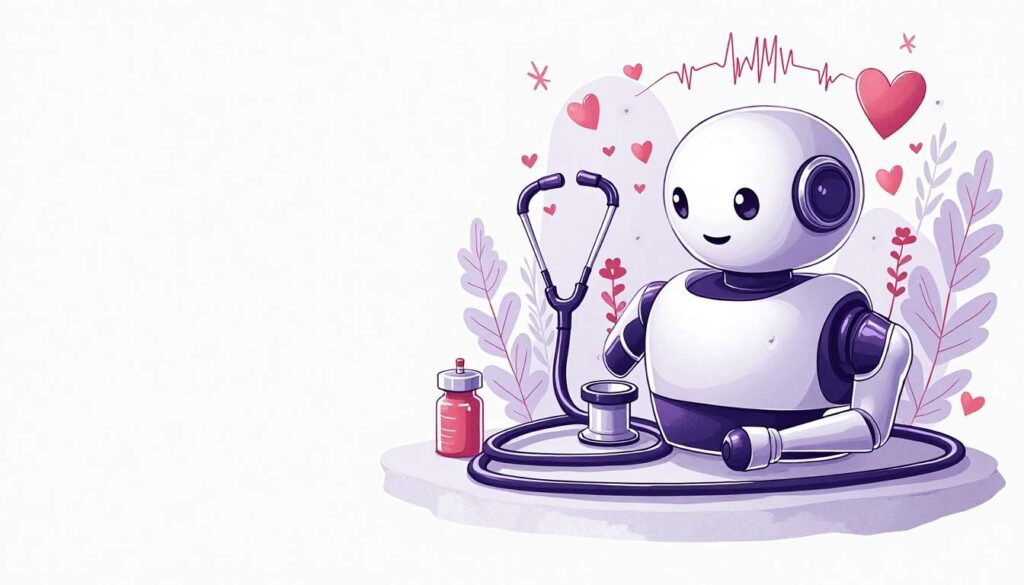
Chatbot technology in healthcare uses AI and natural language processing to answer patient questions, automate routine tasks, and support care anytime. It can schedule appointments, send medication reminders, share basic symptom guidance, and collect information before a telehealth visit. For example, a chatbot can triage common symptoms and suggest next steps, then route urgent cases to a human nurse. This improves access, reduces staff workload, and keeps communication consistent.
Understanding Chatbot Technology in Healthcare
What Are Healthcare Chatbots?
Healthcare chatbots operate as artificial intelligence systems which duplicate human communication patterns. The healthcare chatbot technology enables patients to receive assistance with their inquiries and schedule appointments. The modern bots differ from traditional phone systems because they employ machine learning and NLP to understand meaning and produce intelligent responses.
These bots operate through websites and mobile applications and messaging platforms including WhatsApp and Facebook Messenger. The bots operate continuously to reduce medical staff workload by performing basic tasks. The implementation of chatbot in healthcare delivers faster services and enhanced patient care through its quick and useful responses.
Types of Chatbots in Healthcare
Healthcare chatbots typically fall into three categories:
- Informational Chatbots: Provide general medical information, symptom checking, and health tips.
- Administrative Chatbots: Assist with appointment scheduling, medication reminders, and billing inquiries.
- Therapeutic Chatbots: Offer mental health support, cognitive behavioral therapy, and chronic disease management guidance.
Each type plays a key role, but together they boost care and patient contact. healthcare chatbot guides patients and helps spot health issues early.
Admin bots cut wait times and raise patient happiness. Therapy bots offer quick mental health help, reaching those who avoid in-person care. These examples clearly show the benefits of chatbots in healthcare, especially in improving access and responsiveness across different care needs.
Enhancing Patient Engagement and Access to Care
24/7 Availability and Immediate Response
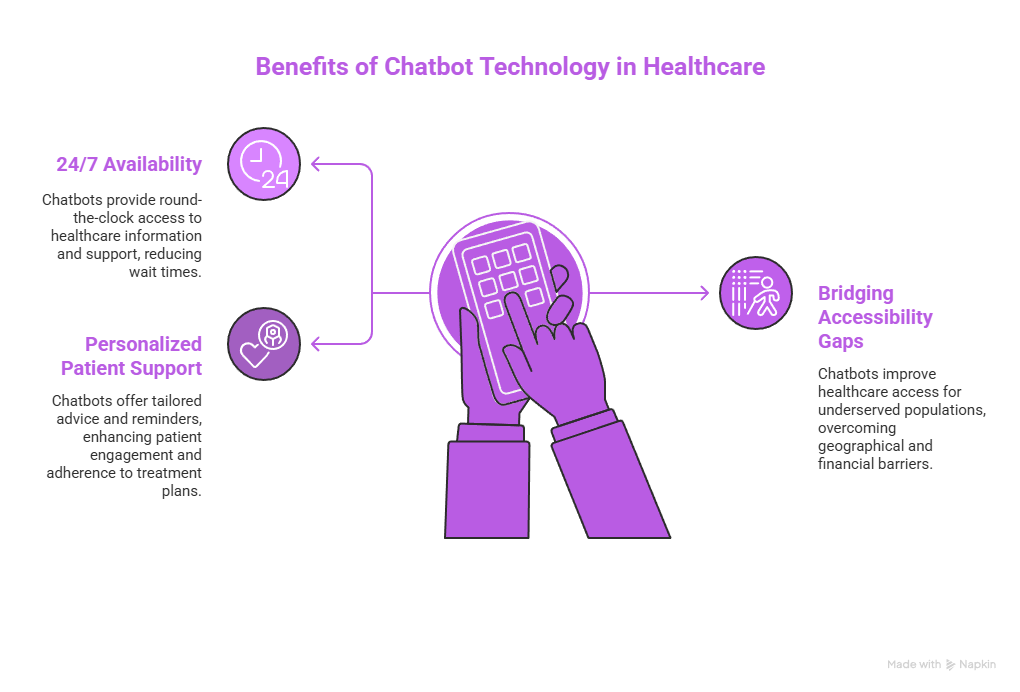
One big benefit of chatbot tech is 24/7 access. Chatbots lets patients get help fast, without waiting for office hours or delays.
During COVID-19, bots gave instant info on symptoms, tests, and shots. This eased hotline pressure. The widespread use of chatbots in healthcare during public health emergencies showed how scalable and reliable this technology can be. Chatbots handle many questions at once, freeing staff to manage serious cases.
Bridging Gaps in Healthcare Accessibility
Health gaps often rise from location, money, or social limits. Chatbot technology helps fill these gaps with cheap tools on phones or PCs.
Rural areas get fast checks and advice. People with movement issues get easier access. Bots also talk in many languages and respect local culture. The use of chatbots in healthcare supports inclusive access by reaching patients who might otherwise struggle to connect with providers. Healthcare chatbot helps more people feel heard, safe, and ready to ask for care.
Personalized Patient Support
Smart chatbots use patient data to give custom advice. Chatbots can link to EHR to give med reminders and track long-term health issues.
They also help book visits and remind patients about tests like mammograms. Chatbot technology in healthcare keeps care on track and boosts patient action. These workflows highlight some of the most practical benefits of chatbots in healthcare, including better follow-through and improved patient engagement.
Streamlining Healthcare Operations
Reducing Administrative Burden
Healthcare staff lose time on admin jobs like booking, billing, and forms. Chatbot Technology in Healthcare automates these tasks and frees staff for patient care. Many modern clinics now use WhatsApp automation tools like Getgabs, Messagedly, and GetItSMS to check doctor slots, cut no-shows, and send reminders automatically.
Bots check doctor slots, cut no-shows, and send reminders. They help with insurance checks too. The use of chatbots in healthcare improves both patient convenience and internal efficiency. Chatbots in healthcare boosts patient ease and speeds up clinic work.
Improving Data Collection and Patient Monitoring
Chatbots track symptoms, meds, and habits in real time. Healthcare chatbots give doctors data to spot issues early and change treatment fast.
For chronic care, bots log daily health stats and alert doctors when needed. Chatbot technology in healthcare also teaches patients, helping them stay informed and involved. These capabilities are widely recognized as key benefits of chatbots in healthcare, especially for long-term condition management.
Enhancing Telemedicine Integration
As telemedicine grows, Chatbot Technology in Healthcare leads first steps. Bots collect info, check IDs, and give follow-ups after online visits.
They sort symptoms and guide patients to the right care. The use of chatbots in healthcare improves the speed and accuracy of virtual visits. Chatbot Technology in Healthcare also shares health tips and info. This makes online care fast, easy, and useful for all.
Improving Mental Health Support Through Chatbots
Addressing the Mental Health Crisis
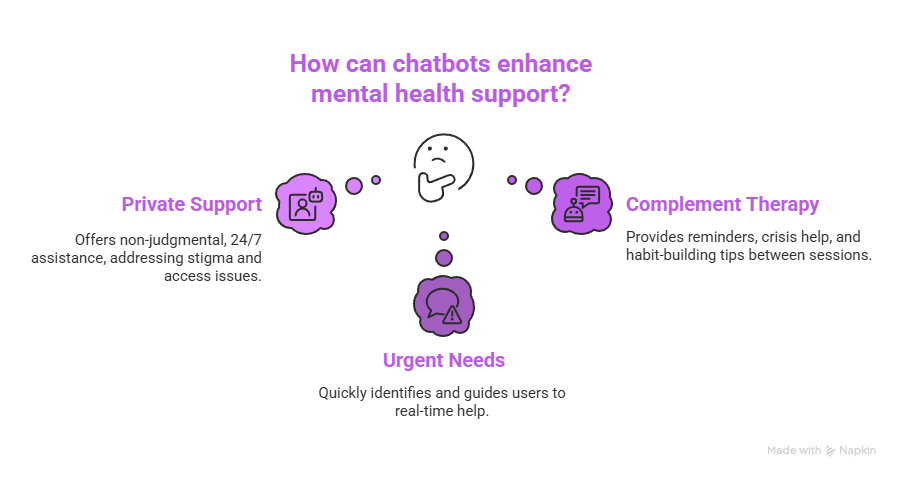
Mental health care is often blocked by stigma and access issues. Chatbot Technology in Healthcare gives private, round-the-clock support without judgment.
Tools like Woebot and Wysa use AI for CBT, mood checks, and coping help. These tools highlight the benefits of chatbots in healthcare by offering immediate, low-barrier mental health support for those who need it.
Complementing Traditional Therapy
Chatbots supports mental care between sessions. Bots give reminders, share crisis help, and build good habits through daily tips.
They spot urgent needs and guide users to real help fast. The use of chatbots in healthcare keeps patients engaged between appointments and supports continuity of care.
Challenges and Ethical Considerations
Ensuring Accuracy and Reliability
Chatbots in healthcare must stay accurate to keep patients safe. Bots need constant updates with new research and medical rules.
As treatments change, chatbots must adjust fast. This keeps advice clear, current, and useful for patients who rely on the info to guide care.
Healthcare groups must set clear rules for chatbot use. They should not replace real medical advice.
Audits and user feedback help improve bots. Adding a way to reach real staff builds trust and supports users who need extra care.
Protecting Patient Privacy and Data Security
The handling of private data through chatbots requires robust security measures. Bots need to comply with HIPAA and GDPR and other privacy regulations.
Organizations need to train their staff while restricting access and implementing encryption protocols. The responsible use of chatbots in healthcare depends heavily on strong data protection and transparent privacy practices.
Addressing Bias and Accessibility Issues
The data used in Chatbot Technology for Healthcare applications can contain biased information. The teams need to use diverse data and check bot performance across all user groups.
The bots need to support multiple languages and voice use and screen readers. The system should have a simple design and help guides to provide fair and clear support to all users.
The Future of Chatbot Technology in Healthcare
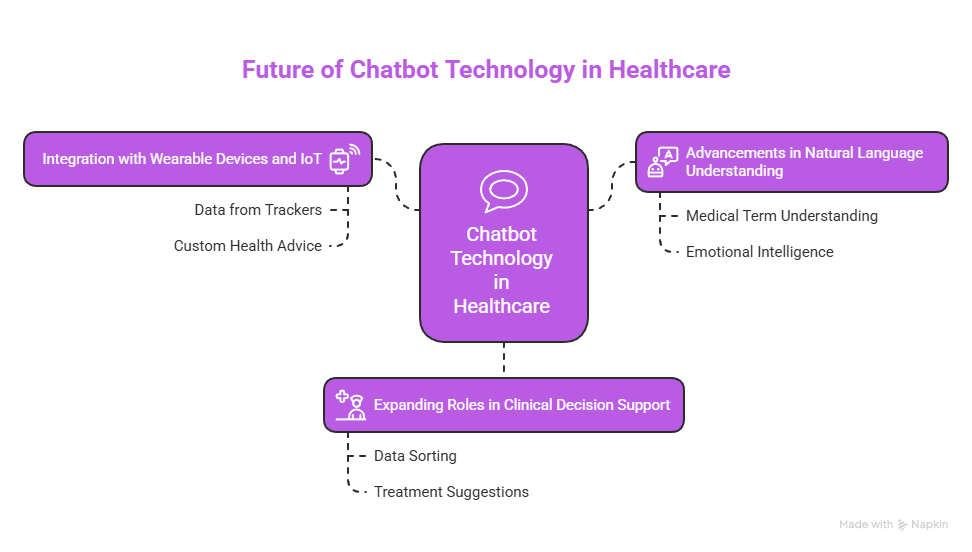
Integration with Wearable Devices and IoT
Chatbot technology in healthcare links with wearables and IoT tools. Bots read data from trackers and give real-time tips and custom health advice.
They boosts prevention by using device data. These advancements expand the benefits of chatbots in healthcare by helping users respond to risks earlier.
Smarter devices mean better custom advice. Chatbot tips match each lifestyle, helping people stay healthy and easing the load on care systems.
Advancements in Natural Language Understanding
As NLP grows, chatbot technology in healthcare will better read medical terms and emotions. Bots will talk with more care and human-like warmth.
They’ll mix facts with empathy, easing patient fear. This emotional skill builds trust and comfort, key for tough health talks.
Expanding Roles in Clinical Decision Support
Future chatbots for healthcare may help doctors by sorting medical data, suggesting diagnoses, and offering treatment options. Using machine learning, these bots stay updated with new research and rules. They can also sum up patient records to aid teamwork and smooth out clinic tasks. This saves time, cuts errors, and improves care.
Trending Now!
Healthcare services experience transformation through AI chatbots which provide better accessibility and efficiency while delivering patient-centered care. The technology enables telemedicine services and appointment scheduling and medication management and immediate assistance to patients. Chatbots deliver personalized healthcare through Natural Language Processing and Machine Learning technologies which enhance symptom checking capabilities and increase patient involvement. The continuous availability of chatbots decreases healthcare provider workloads while lowering expenses and simultaneously improves both care quality and patient satisfaction.
The future development of chatbots will include voice support capabilities and wearable device integration and advanced personalization features. The tools will deliver immediate understanding and preventive healthcare services. The implementation of chatbots faces ongoing challenges because of privacy concerns about data protection and system integration requirements and ethical dilemmas. The key to success depends on careful application along with robust data protection measures and human supervision. AI chatbots will create an inclusive efficient connected healthcare future through ongoing innovation.
Real Life Experience
When BFIT came to us, their team was missing student inquiries outside office hours. We stepped in with 24/7 live chat support so students could get answers the moment they reached out. Over time, we saw better engagement, more qualified inquiries, and clearer insight into what students were actually looking for. That feedback helped BFIT improve both their website and their enrollment process.
Conclusion
Chatbot technology in healthcare boosts access, raises engagement, and cuts admin work. As AI grows, bots will give more personal and caring support.
To reach full impact, chatbots must stay accurate, fair, and private. With smart use, they can help build faster, easier, and patient-first systems.
As care keeps changing, using chatbot tech is key. It’s now a must-have for providers who want to give top care in a digital world.
Experience the power of chatbot support with HelpSquad Health. Talk to us today and see how our solution improves care, cuts costs, and boosts patient trust.
FAQs
What is a chatbot?
What is a chatbot in healthcare?
What is the most appropriate use of an AI chatbot in healthcare?
What is the main purpose of a chatbot?
What is the future of chatbots in healthcare?
The future of chatbots in healthcare is centered around better automation of administrative tasks, improved patient satisfaction, and stronger integration with healthcare systems. As technology advances, chatbots are expected to help streamline appointment management, reduce provider burden, and play a larger role in virtual care and telehealth delivery.

Vlade Legaspi has spent over 6 years as an executive assistant. He loves getting creative with design, video editing, and writing. At HelpSquad, he’s part of the marketing team, helping the business grow and connect with more people. You can reach out to him on LinkedIn.