Optimizing Clinical Trial Call Center Services for Enhanced Patient Engagement
19 Dec 2025 By: Mary Dellosa
Updated

Patients often abandon clinical trials because the process is confusing, jargon-heavy, and difficult to navigate. Clinical trial call center services improve patient engagement by simplifying communication, reducing enrollment friction, and providing step-by-step guidance from first inquiry through screening. Optimizing these services can increase trust, improve conversion rates, and support stronger recruitment outcomes.
Recruitment is the biggest risk in any study. In the U.S., 80 percent of trials miss their deadlines and 19 percent just shut down because they cannot find enough people. The FDA says only 6 percent finish on time. To fix this, the industry needs simpler rules and actual human voices.
The Critical Role of Call Centers in Clinical Trials
More Than Just a Phone Line
Looking into a clinical trial is a big decision. It comes with a lot of questions and a lot of nerves. For most people, the whole journey starts with one phone call. That call can mean everything.
The person who answers the phone is not just there to give out facts. They are often the only human contact during the early stages. For someone who is nervous, that first voice matters. If the agent is kind and takes the time to listen, the caller feels it. They start to feel a little more at ease and ready to take the next step. Most people do not need a long scientific speech. They just need to feel like someone actually cares about their situation.
Challenges Facing Clinical Trial Call Centers
Even though these conversations are important, many call centers struggle. They deal with too many calls and messages that do not match up. Sometimes the training is just too basic. If an agent does not have the latest info on a trial, the caller gets frustrated. This leads to missed chances where a person might have signed up but decided it was just too much work.
Information in clinical trials moves fast. If agents do not have real time updates, they cannot give the help people need. Language and culture also play a huge role. If a person cannot understand the requirements because of a language gap, they will not join. Some centers are starting to use better language support and cultural training to fix this. It creates a space where everyone feels respected.
Strategies to Enhance Participant Engagement Through Call Centers
Investing in Specialized Training
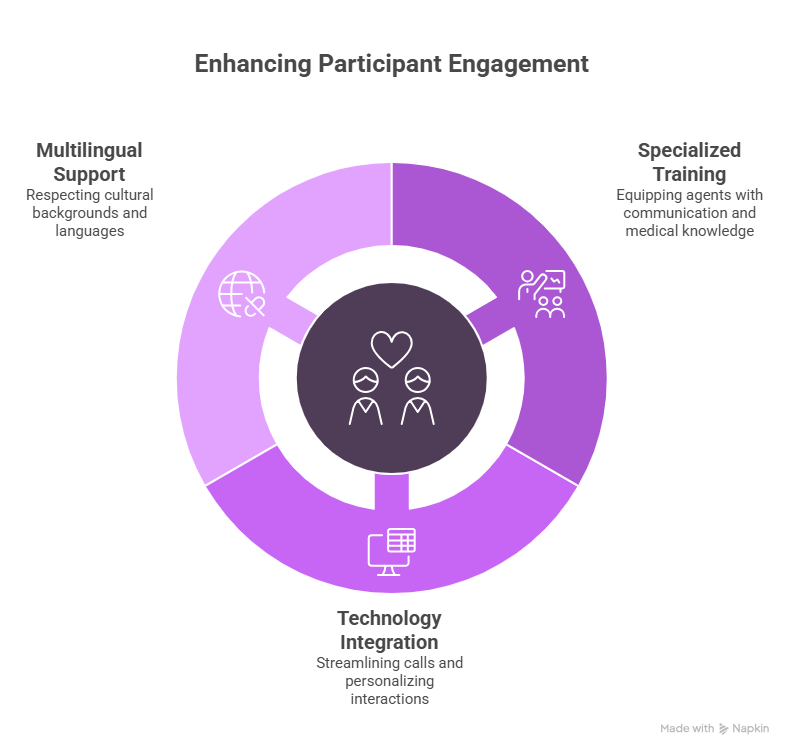
Training is the most important part of a good center. Agents need to know the trial details, but they also need to know how to talk to people. This means listening closely and being kind. They should be able to explain hard medical terms in plain English that anyone can understand.
Regular updates and practice conversations help agents get comfortable. When agents practice responding to feelings like worry or doubt, they get better at connecting with people. This hands on approach makes a massive difference in how a person feels during the call.
Leveraging Technology for Better Service
Technology should be a tool that makes human connection easier. A good system should get a caller to the right person without making them wait on hold forever.
Using a good tracking system lets agents see a caller history right away. When an agent knows what a person asked last time, it makes that person feel important.AI tools can also help by finding patterns in feedback. If the data shows people are starting to lose interest, the center can reach out with extra help to keep them on track.
Multilingual Support and Cultural Sensitivity
If a trial wants to include everyone, it has to speak their language. People are much more likely to stay involved when their background is respected.
Some centers use bilingual agents or translation services. But it is not just about the words. You have to understand cultural differences. Some cultures view medicine differently. When an agent is trained to respect those details, they build more trust. This leads to happier participants and better results for the trial.
Measuring and Improving Call Center Performance
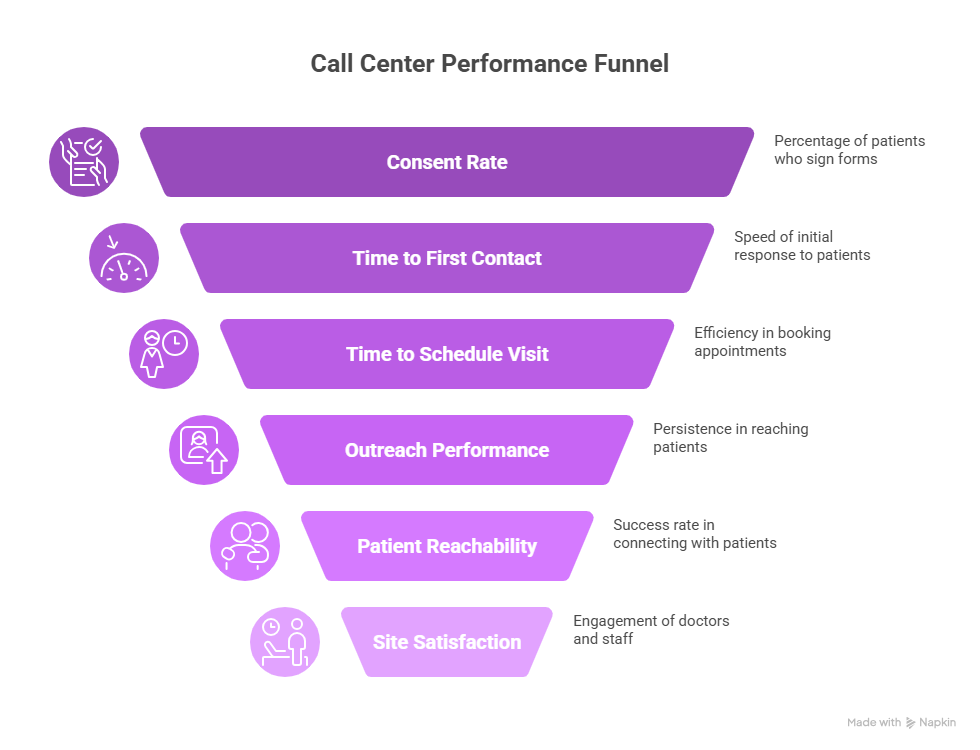
To see if a site is actually doing a good job, you have to look at these six areas.
- Consent rate: This is the percentage of people who actually sign the forms. It is the best way to see if the process is working.
- Time to first contact: How fast do you call someone back? Calling within 24 hours can make a huge difference. If you wait too long, they move on.
- Time to schedule the first patient visit: Booking that first appointment fast keeps things moving. If it happens on the first call, the person is much more likely to show up.
- Outreach performance: This is about not giving up. Most places stop after three calls. You should try at least ten times. Many people do not pick up until the fourth or fifth try.
- Patient reachability rate: Are you actually getting people on the phone? A 90 percent success rate is a good goal.
- Site satisfaction: If the doctors and staff like the process, they will stay involved.
Integrating Call Centers Within the Broader Clinical Trial Ecosystem
Collaboration with Clinical Teams
Call centers should never work alone. They need to talk to the doctors and the team running the trial. This ensures agents always have the best info. When everyone is on the same page, the participant has a much better experience and there is less confusion.
Supporting Participant Retention Beyond Enrollment
The job does not end once someone signs up. Call centers are a big part of keeping people in the study. They send out reminders and answer questions that pop up later. A simple check in call can make a person feel supported enough to finish the study. Using text messages or online portals gives people more ways to stay in touch.
Future Trends in Clinical Trial Call Center Services
Artificial Intelligence and Chatbots
AI is starting to handle easy things like scheduling or basic questions. This is a good thing. It lets human agents focus on the deeper conversations that actually need a person. As these tools get smarter, they will be able to offer more personal help.
Omnichannel Communication
People want to talk through phone, email, or text. We have to meet them where they are. A good system keeps all those messages in one place so the agent knows exactly what is going on. It makes the whole thing feel smooth for the person.
Data Driven Personalization
Using data helps centers change how they talk to each person. By looking at patterns, they can answer concerns before the person even asks. For example, if a group is worried about side effects, the center can have those answers ready. It makes the service feel more focused on the actual person.
Frequently Asked Questions
What are clinical trial call center services?
Clinical trial call center services are the patient support units, which are available on, demand to the patients, and thereby, they are the agents that connect the potential patients as well as the already enrolled ones with the controller of the research. They respond to the inquiries of the trial, coordinate with the candidate for the screening process, organize the appointments, and facilitate the participants in the whole study.
Why are clinical trial call center services important for patient enrollment?
Contact with real people is what they provide most of the time to a new patient. A direct contact with a clearly spoken friendly person helps tecnhical words to be better understood and procedures more clear, the patient gains trust and in that way, the number of enrolled participants can be enlarged.
How do clinical trial call center services improve retention during a trial?
Through reminders and answering questions, call centers are a part of the retention strategy to keep the relationship with the participant. In case of worry, they solve it efficiently and if the study proceeds in a nice atmosphere, the participants will be less tempted to lea
What challenges commonly affect clinical trial call center services?
One of the problems with the call center staff is the large number of calls they receive, the other major problem is the mode of communication, and the last but not least of the issues regarding call centers is that the lack of proper training (especially in cases when there is a frequent change of the protocol) may result in the spread of incorrect information, patient dissatisfaction, and consequently lower engagement or enrollment.
Where does the information in this blog come from, and how can readers trust it?
This blog is based on the routine functions of a call center in a clinical trial and patient engagement activities related to first contact, and it is backed by research on the influence of first interactions on participation.
Conclusion: Making Every Call Count
Clinical trial call centers play a major role in defining patient experiences and the overall success of the trial. Making these services efficient needs to have the right staff, use of intelligent technology, be aware of different cultures, and keep improving continuously.
Every call is an opportunity to inform, reassure, and connect with the patient. If the connection is made in a proper way, it can be the conversion of a reluctant prospect into a confident participant, thus, medical science moves forward one conversation at a time.
HelpSquad has precisely the team to take care of your call handling requirements, just a call away! They offer trained agents, 24/7 coverage, and patient, centered call handling tailored to clinical trials, which is definitely the way to go if you want to increase engagement, enrollment, and retention and deliver a better experience to participants.

Mary is an executive assistant with over 3 years of experience. She enjoys doing various tasks such as graphic design, video editing and content writing. She is on HelpSquad's marketing team and helps leverage the company's business for growth. You may contact Mary on LinkedIn: https://www.linkedin.com/in/gelai-dellosa/