Home Assistant for Elderly: How AI Home Care Improves Safety and Independence
06 Aug 2025 By: Vlade Legaspi
Updated
A home assistant for elderly care is a smart AI-powered tool designed to help seniors live independently and safely at home. These systems can monitor health, detect falls, provide medication reminders, and offer social interaction to reduce loneliness. Families and caregivers benefit from real-time alerts and daily support, ensuring seniors remain safe while enjoying greater independence. This guide explores the top AI home care assistants, their key benefits, real-world examples, and tips to choose the best solution for your loved ones.
This article looks at the rise of the AI Home Care Assistant. It covers what they can do, the pros, the hurdles, and what’s next. From real use cases to ethics, see how AI reshapes aging and care.
The Growing Need for Innovative Elderly Care Solutions
Demographic Shifts and Caregiver Shortages
The world faces a major shift as more people grow old. The UN says by 2050, 2.1 billion people will be 60 or older, up from 1 billion in 2020. This fast growth puts heavy strain on healthcare, social services, and families.
A key issue is the lack of trained caregivers. In the U.S., home health aide jobs will grow 33% from 2020 to 2030. Still, demand will rise faster. Families often can’t find care they can trust or afford. Caregivers burn out from long hours and stress. An AI Home Care Assistant could help fill these gaps and ease the load.
The Limitations of Traditional Home Care
Traditional home care services require physical visits which prove expensive and do not exist throughout all regions. The standard visits provide only fundamental care services. The system fails to provide adequate protection and social backing and personal care services. Many seniors who wish to remain at home experience social isolation while their health risks increase and they receive insufficient care.
An AI Home Care Assistant gives a better option. The system provides continuous support through personalized care services while detecting health alterations at their initial stages. The tools reduce caregiver responsibilities and enable elderly people to maintain their independence. Smart devices monitor daily routines while sending alerts to family members or staff about unusual activities which enables early problem detection. Video calls together with games and chat tools enable seniors to stay connected and experience improved mood.
Telehealth implementation in elderly care transforms the process through which seniors interact with medical professionals. The technology enables seniors to consult with healthcare specialists through their home environment. The system reduces the necessity for traveling while simultaneously decreasing the chances of getting sick. The system simplifies medical checkups and enables older adults to maintain control over their health management. The growth of technology including the AI Home Care Assistant will establish an improved system that provides better care for home-based aging.
What Is a Home Assistant for Elderly?
Defining AI in Elderly Care
An AI Home Care Assistant uses smart tech to help seniors with daily tasks. It blends machine learning, voice tech, sensors, and computer vision to give support.
These tools go beyond basic devices. They learn from users and adjust over time. They remind users to take medicine, spot emergencies, give company, and track health.
Many work with smart home tools to make care smooth and simple. This helps seniors stay more independent and live better while still getting the help they need.
Types of AI Home Care Assistants
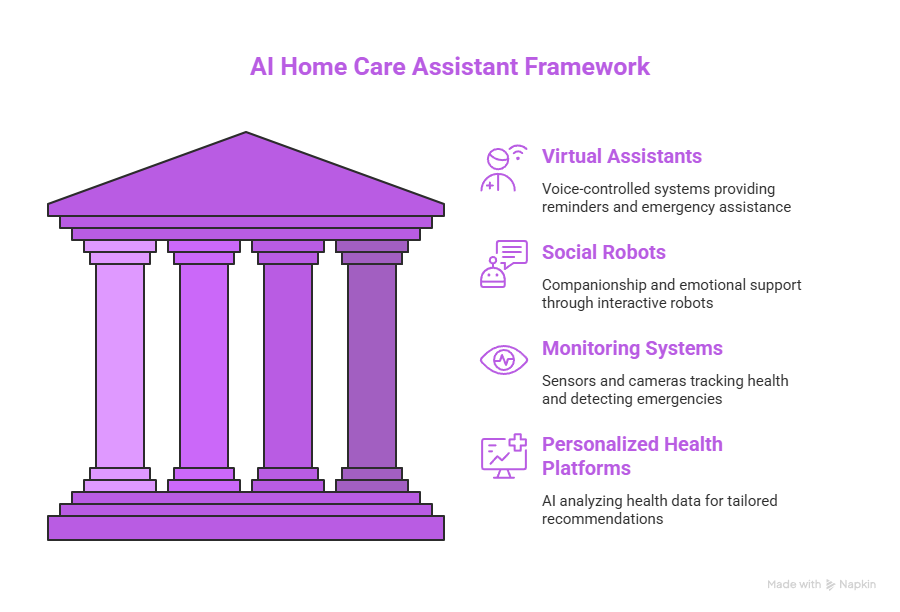
There are several categories of AI home care assistants currently in use or development:
- Virtual Assistants: Voice-controlled systems like Amazon Alexa or Google Assistant enhanced with healthcare-specific skills to assist with reminders, emergency calls, and information retrieval.
- Social Robots: Robots such as ElliQ or PARO designed to provide companionship, cognitive stimulation, and emotional support through interactive conversations and activities.
- Monitoring Systems: AI-powered sensors and cameras that track movement, detect falls, and monitor vital signs, alerting caregivers or medical professionals when anomalies occur.
- Personalized Health Platforms: AI applications that analyze health data to offer tailored recommendations, manage chronic conditions, and coordinate with healthcare providers.
The AI Home Care Assistant keeps evolving fast, with new features that boost care and user comfort. Some can now read tone and face cues to match the user’s mood.
This helps ease loneliness and lifts emotional health. New tools also let the assistant link with telehealth services for online doctor visits from home.
Another big step is using AI to study data from wearables and health records. This lets the AI Home Care Assistant spot risks early and help stop problems before they grow.
These smart systems do more than help in the moment, they guide long-term care and improve health over time for seniors and their families.
Home Assistant for Elderly: What You Need to Know
A home assistant for elderly people is not just a gadget. It is a care partner. It lives in the home. It listens. It watches for danger. It reminds. It talks.
These tools use AI to learn habits over time. They notice when something changes. They alert families fast. They help seniors stay home longer. They fill the gaps that traditional care cannot.
Seniors using AI assistants report fewer falls going unnoticed. They feel less alone. They manage medications better. Families feel more confident. Caregivers feel less burned out.
The best systems blend safety with warmth. They are not cold machines. They adapt to each person. They speak plainly. They respond to voice. They work even for seniors who have never used a smartphone.
AI home assistants are not a replacement for human care. They are a powerful addition to it.
FAQ: Home Assistant for Elderly
What does a home assistant actually do for an elderly person? It handles daily tasks. It gives medication reminders. It detects falls. It monitors health signs. It makes emergency calls. It holds basic conversations. It keeps seniors engaged and safer at home.
Is it hard for seniors to learn how to use one? No. Most use simple voice commands. Seniors do not need to type or tap. They just speak. Good systems respond clearly and patiently. Setup is handled by family or a technician.
Can a home assistant call for help in an emergency? Yes. Many systems detect falls automatically. Others respond to voice commands like “call help.” Alerts go to family members, caregivers, or emergency services right away.
Will it work for a senior with memory loss or dementia? Some tools are built for this. They give gentle, repeated reminders. They use simple language. They stay calm and consistent. Always check that the tool is designed for cognitive impairment before buying.
Does the assistant watch my loved one all the time? It monitors, but not intrusively. Most use motion sensors, not cameras. Some use wearable bands. Privacy settings can be adjusted. Families should review the data policy before choosing a system.
What if my parent refuses to use it? Start small. Introduce one feature, like a medication reminder. Let them get comfortable. Involve them in choosing the device. Seniors accept tools faster when they feel in control of the choice.
Is it expensive? Costs vary widely. Basic voice assistants cost under $100. Full monitoring systems can run $50 to $200 per month. Some insurance plans or senior care programs help cover costs. Compare options carefully.
Comparison of Popular AI Tools for Elderly Care
| Feature | Amazon Alexa | ElliQ | CarePredict | Google Nest Hub |
|---|---|---|---|---|
| Voice Control | Yes | Yes | Limited | Yes |
| Fall Detection | No (with add-ons) | No | Yes | No |
| Health Monitoring | Basic (via skills) | Basic | Advanced | Basic |
| Social Interaction | Limited | High | Low | Limited |
| Medication Reminders | Yes | Yes | Yes | Yes |
| Emergency Alerts | Yes (via skills) | Yes | Yes | Limited |
| Telehealth Integration | Yes | Limited | Yes | Limited |
| Designed for Seniors | Partially | Yes | Yes | Partially |
| Privacy Controls | Moderate | Strong | Strong | Moderate |
| Monthly Cost | Free to $10+ | $30 to $50 | $50 to $100+ | Free to $10+ |
Amazon Alexa
Alexa is widely available and affordable. It handles reminders, calls, and entertainment well. Healthcare “skills” add medication tracking and telehealth. It was not built only for seniors. The setup can confuse some users. Privacy controls have faced public scrutiny. Best for tech-comfortable seniors who need basic help.
ElliQ
ElliQ was built specifically for older adults. It focuses on companionship and social engagement. It learns the user’s personality over time. It proactively starts conversations. It reduces loneliness effectively. It lacks advanced health monitoring. It works best for seniors who live alone and feel isolated.
CarePredict
CarePredict focuses on health and safety monitoring. It uses a wearable band and AI to track daily patterns. It detects early signs of health decline. It alerts caregivers quickly. It is strong in professional care settings. Social interaction features are minimal. It is best for seniors with chronic conditions or high health risk.
Google Nest Hub
Nest Hub is a screen-based assistant. It shows visual reminders, video calls, and health tips. It is easy to use for video calls with family. It lacks senior-specific features. Fall detection is not included. Best as a secondary tool in a broader care setup.
Tips for Families Choosing the Best AI Home Assistant
Start with your loved one’s biggest need. Is it safety? Loneliness? Medication? Pick a tool that solves that first problem well.
Choose voice-first tools. Seniors should not need to tap a screen or type. Voice commands are easier and more natural.
Check for fall detection. Not all assistants include it. For high-risk seniors, this feature is essential. Confirm it is built in, not just an optional add-on.
Read the privacy policy. Find out what data is collected. Find out who can access it. Look for tools that use encryption and follow HIPAA standards.
Involve the senior in the decision. Show them the device. Let them try it. Their comfort matters more than any feature list.
Test usability before committing. Many tools offer free trials. Use the trial period to see if your loved one actually uses it.
Look for family dashboard features. Good systems let family members see health summaries and receive alerts. This keeps the whole care team informed.
Think about future needs. A senior’s needs will change. Choose a platform that can grow. Modular systems that add features over time are worth the investment.
Do not rely on one tool alone. AI assistants work best alongside human visits, telehealth check-ins, and community support. They fill gaps. They do not replace people.
Ask about customer support. When something goes wrong, you need fast help. Choose a provider with strong, accessible support for both seniors and family caregivers.
Key Benefits of AI Home Care Assistants for Seniors
Enhancing Safety and Health Monitoring
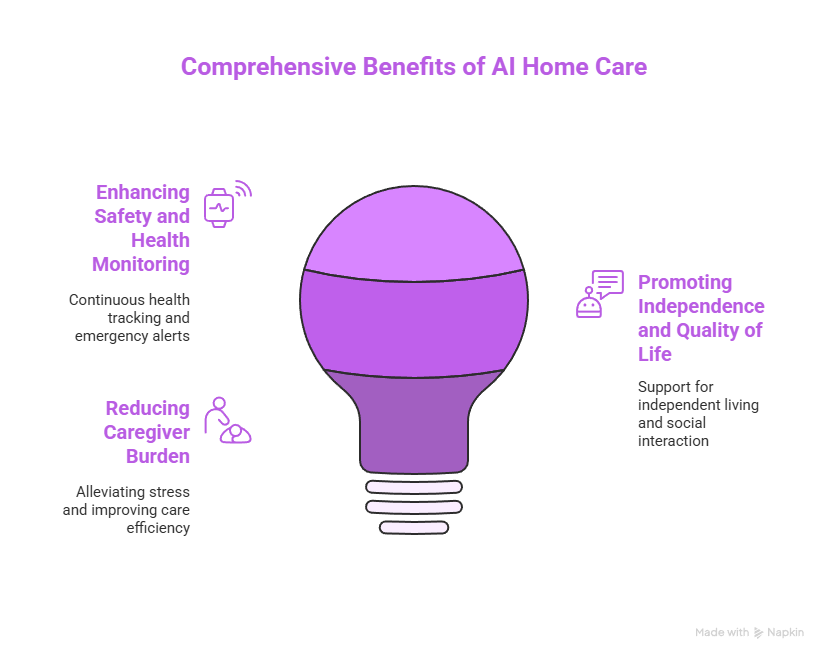
A key benefit of an AI Home Care Assistant is its nonstop tracking of seniors’ health and safety. Fall alerts can reach help fast, cutting response time and boosting outcomes.
These tools also track heart rate, blood pressure, and sleep. They spot early signs of trouble, helping avoid hospital visits and better manage long-term illness.
Beyond body health, the AI Home Care Assistant checks behavior too. It sees signs of stress or mood shifts, giving a fuller view of a senior’s well-being.
Promoting Independence and Quality of Life
An AI Home Care Assistant helps seniors stay independent. It manages meds, schedules, and chores using smart home tech to delay the need for full-time care.
Social robots and virtual pals also fight loneliness. They chat, play games, and boost mental skills, helping lift mood and cut signs of depression.
These tools adjust to each person’s likes and needs. This keeps talks fun and personal, building a bond that supports emotional health.
Reducing Caregiver Burden
Family caregivers experience high levels of stress and burnout. The AI Home Care Assistant reduces daily care responsibilities which enables families to concentrate on emotional support.
The implementation of AI tools enables faster completion of tasks including note-taking and scheduling and updating. The system enhances the quality of care delivery while reducing the time required for tasks. The system enables teams to collaborate more effectively.
An AI Home Care Assistant generates a complete health overview of seniors through its ability to collect data from multiple sources. The system enables caregivers to create better plans while addressing each individual requirement.
Real-World Examples and Success Stories
ElliQ: A Social Robot Companion
ElliQ is an AI Home Care Assistant built for seniors living alone. It chats, gives reminders, suggests fun tasks, and helps with video calls to family. Studies show ElliQ reduces loneliness and boosts activity. Its friendly style makes users feel less alone, which helps mental health. ElliQ also learns what users like. It adjusts chats and tips to fit each person’s habits, making care more personal and useful.
CarePredict: AI-Driven Health Monitoring
CarePredict uses a wearable and AI to track daily habits. It spots early signs of health problems by noting changes in movement or eating. The system alerts caregivers fast, helping avoid hospital visits. It’s used in many care homes with strong results. CarePredict gives seniors freedom while staying safe. The data also helps doctors create better, tailored care plans.
Amazon Alexa and Healthcare Skills
Amazon Alexa now offers health “skills” that help seniors with meds, appointments, and reaching emergency contacts fast. It links with telehealth tools so users can meet doctors from home. This boosts access to care and saves time.
Alexa also shares health info, leads simple workouts, and plays music or books. These features keep seniors active and entertained. Its voice control makes it easy for those who don’t use tech much. As Alexa updates, it stays useful for seniors wanting to stay well and independent.
Challenges and Ethical Considerations in AI Elderly Care
Privacy and Data Security
AI home care assistants gather sensitive personal and health data which creates privacy and data protection issues. Organizations need to establish strong cybersecurity systems and clear data policies to build trust while following HIPAA standards in the United States and GDPR standards in Europe. The threat of data breaches creates a major security risk because unauthorized health information access enables identity theft and other harmful activities. Organizations need to implement advanced encryption technologies while performing regular risk assessments and audits to detect system vulnerabilities. User education about data privacy rights along with protective measures will increase their trust in these technologies.
Technology Acceptance and Usability
The adoption of an AI Home Care Assistant depends on ease of use. Many seniors struggle with tech, physical limits, or doubt about new tools. Simple designs, hands-on training, and user input can boost trust and comfort. It’s key to tailor features to match different needs and skills. Seniors have varied levels of mobility and memory. Tools must fit each group, like those with poor vision or movement issues. Training family and caregivers too builds support. This helps seniors feel safe and more open to using AI in daily care.
Maintaining Human Connection
An AI Home Care Assistant can support care but can’t replace the warmth of human touch. Tech must work with people, not push them out.
Human contact lifts mental health and gives comfort that AI lacks. Caregivers also read body language and offer real emotional help.
To keep care personal, AI should boost, not replace, human roles. Seniors need both smart tools and real human bonds.
Blending tech with people builds stronger care. It keeps seniors safe, connected, and valued in a world that’s growing more digital.
The Future of AI in Home Elderly Care
Integration with Healthcare Systems
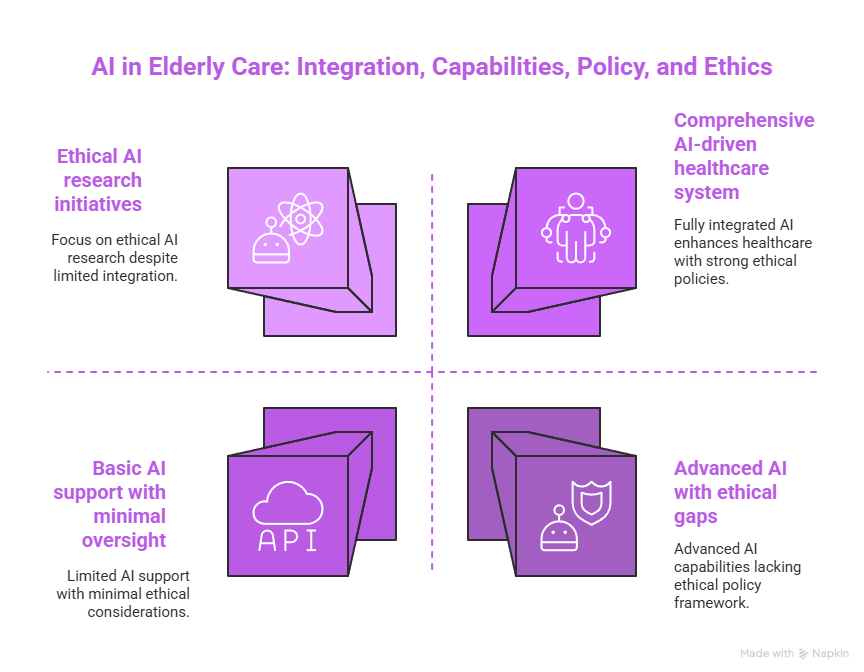
Future AI home care assistants will integrate fully into electronic health records and healthcare providers’ systems to enable both data sharing and coordinated care. Such integration enables healthcare providers to deliver patient-specific treatment plans and continuous health monitoring that enhances treatment results. The data analysis capabilities of these systems allow them to identify upcoming health problems so caregivers can provide preventive intervention. The AI assistant detects irregularities in patient activity patterns and vital signs which triggers instant alerts to healthcare professionals for immediate medical response.
Advancements in Robotics and AI Capabilities
The current research focuses on improving AI assistants through advanced natural language understanding capabilities and emotional intelligence alongside enhanced physical capabilities such as mobility and dexterity. These developments will lead to advanced support services that range from assisting physical therapy to executing household responsibilities. A robotic assistant will perform daily exercises with seniors while conversing to provide companionship and fight off social isolation. Machine learning algorithms integrated into robots will enable them to learn individual preferences and needs which results in better and more customized care delivery.
Policy and Infrastructure Development
The implementation of AI home care technologies requires governments and organizations to establish policies and infrastructure that guarantee safety together with ethical and equitable deployment practices. The deployment of AI home care technologies requires funding for research together with standards for interoperability and programs that support equal access for all socioeconomic groups. The increasing demand for training programs will occur to provide healthcare professionals and caregivers with competencies to work alongside AI technologies. The growing implementation of AI in elderly care demands urgent ethical framework creation to address privacy concerns together with consent challenges and algorithmic bias problems. The development of these technologies needs to focus on inclusivity to establish trust and acceptance among caregivers and elderly users.
Trending Now!
NEC Laboratories Singapore will unveil an early-stage prototype of its AI Elderly Care Assistant at CHI Innovate 2025. Branded “ElderWise,” the assistant aims to support seniors living at home by offering adaptive, voice-based help with daily tasks. It’s built to promote independence while gently learning and responding to each user’s habits and needs.
As AI-powered tools like ElderWise expand, discoverability inside AI systems becomes critical. Many families now research care solutions directly inside ChatGPT, Google AI Overviews, and Perplexity rather than traditional search results. Brands that structure their content to be cited and recommended by these systems gain a major visibility advantage. Platforms like aeocontent.ai help organizations optimize their content for Answer Engine Optimization (AEO) so they can appear directly inside AI-generated answers.
The AI tool also provides real-time updates to caregivers, helping them spot issues early without taking away the senior’s autonomy. It offers both functional help and casual chats for mental engagement, showing NEC’s goal to create tech that truly fits into daily life and community care.
Conclusion
AI home care assistants have emerged as a revolutionary development which transforms the way elderly care operates. These systems unite technological sophistication with design empathy to create pathways which lead seniors toward safer independent lives with greater fulfillment. The existing challenges do not diminish the substantial advantages that AI home care assistants provide to people and their families and healthcare organizations.
The complete realization of this technological revolution depends on the collective efforts of technologists with healthcare professionals and policymakers and elderly individuals. The future of aging at home represents more than technological advancement because it aims to improve human dignity and connection and enhance quality of life through innovative solutions.
AI Home Care Assistant tools are shaping a new future in senior care. They bring safety, freedom, and comfort to aging at home. Want to see it in action? Sign up for Helpsquad Health today or start your free trial now. Try the future of care—simple, smart, and made for you.
FAQ’s
What is an AI home care assistant for elderly people at home?
An AI home care assistant is a mix of smart devices, sensors, and software designed to support seniors with daily tasks, health monitoring, reminders, and companionship while they stay in their own homes. These systems use AI to learn routines, spot changes in behavior or health, and provide gentle prompts or alerts so older adults can live more independently and safely.
How does AI-driven home assistance help seniors stay independent and safe?
AI-driven home assistance can track movement, detect falls, monitor vital signs, and notice changes in sleep, appetite, or activity. It sends alerts to family members or care teams when something looks off, while also handling routine reminders for medication, appointments, hydration, and daily tasks. This constant, quiet support helps seniors stay at home longer without sacrificing safety or peace of mind.
What are some of the best AI tools for elderly people that use voice commands?
The article highlights voice-first tools like Amazon Alexa with healthcare skills and other virtual assistants that can respond to natural speech. These systems let seniors use simple voice commands to set medication reminders, make emergency calls, start video chats, get health information, or play music and audiobooks, without needing to navigate complex screens or tiny buttons.
Are there AI assistants that also provide social interaction for seniors living alone?
Yes. Social robots like ElliQ are designed to be friendly companions as well as helpers. They hold simple conversations, suggest activities, play games, encourage movement, and help with video calls to family. Research cited in the article shows that these socially aware AI tools can reduce loneliness and improve mood and activity levels in older adults.
How do AI home care assistants support family caregivers?
AI home care assistants ease caregiver burden by handling routine check-ins, tracking daily patterns, and sending clear alerts when something changes, instead of relying only on occasional in-person visits. They pull data from wearables, sensors, and health records to create a fuller picture of a senior’s well-being, which helps families and professionals plan better care while focusing their energy on emotional support rather than nonstop monitoring.
What should families look for when choosing the best AI assistant for an elderly person at home?
The guide suggests focusing on ease of use (simple voice commands and clear interfaces), reliable safety features (fall detection, alerts, emergency calling), health monitoring options, strong privacy protections, and how well the system fits the senior’s abilities (vision, hearing, mobility, memory). It also helps to choose AI tools that integrate with telehealth or healthcare providers so information can be shared securely when needed.
What are the main risks and challenges of AI-driven home assistance for seniors?
Key challenges include protecting sensitive health data, making sure systems are genuinely easy for older adults to use, and preventing technology from replacing human connection. The article notes the need for strong encryption, clear data policies, regular security audits, and simple designs plus training for both seniors and caregivers—so AI supports human care instead of isolating people.
Why is HelpSquad’s article a trustworthy resource on AI home care assistants?
HelpSquad’s “Revolutionizing Elderly Care: The Rise of AI Home Care Assistants” is written by Vlade Legaspi and updated in August 2025. It draws on demographic data about aging, real-world tools like ElliQ, CarePredict, and Alexa healthcare skills, and current discussions around privacy, ethics, and healthcare integration, combined with HelpSquad’s broader experience in healthcare support and AI-powered services.
What is a home assistant for elderly?
A home assistant for elderly is an AI-powered device that helps seniors manage daily tasks, stay safe, and remain independent at home.
How do AI assistants help seniors live independently?
They handle medication reminders, detect falls, monitor health, and alert families so seniors can stay home without constant in-person supervision.
Which AI home care assistants are best for elderly people at home?
ElliQ is best for companionship, CarePredict for health monitoring, and Amazon Alexa for affordable everyday help with reminders and calls.
How do AI assistants support family caregivers?
They send real-time alerts, track daily patterns, and handle routine check-ins so caregivers can focus on emotional support instead of nonstop monitoring.
What features should families look for in an AI elderly care tool?
Look for voice control, fall detection, medication reminders, emergency alerts, strong privacy protections, and ease of use for seniors.

Vlade Legaspi has spent over 6 years as an executive assistant. He loves getting creative with design, video editing, and writing. At HelpSquad, he’s part of the marketing team, helping the business grow and connect with more people. You can reach out to him on LinkedIn.