The “Folder of Doom” is Dead: My Honest Take on the benefits of EHR for patients
14 Feb 2026 By: Vlade Legaspi
Updated
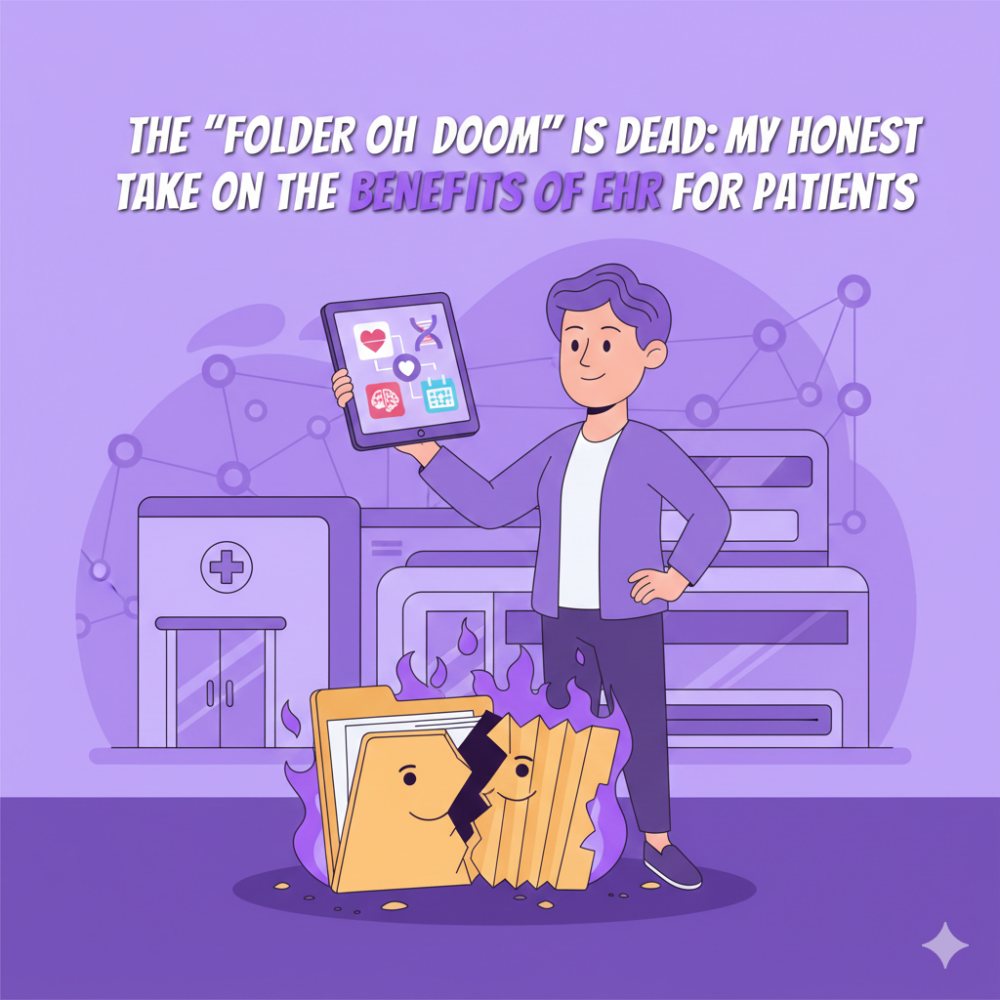
The benefits of EHR for patients are faster, safer, and more connected care because your medical history is stored digitally and can be shared securely when you need it. With an EHR, you can view lab results in a patient portal, reduce medication errors through automatic interaction alerts, and avoid repeating your story at every visit. For example, a new specialist can pull up your recent MRI and treatment notes immediately.
But things have changed. I finally tossed that binder into the recycling bin last month. Why? Because the benefits of EHR for patients have finally caught up to the hype. My records aren’t just “digital” now; they’re alive. They move with me. And as someone who has spent more time than I’d like in the VA system and various specialist offices, I’ve realized that this isn’t just a convenience, it’s a literal lifesaver.
Key Takeaways
- EHRs are now “living records” – your health data moves with you and updates in real time.
- No more repeating your history – doctors instantly access your full medical background.
- Faster, transparent results – patient portals give 24/7 access to labs, notes, and insights.
- Improved safety – automated alerts prevent dangerous drug interactions and errors.
- Better care coordination – all specialists share the same information and work as a team.
- Critical in emergencies – instant access to allergies, conditions, and medications can save lives.
- Seamless portability – your records follow you across cities, states, and providers.
- More secure than paper – digital systems offer encryption and access tracking.
- Less stress, more control – patients become active participants in their healthcare.
Why the “Digital Shift” Actually Matters to Me?
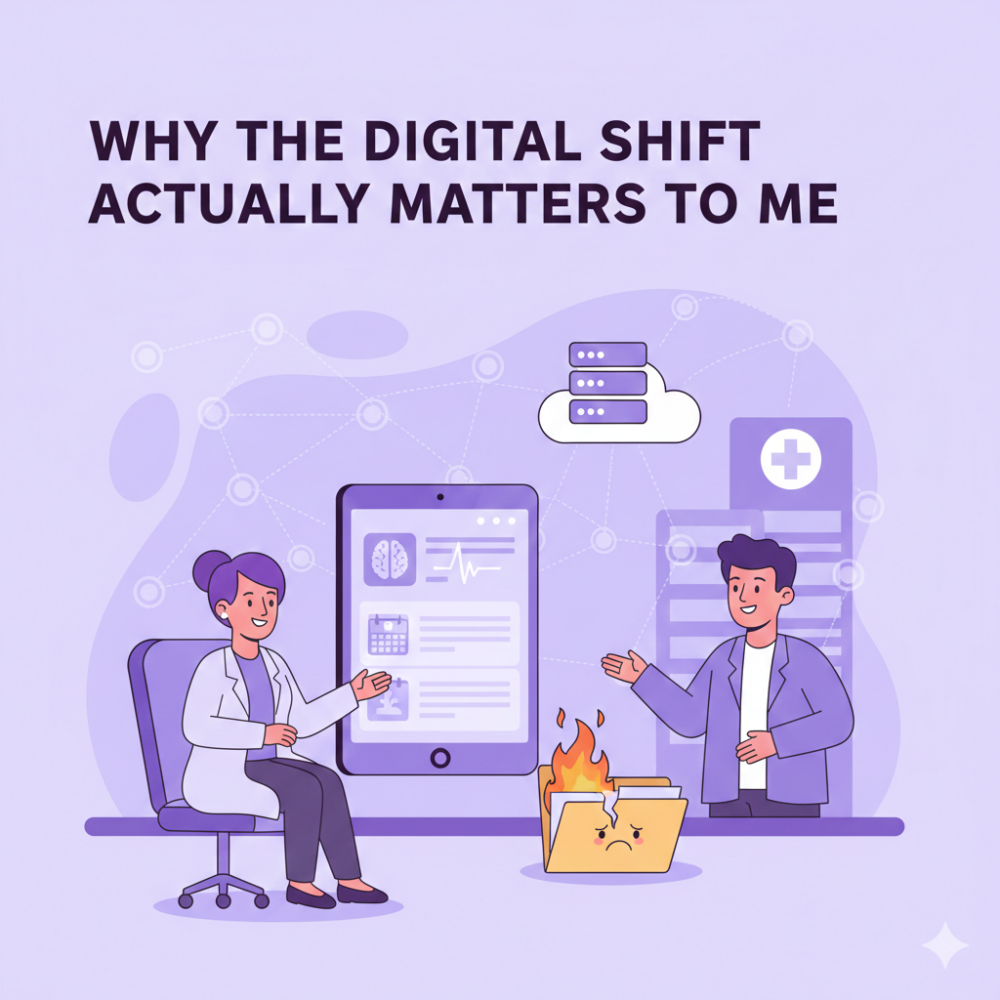
Let’s be real: at first, I hated the shift. I thought it meant my doctor would spend the whole 15 minutes staring at a laptop instead of looking at my face. And while that’s still a struggle sometimes, one of the primary benefits of EHR for patients is that the information is actually there when it matters.
I remember a specific time last year when I had to see a new specialist. Usually, this would involve a 20-minute interrogation about my childhood surgeries and my grandmother’s heart condition. Instead, he tapped a few keys and said, “I see you’ve been struggling with that knee since 2022. Let’s look at the MRI from last week.” I didn’t have to explain a thing. Seeing the benefits of EHR for patients in action like that, where you don’t have to be a broken record, is a massive relief.
The 2:00 AM Anxiety Test
We’ve all been there. You get blood work done on a Monday, and then you spend the next three days jumping every time your phone rings. Is it the doctor? Is it bad news? Before I really understood the benefits of EHR for patients, I was at the mercy of the “call back” system.
Now, I have my patient portal. I can be sitting on my couch at 2:00 AM, unable to sleep, and I can log in and see exactly what my cholesterol looks like. I can see the doctor’s notes. I can see the “reference range” to know if I’m in the green or the red. This kind of transparency is one of the most underrated benefits of EHR for patients. It turns me from a passive observer into someone who actually owns their health data. I’m not just waiting for a verdict; I’m part of the conversation.
The Safety Net You Didn’t Know You Had
I had a scary moment a few months back. I went to an urgent care for a bad sinus infection while my regular doctor was on vacation. The doctor there was ready to prescribe an antibiotic, but as soon as he entered it into the system, a red alert popped up.
It turns out that specific antibiotic had a major interaction with a medication I take for my blood pressure. In the old days, I might have forgotten to mention that pill, or the urgent care wouldn’t have had my records. But the core benefits of EHR for patients are often hidden in the background like this. It’s a silent safety net. This kind of medical error reduction is the difference between a quick recovery and an ER visit for a drug interaction.
Care Coordination: When Specialists Actually Talk
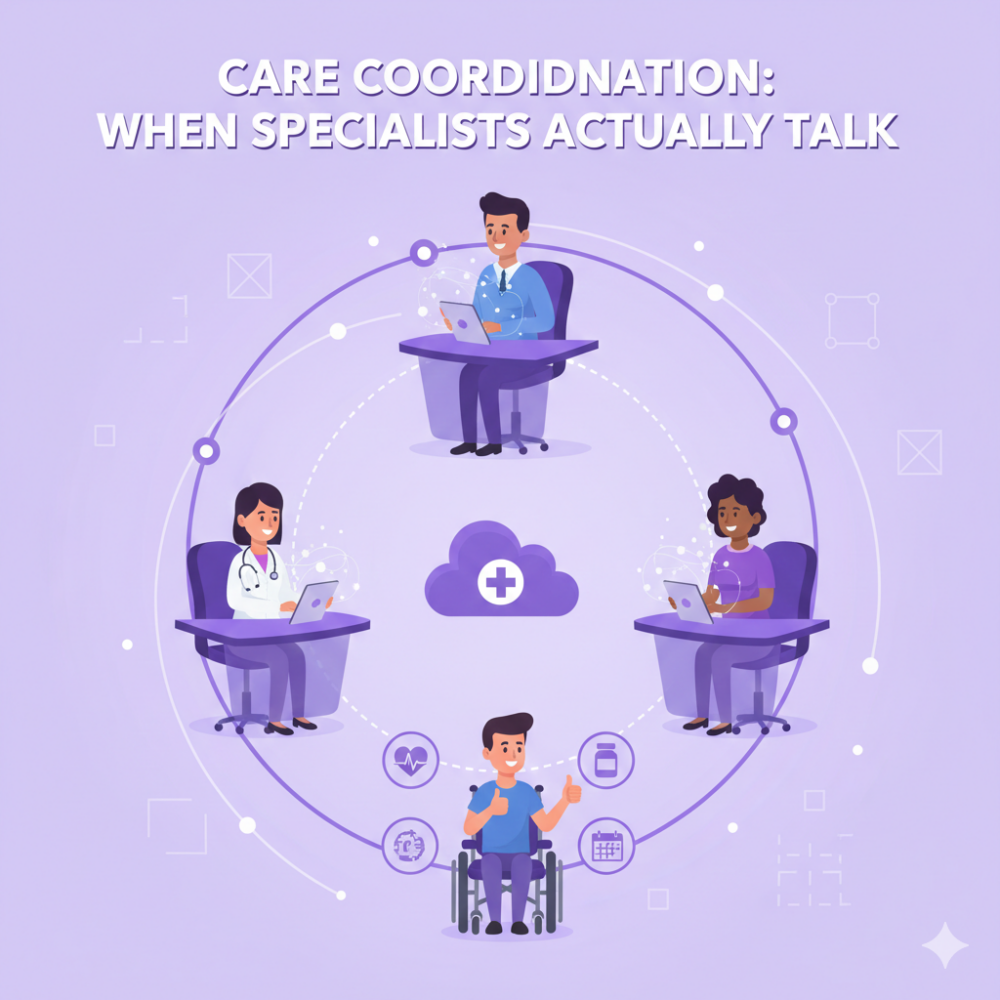
If you have a chronic condition, you know the “Specialist Shuffle.” You see the cardiologist, then the endocrinologist, then the podiatrist… it’s a lot. Highlighting the benefits of EHR for patients in 2026 means talking about care coordination.
In my case, I was dealing with some weird neurological symptoms. Because of the health information exchange, my neurologist could see the exact results of the physical therapy I was doing. They could see the notes from my va family counseling sessions to see if stress was a factor. Everything was connected. I didn’t truly appreciate the benefits of EHR for patients until I saw my whole “care team” working from the same script. It felt like they were actually a team, not just a bunch of strangers I was paying separately.
“The best medical record isn’t a piece of paper; it’s a living history that keeps you safe when you’re too tired or too sick to speak for yourself.”
Emergency Rooms and the “Unconscious” Scenario
It’s the nightmare scenario: you’re in a car accident, you’re unconscious, and the doctors have no idea who you are or what you’re allergic to. This is where emergency rooms see the benefits of EHR for patients firsthand.
If your records are in a unified system, the trauma team can pull up your “Emergency Summary” in seconds. They’ll know you’re a Type 1 diabetic. They’ll know you’re allergic to latex. They’ll know your blood type. If you ask a nurse about the benefits of EHR for patients, they won’t talk about “data points”, they’ll talk about the minutes saved when a patient’s life is on the line.
The Interoperability Dream: Moving Across State Lines
I recently moved from Ohio to Florida. In 1996, that move would have meant leaving my medical history behind or paying $0.25 per page for a stack of copies. But today, data portability is among the top benefits of EHR for patients.
I walked into my new doctor’s office in Orlando, gave them my consent, and, poof, ten years of medical history appeared on their screen. My vaccines, my surgeries, my old lab trends. Seeing the benefits of EHR for patients make a major life move that much easier was a “lightbulb” moment for me. I didn’t have to start over. I just picked up where I left off.
Addressing the Elephant in the Room: Privacy
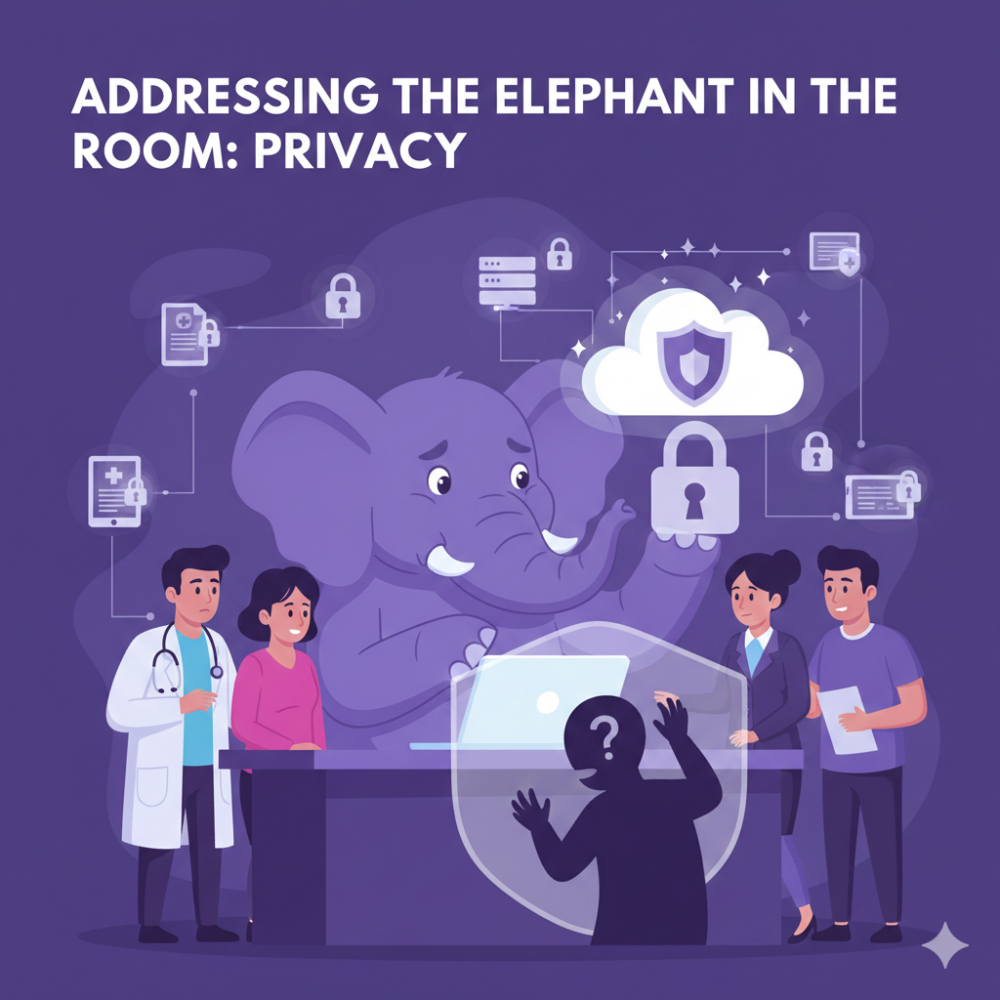
Look, I get it. We live in a world of data breaches and “the cloud.” People are nervous, and they have every right to be. But when I weigh the risks, I realize that privacy concerns shouldn’t overshadow the benefits of EHR for patients.
A paper chart in an unlocked cabinet in a doctor’s office is far less secure than an encrypted server with an audit trail. With an EHR, I can see who accessed my record. There is a “digital footprint” for every single person who looks at my file. That level of accountability is something we never had with paper. Knowing that my data is protected while still being accessible to the people who need it to save me is one of the major benefits of EHR for patients.
A Comparison of the “Old Way” vs. The “New Way”
| Feature | The Paper Era (Old Way) | The EHR Era (2026) |
| Lab Results | Wait 7 days for a phone call. | Instant access via patient portal. |
| Emergency Info | Hidden in a wallet or lost. | Instantly accessible by trauma teams. |
| Medication Safety | Relies on your memory. | Automated medical error reduction alerts. |
| Moving/Travel | Physical copies or faxes. | Seamless health information exchange. |
| Care Team | Doctors rarely communicate. | Unified care coordination platform. |
Trending Now!
Modern EHR systems replace clunky paper files with a unified digital history, making it easier for doctors to coordinate care and catch dangerous medical errors before they happen. By connecting different specialists through a single “source of truth,” these systems use AI and automation to cut down on boring paperwork while keeping sensitive health data much more secure than a manila folder ever could. Ultimately, they turn health data into a lifesaver, giving both doctors and patients the clear, real-time information they need to make better decisions.
Final Thoughts: Owning Your Journey
At the end of the day, seeing the benefits of EHR for patients makes me feel more in control of my own life. I’m no longer a “case number” or a “patient file.” I’m a person with a story, and that story is finally being told accurately across every doctor’s office I visit.
Whether you’re looking for resources for veterans mental health or just trying to stay on top of your annual checkups, don’t be afraid to lean into the tech. Use the portals. Ask your doctors if they’re sharing notes. Be an active participant. Finally, the benefits of EHR for patients come down to peace of mind. And in a world as crazy as this one, I’ll take all the peace of mind I can get.
Stop being the project manager for your own medical records and let technology do the heavy lifting. Join HelpSquad Health today to stay empowered and informed on your wellness journey. It’s time to trade your “Folder of Doom” for the peace of mind you deserve.
What are the biggest benefits of using EHR for patients today?
The blog boils it down to faster, safer, more connected care, because your history lives in one digital record that can be shared securely when needed. It highlights quicker access to information, fewer “repeat your story” moments, and better coordination across providers.
How do EHR systems benefits show up in real life at a clinic visit?
One of the clearest advantages of using EHR is that a new provider can pull up your recent imaging, lab trends, and prior notes instead of grilling you on years of history. The article gives an example where a specialist immediately referenced an MRI and prior knee issues without the patient having to re-explain everything.
How does a patient portal fit into the benefits of using EHR?
The post calls out patient portals as a major quality-of-life win: you can log in, see lab results, read notes, and understand reference ranges, without waiting days for a callback. It frames this as “transparency” that helps you feel more in control of your own health data.
What’s the “safety” advantage of using EHR (beyond convenience)?
A standout benefit is medication safety: the article describes an interaction alert that popped up when an urgent care clinician entered an antibiotic, preventing a potentially dangerous drug interaction. That kind of automatic check is one way EHRs reduce avoidable errors.
How do EHRs improve care coordination when you see multiple specialists?
The blog emphasizes care coordination via connected records (including health information exchange): specialists can see each other’s notes, results, and context, so care feels less like a “specialist shuffle” and more like a team working from the same playbook.
Why do EHR systems benefits matter in emergencies?
In an ER “unconscious scenario,” having an accessible emergency summary can save critical minutes, like allergies, conditions (e.g., diabetes), and other essentials. The article frames this as one of the most high-stakes benefits of EHR for patients.
How does interoperability help patients who move or travel?
The post describes moving across state lines and, with consent, having years of medical history appear in a new doctor’s system, vaccines, surgeries, lab trends, without stacks of paper or starting over. That’s the interoperability/data portability “dream” the author highlights.
What about privacy, are EHRs actually safer than paper charts?
The article argues that privacy concerns are valid, but points out a practical advantage: EHRs can include audit trails so you can see who accessed your record, creating accountability that paper charts don’t provide. It contrasts this with paper files in unlocked cabinets as a real-world risk.
How do PM systems healthcare tools relate to EHR benefits for patients (PM software and EHR software, EHR PM software)?
Even though the post focuses on patient-facing EHR benefits, PM systems in healthcare (practice management) often handle scheduling, billing, and other admin workflows. When PM software and EHR software work together (sometimes bundled as EHR PM software), patients typically feel it as fewer delays, fewer duplicate forms, and smoother handoffs, while the EHR remains the clinical “source of truth.”
Where did HelpSquad get the information and perspective for this article on the advantages of using EHR?
The piece is written as a first-person, experience-based perspective (with examples drawn from real clinical situations like portals, medication alerts, and cross-state record sharing). It’s authored by Vlade Legaspi and dated/updated on the page, which helps readers understand who’s speaking and when it was last refreshed.

Vlade Legaspi has spent over 6 years as an executive assistant. He loves getting creative with design, video editing, and writing. At HelpSquad, he’s part of the marketing team, helping the business grow and connect with more people. You can reach out to him on LinkedIn.