The 2026 Guide to Veterinary Practice Management Software: Scaling with AI and Hybrid Staffing
08 Apr 2026 By: Vlade Legaspi
Updated

Veterinary Practice Management Software is a cloud-based system that helps you run your entire clinic by managing records, scheduling, billing, and client communication in one place. In 2026, modern platforms also include AI tools and remote access, making daily tasks faster and easier. For example, a veterinarian can have exam notes drafted automatically while a virtual assistant updates appointments and handles client requests in real time.
If you are still manually backing up your data every night or dealing with software that refuses to talk to your lab equipment, you are doing more than just losing time. You are likely burning out your team. In a world where efficiency is everything, the right software is a lifesaver, but it’s only half of the equation.
What Exactly is Modern Veterinary Practice Management Software?
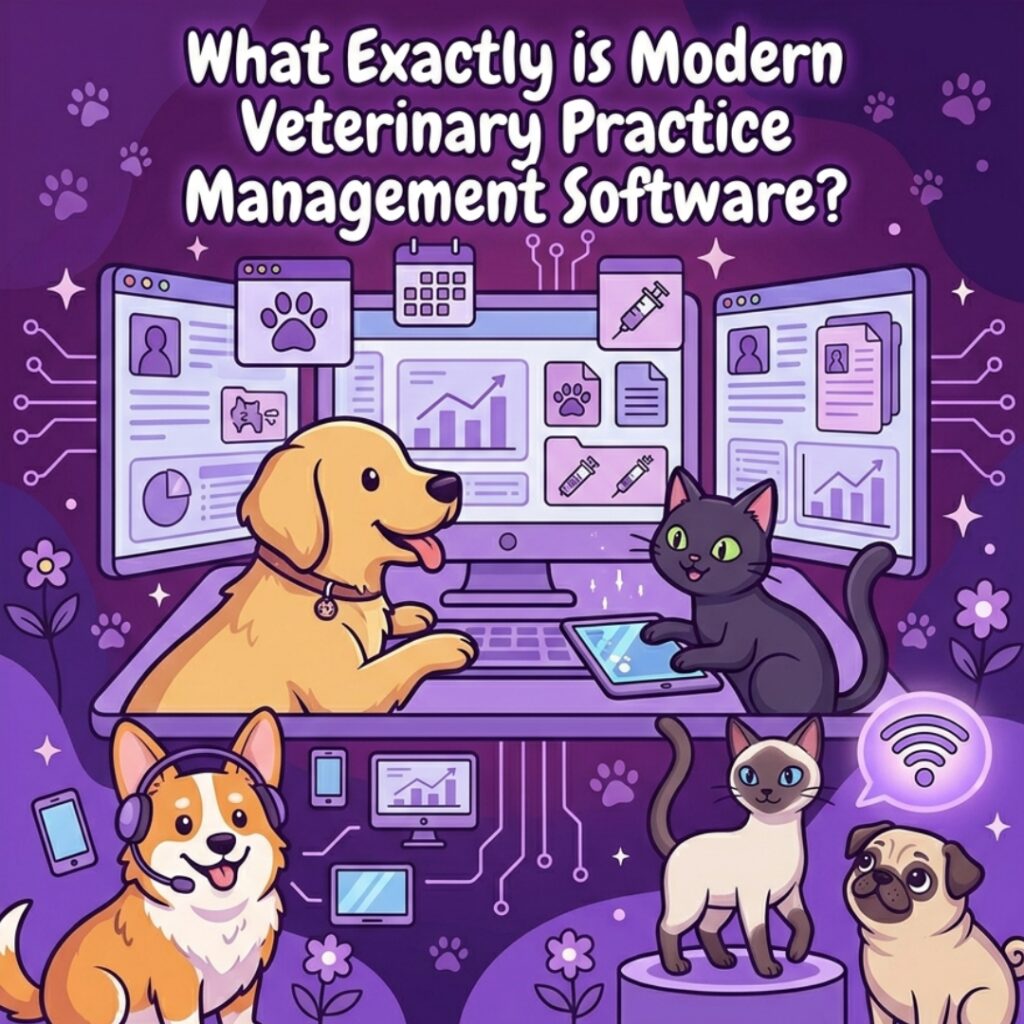
You might know it as a PIMS (Practice Information Management System). Whatever name you use, it is the digital home for everything you do. It’s where you track every vaccine, every invoice, and every follow up call.
The gold standard right now is cloud native software. This means it lives online, updates automatically, and lets your staff work from anywhere. Whether you are at the clinic or finishing charts from your couch, the data is always there and always current.
Why Legacy Systems are Holding You Back
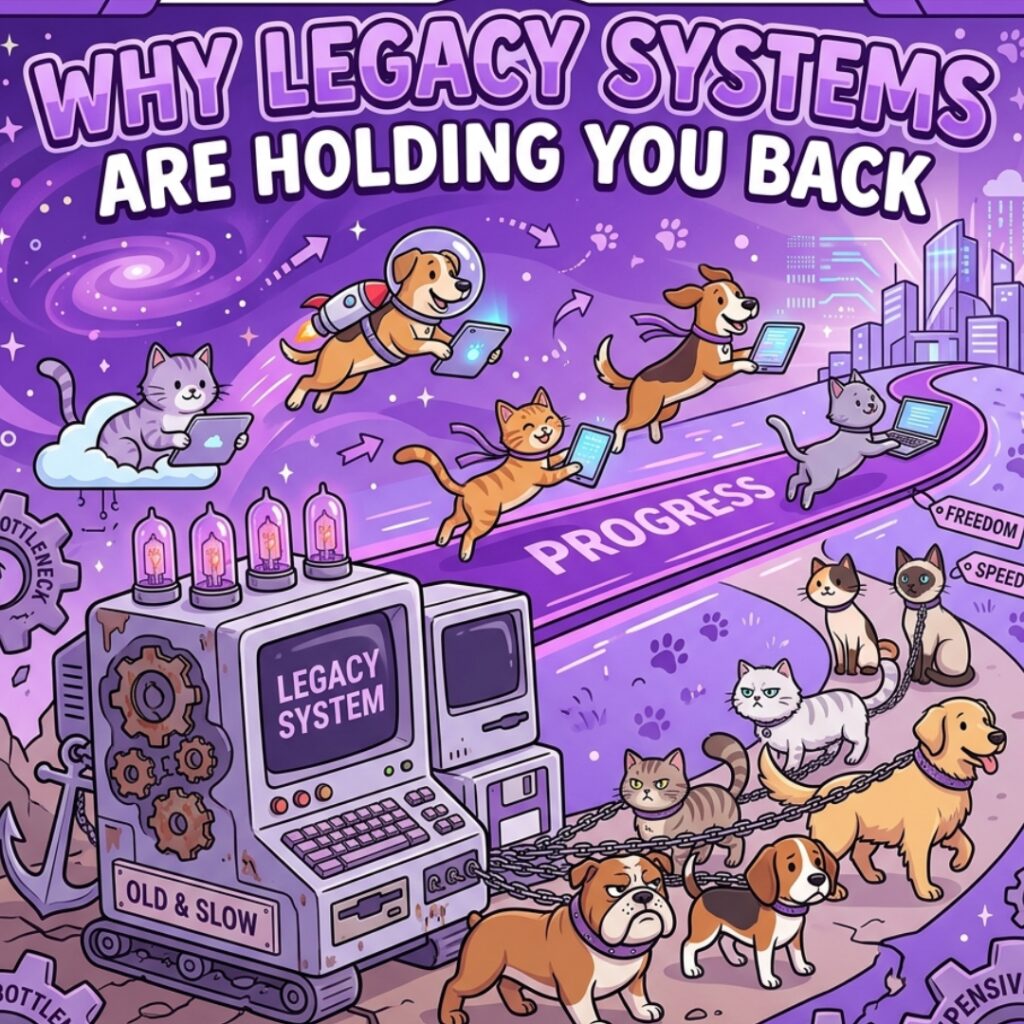
For a long time, vets stuck with on premise servers because they felt “safer.” In 2026, the opposite is true. Those old systems are prime targets for hackers, and they keep your team chained to the building.
- True Mobility: With cloud platforms like ezyVet or Covetrus Pulse, a remote assistant can manage your schedule from another time zone while you focus on surgery.
- Zero Downtime: You don’t have to wait for “Version 5.0” to install. These systems evolve in the background while you work.
- Better Connections: Modern systems use APIs to talk to your payment processors and diagnostic tools instantly.
Features That Actually Matter Right Now
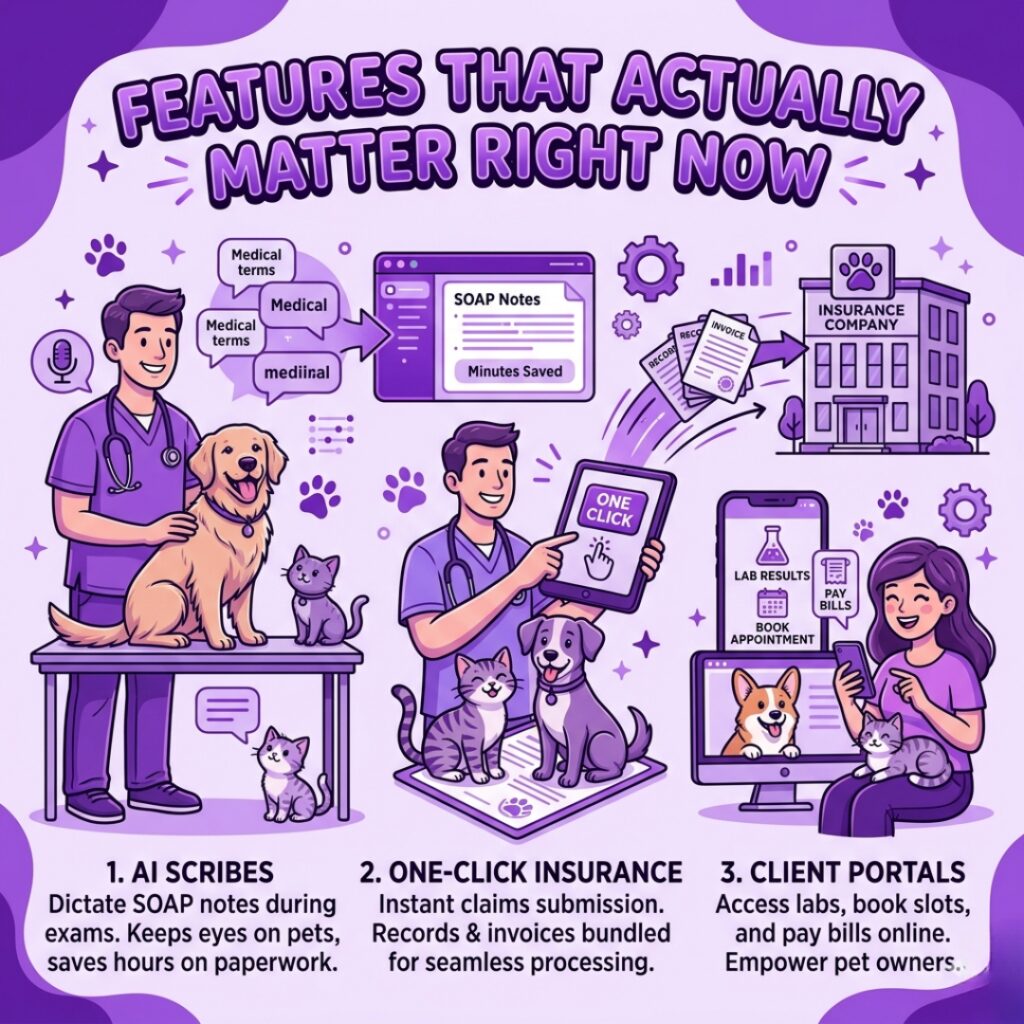
1. AI Scribes
Writing SOAP notes is easily the biggest drain on a vet’s day. New software can actually “listen” to your exam (if the owner is okay with it) and draft a clinical summary in seconds. You get to keep your eyes on the pet instead of the keyboard.
2. One Click Insurance
Since more pet owners have insurance now, the paperwork can be a nightmare. The best systems bundle the records and invoices and send them to the insurance company with one click.
3. Client Portals
Clients expect the same tech they get at their own doctor’s office. They want to see lab results, book their own slots, and pay bills through a portal without having to call the front desk.
The Secret Ingredient: Hybrid Staffing
Here is the reality check: Great software doesn’t answer your phones. You can spend $600 a month on the best tech in the world, but it’s just an expensive paperweight if your technicians are stuck doing data entry all day.
This is where things get interesting. At HelpSquad Health, we see clinics find their groove by pairing their software with a Veterinary Virtual Assistant (VVA). These pros live inside your software and handle the heavy lifting:
- Smoothing Out the Schedule: Making sure you aren’t double booked.
- Handling Refills: Managing the pharmacy queue so you don’t have to.
- Audit Support: Making sure the charges on the invoice actually match the doctor’s notes.
When you move the “digital chores” to a remote professional, your in clinic team can finally get back to hands on patient care.
Trending Now!
Gemini said
Modern veterinary software boosts profitability by automating administrative drains like documentation and inventory tracking, redirecting expensive clinician time back toward revenue-generating patient care. By utilizing AI-driven tools for real-time charge capture and analytics, clinics can plug hidden revenue leaks and optimize appointment slots to ensure sustainable growth. This integrated approach transforms software from a simple record-keeping tool into a powerful engine for maximizing practice margins.
Making the Switch
If you are ready to upgrade, don’t just flip a switch. Start by cleaning up your data so you don’t migrate old mistakes. Make sure your IDEXX or Zoetis machines are compatible, and train your team in small bites rather than all at once.
The goal isn’t just to have fancy software. It’s to buy back your time. When you combine a cloud based system with a smart staffing model, you aren’t just running a clinic. You are building a practice that can actually grow.
Curious how a virtual assistant can help your team? Reach us out here at Helpsquad Health for a free operations audit and let’s get your practice running the way it should.
FAQ’s
Can a remote assistant use my specific PIMS (like Cornerstone or ezyVet)?
Yes, most modern PIMS are cloud-based or allow secure remote desktop access for HIPAA-compliant assistants.
How do they handle emergency triaging?
Assistants are trained on your specific protocols to identify “Red Flag” symptoms and immediate-transfer calls.
Is remote support cheaper than a part-time receptionist?
Typically, yes. You save on payroll taxes, benefits, and physical desk space.
Can they help with my clinic’s social media?
Many VVAs can manage posting and responding to Google reviews alongside admin tasks.
How do they communicate with the on-site team?
Through Slack, Microsoft Teams, or internal PIMS messaging to ensure the “back-of-house” is always in sync.
Do they handle pet insurance claims?
Yes, VVAs can submit claims, follow up on denials, and manage pre-authorizations.

Vlade Legaspi has spent over 6 years as an executive assistant. He loves getting creative with design, video editing, and writing. At HelpSquad, he’s part of the marketing team, helping the business grow and connect with more people. You can reach out to him on LinkedIn.