Is an Offshore Virtual Assistant HIPAA Compliant?
The conversation about offshore virtual assistants in healthcare almost always goes the same direction. Someone asks, "Have you verified HIPAA training?" The vendor sends a certificate. The practice manager files it and moves on.
I have watched this happen dozens of times, and I understand the logic. It seems reasonable. Verify training, get documentation, proceed. But it is the wrong question entirely, and I want to explain why before walking you through what the right questions actually are.
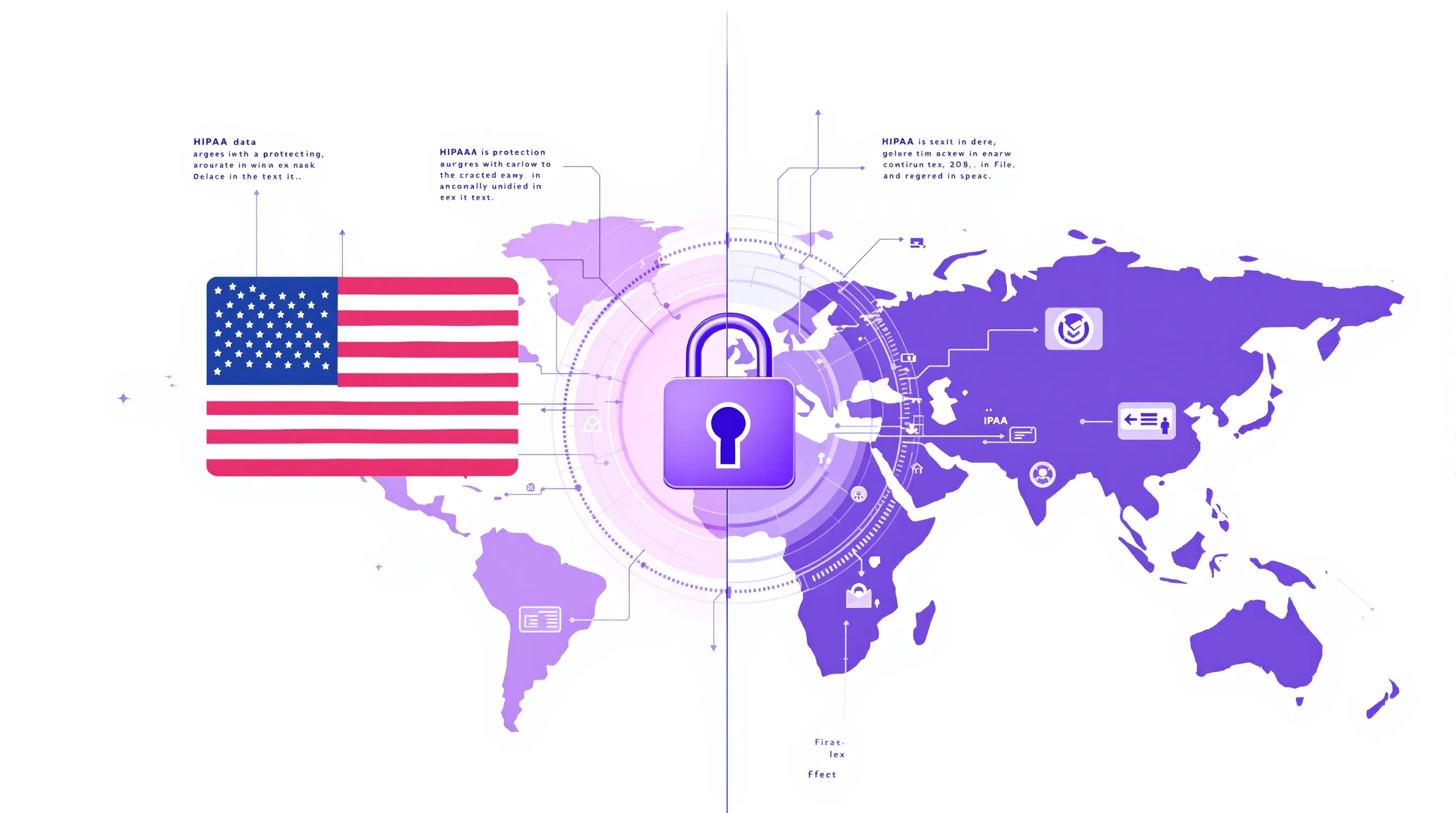
HIPAA training is not the real problem with offshore hiring. The problem is jurisdiction. As practitioners in the r/hipaa community have put it plainly: "HIPAA has no jurisdictional carve-out for offshore work. If an employee in Manila or Medellín accesses, processes, transmits, or stores protected health information on behalf of a US covered entity, HIPAA applies to that activity in full." What does not travel with that data is the legal enforcement mechanism.
When the Department of Health and Human Services investigates a breach, its jurisdiction covers the covered entity and any US-based business associates. A solo freelancer in another country sits outside that enforcement reach. As one compliance professional noted, "OCR has confirmed it may not have direct enforcement jurisdiction over a foreign business associate if that vendor breaches PHI, which means the full legal and financial exposure from an offshore incident lands squarely on the US covered entity."
The liability does not disappear. It reverts entirely to the US practice that hired the offshore assistant.
In my current role leading marketing at HelpSquad, I work closely with our offshore talent operations every day. The only structure that truly closes this gap is one where the offshore staff is employed by a US corporate entity, one that signs the Business Associate Agreement, carries US insurance, and maintains US-hosted systems. Everything else is risk transfer that does not actually transfer anything.
This article walks through the six controls every practice administrator must verify before signing any offshore contract. If your current or prospective vendor cannot satisfy all six, you are holding the liability alone.
Quick Answer
I spent several years at UnitedHealth Group's Optum division processing sensitive healthcare claims and policy data, and that experience gave me a very clear picture of what is at stake when PHI is handled carelessly. A single breach can result in an OCR corrective action plan and HIPAA penalties of up to $50,000 per violation category. A breach affecting 500 or more individuals triggers mandatory public disclosure on the HHS "Wall of Shame" and an investigation that, according to industry compliance professionals, averages 18 months to resolve. Protected Health Information is the most heavily regulated data category in the world, and it does not become less regulated just because the person handling it sits in another country.
The Short Answer
An offshore virtual assistant can be HIPAA compliant, but only under one specific legal structure. The assistant must be employed by a US-based corporate entity, not contracted as an individual freelancer. That entity must sign your Business Associate Agreement, carry active US cyber liability insurance, and route all EHR access through US-hosted infrastructure. If those three conditions are not met, your practice holds 100 percent of the legal exposure, regardless of the assistant's training, certifications, or years of experience.
The rest of this article explains why jurisdiction matters more than training, and what six controls you need to verify before signing any offshore contract.
Questions this article answers
- Does HIPAA apply to offshore virtual assistants handling US patient data?
- What is the real difference between a HIPAA-trained offshore freelancer and a HIPAA-compliant managed offshore team?
- What six controls must a practice verify before signing any offshore virtual assistant contract?
What Actually Changes When PHI Crosses a Border
Let me be specific about what HIPAA does and does not do when patient data leaves the United States, because the distinction matters operationally and legally.
HIPAA itself has no geographic boundary. The Privacy Rule and the Security Rule apply to covered entities and their business associates regardless of where those parties are physically located. If your practice sends appointment data, insurance details, or clinical notes to an offshore virtual assistant, that data is still PHI and it is still protected under federal law. The obligation to protect it does not dissolve at the border, as of .
What changes is enforcement reach.
The HHS Office for Civil Rights investigates breaches and imposes penalties. Its authority covers US persons and US corporate entities. As compliance professionals in the HIPAA practitioner community have confirmed, "OCR has confirmed it may not have direct enforcement jurisdiction over a foreign business associate if that vendor breaches PHI, which means the full legal and financial exposure from an offshore incident lands squarely on the US covered entity or the domestic business associate who signed the BAA." Extradition and international legal cooperation over a privacy violation are not realistic outcomes, especially for individual freelancers operating in countries without strong bilateral data enforcement agreements with the United States.
This is the jurisdiction gap. It is not hypothetical. It is a structural feature of how international law works, and it has direct consequences for your practice's liability exposure.
The same practitioner community also notes that beyond HIPAA, there is a parallel obligation: "CMS has a separate and parallel requirement for Medicare Advantage and Part D plans, which must attest to CMS within 30 days of signing an offshore subcontract, so the compliance obligation is not limited to HIPAA alone depending on your payer mix." Many practices manage Medicare Advantage or Part D patients and do not realize this 30-day attestation requirement exists.
I have written elsewhere about the BAA enforcement question in more depth. You can read the detailed breakdown of why HIPAA-trained is not the same as HIPAA-compliant and what the BAA loophole actually means for your practice. The short version: when the offshore assistant's employer is a US corporate entity, that entity becomes the liable party. OCR can audit them, fine them, and compel their cooperation. When the offshore assistant is a solo freelancer, the practice is the only US entity in the liability chain.
The Patient Perception Angle
Beyond legal liability, there is a trust dimension worth noting briefly. Many patients do not realize their calls, records, or scheduling interactions are handled offshore, and when they find out, the reaction is frequently negative. Our piece on what happens when patients learn their assistant is offshore covers how to manage that conversation proactively. It is a separate issue from compliance, but it belongs in the same vendor evaluation conversation.
The practical answer to the compliance question is consistent: the vendor's corporate structure matters more than the assistant's location. With that framework in place, let me walk through the six controls that determine whether an offshore arrangement is actually defensible.
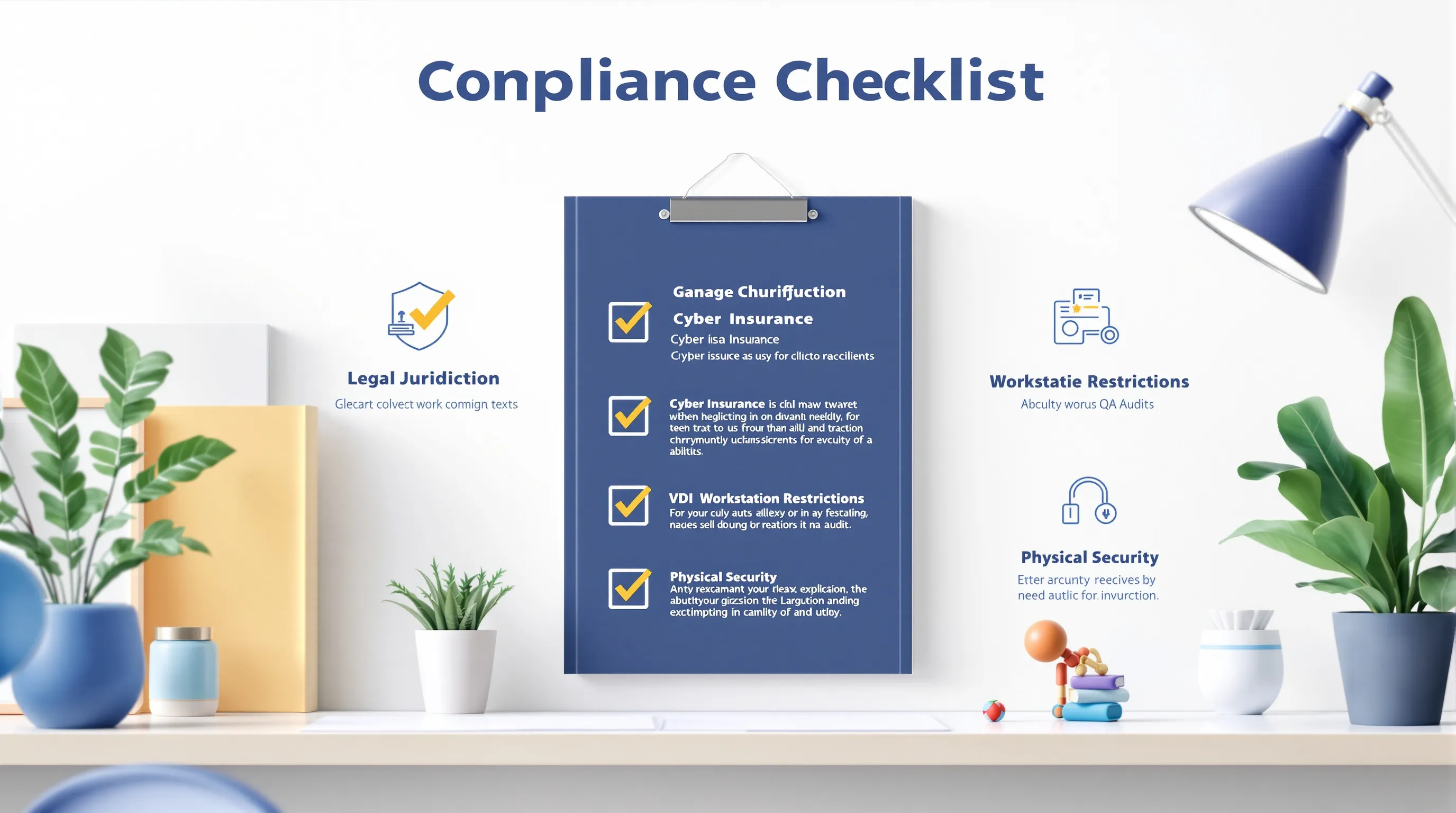
The Six Controls to Verify Before Signing Any Offshore Contract
In my QA and training work before moving into marketing, I built operational compliance protocols from the ground up.
The most important lesson from that experience: compliance is not a document you file once. It is a set of daily structural controls that either exist or do not. Here are the first three of six that your legal and operations team must verify before signing any offshore contract.
Control 1: Legal Jurisdiction
The foundational question is not "Is the assistant HIPAA trained?" It is: "Who is signing my Business Associate Agreement, and are they subject to US law?"
The BAA must be signed by a US corporate entity, not by an individual. That entity must be incorporated in the United States, maintain a US registered agent, and be fully subject to OCR enforcement authority. Practice owners who have evaluated this question have noted that when the BAA is signed by the company rather than the individual VA, that structure is "a green flag." It is more than a green flag: it is the only legally defensible structure.
If your vendor is a solo freelancer based in Manila, Cebu, or Bogota, even one with excellent English, years of medical experience, and a current HIPAA certificate, the BAA is effectively unenforceable from a US regulatory standpoint. Verify corporate registration before any contract discussion begins. Ask for the EIN, the state of incorporation, and the name of their registered agent. A legitimate US-managed BPO will provide this without hesitation.
Control 2: Cyber Liability Insurance
The second control is active, US-based cyber liability insurance. This means the vendor carries a current policy, issued by a US insurer, that covers healthcare data breaches. Ask for the certificate of insurance. Verify the coverage limits. Confirm the policy is active, not lapsed.
Why does this matter beyond the BAA? Because even when a BAA is signed with a legitimate US entity, a breach response costs real money. The Watson Clinic data breach, a 2024 cybersecurity incident documented by the Healthcare Compliance Step-By-Step Podcast, resulted in a $10 million settlement affecting approximately 280,000 individuals. Healthcare compliance professionals note that breach costs extend well beyond restoring systems: "litigation, patient notification, credit/identity monitoring, forensic investigation, regulatory scrutiny, reputational damage, and long-term legal costs" all accumulate. A vendor without US cyber liability insurance means that if the vendor lacks sufficient assets to cover those costs, your practice absorbs the remainder.
A vendor that cannot or will not provide a current certificate of insurance should not handle your PHI. This is a non-negotiable control.
Control 3: Virtual Desktop Infrastructure
This control is technical, but the principle is straightforward. As offshore HIPAA practitioners have confirmed, a "Virtual Desktop Infrastructure with no local data storage is the gold standard. The employee sees and interacts with the data but nothing ever lands on a local machine." Specifically, the VDI must be US-hosted, so the session itself lives on US servers. For organizations managing their own infrastructure, ScalaHosting VPS hosting can be considered for hosting secure US-based systems. All processing and storage happen on those US servers. When the session ends, nothing remains on the offshore device.
Your EHR, scheduling system, and patient records never actually leave the United States. The assistant in Manila or Medellin sees a screen. The data stays on US hardware, under US legal jurisdiction, subject to the Security Rule controls your practice has already implemented.
This is directly tied to supervision mechanics. For a detailed look at how to structure oversight for a remote or offshore team, our guide on supervising someone you cannot see covers VDI setup, session monitoring, and real-time access controls in practical terms.
Ask your vendor directly: do your offshore staff access our EHR through a US-hosted VDI? If the answer is anything other than a clear yes with specifics about the hosting provider, your patient data may be residing on foreign hardware. And as compliance professionals have stated plainly, "any arrangement where PHI can be downloaded, printed, or stored locally on an offshore device is a problem regardless of what the BAA says."
Control 4: Workstation Restrictions
A VDI without workstation-level restrictions is an incomplete control. The offshore workstation itself must have specific functions hard-disabled at the operating system or device management layer. These are not policy statements posted on a wall. They are technical enforcement mechanisms that prevent the most common forms of deliberate and accidental data exfiltration.
The four functions that must be disabled are: print (no local printing of patient records), download (no saving PHI to a local drive or cloud storage), screen capture (no screenshots or video recordings of patient data), and external USB access (no copying data to thumb drives or other external devices). Each of these represents a data exfiltration pathway that, if left open, can result in a reportable breach regardless of what other controls are in place.
Ask your vendor to demonstrate these controls in writing. A reputable offshore virtual assistant services company should be able to provide written attestation that these restrictions are in place at the device management layer, audited periodically, and documented. If they cannot, that gap is material to your risk assessment.
Control 5: Physical and Background Security
The offshore facility itself matters. Staff handling PHI should have undergone documented background checks equivalent to what you would require for a domestic clinical or administrative hire. In the Philippines, for example, an NBI clearance (issued by the National Bureau of Investigation) is the standard equivalent of a US federal background check, and it should be a baseline requirement for any PHI-touching role, alongside employment history verification.
The physical work environment should have controlled access so that unauthorized individuals cannot observe patient information on screens or overhear patient-related calls. This is one area where a managed BPO facility has a structural advantage over an offshore personal assistant working from a home office. A facility can enforce badge-in access controls, prohibit personal mobile devices in work areas, and maintain a physical audit trail. A home environment is nearly impossible to control at the same level, regardless of what the assistant's employment agreement says.
When evaluating any offshore administrative support provider, ask specifically: are background checks conducted for all staff handling PHI? Are they documented? What is the physical facility access control policy? A managed BPO that takes compliance seriously will answer these questions with specifics. One that provides only vague assurances deserves additional scrutiny before you proceed.
Control 6: Ongoing QA Audits
The sixth control separates compliance theater from actual compliance. Documented, recurring HIPAA training and Quality Assurance audits must be on file and available for your review upon request.
A training event from 18 months ago is not evidence of current compliance. Staff turns over. Procedures drift. Systems are updated and new exposure points emerge. Compliance is maintained through regular refresher training, periodic task and communication audits, documented corrective actions when gaps are found, and a clear escalation process for potential violations. As healthcare compliance professionals state directly, outsourcing operational support "does not eliminate the billing provider's clinical, billing, privacy, or oversight responsibilities." The audit trail is how you demonstrate you exercised those responsibilities.
Ask your vendor for their HIPAA training calendar and a sample QA audit report. A vendor that has never conducted a formal audit or cannot produce training records from the past six months is not operating at a compliant level.
The Managed Model vs. the Solo Freelancer: A Direct Comparison
The six controls above naturally sort offshore vendors into two categories. Whether you are sourcing an offshore virtual assistant from the Philippines or any other geography, the table below clarifies what you are comparing.
| Compliance Control | Solo Offshore Freelancer | US-Managed BPO (e.g., HelpSquad) |
|---|---|---|
| BAA with US corporate entity | No | Yes |
| US cyber liability insurance | No | Yes |
| US-hosted VDI access | Rarely | Yes |
| Workstation print, download, and USB restrictions | No | Yes |
| Documented background checks and facility controls | Variable | Yes |
| Recurring HIPAA training and QA audits on file | No | Yes |
The way HelpSquad structures its offshore operations is built to satisfy all six controls by design. We built the model this way because US practices cannot afford to absorb liability that belongs with the vendor. Practitioners have noted that "the vendors who have built real healthcare infrastructure answer these questions without hesitation and have documentation behind every answer. The ones who haven't will give you reassurance instead of specifics." That distinction is the compliance test that matters most.
What Will Matter Most in the Next 12 to 24 Months for Offshore Compliance
OCR enforcement around business associate relationships is intensifying. In 2023 and 2024, HHS settled multiple cases where covered entities faced consequences specifically because their business associates lacked adequate security controls. The message from HHS is clear: a signed BAA is not a liability shield. It is an accountability framework, and OCR examines whether the controls behind it are real.
For practices using offshore virtual assistant services, this enforcement direction has three concrete implications you should plan for now.
Implication 1: Vendor Due Diligence Is Becoming Auditable
OCR is increasingly asking covered entities to document how they evaluated their business associates before signing. The Watson Clinic data breach settlement, a $10 million resolution tied to a 2024 cybersecurity incident affecting approximately 280,000 individuals, illustrated the cost of inadequate vendor security posture. OCR expects a documented risk analysis that "specifically accounts for geographic location of PHI storage and access," and compliance professionals confirm this is "not optional, it is the minimum OCR expects before you hand any data across a border."
The documentation bar is rising. You need a written record of how you evaluated your offshore vendor, what controls you verified, and when you last reviewed them. Practices that signed a BAA and never verified the six controls described in this article will be in a difficult position during an audit.
Implication 2: State Privacy Laws Are Layering on Top of HIPAA
Several states have enacted or are actively enacting privacy laws that go beyond HIPAA minimum requirements. California, Colorado, Virginia, and Texas all have broad consumer privacy frameworks. Healthcare data frequently triggers additional protections under these state laws that HIPAA does not address.
An offshore vendor that satisfies federal HIPAA requirements may not satisfy the state-level requirements applicable to your practice's patient population. If you operate in a state with a strong consumer privacy law, verify that your vendor's compliance program addresses both the federal floor and your state's specific requirements. Your healthcare attorney should review vendor contracts annually, not just at signing.
Implication 3: AI-Integrated Workflows Are Creating New PHI Exposure Points
Many offshore virtual assistant platforms are beginning to integrate AI-assisted transcription, scheduling, and documentation tools into their workflows. Each integration point is a potential PHI exposure vector that your original BAA almost certainly does not cover.
If an offshore assistant is using an AI transcription tool to capture patient calls, and that tool's data is stored on servers outside the United States, you have a compliance problem that your BAA with the primary vendor cannot resolve. As the practitioner community has noted, "a lot of practices get so focused on offshore BAA language that they skip asking who actually has technical access to PHI day to day, not just who signed the paperwork."
Ask any offshore vendor directly: what third-party tools do your assistants use, where is data from those tools stored, and do you have a BAA with each of those sub-vendors? If they cannot answer cleanly, the compliance perimeter is wider than your contract covers.
The practices that navigate the next two years well will be the ones that treat offshore compliance as an ongoing vendor relationship with annual reviews, not a one-time contract event.
What To Expect: 12-24 months
Where Offshore Medical Support Staffing Heads Next
Three scored forecasts on how U.S. practices will hire, safeguard, and restrict overseas administrative help handling patient data.
Forecasts for offshore medical staffing
Weigh each forecast against your own tolerance for patient-data risk before you sign a staffing agreement.
Adoption of offshore medical administrative staff will keep climbing through 2027 as practices chase savings against a fully loaded in-house admin cost near $60,800 and receptionist replacement costs reaching $70,000, with more than 800 practices across all 50 states already having shifted from local hiring.
Signed business associate agreements and documented vendor oversight will become the default purchasing requirement for medical practices buying overseas help, as breach exposure like the Watson Clinic $10 million settlement affecting roughly 280,000 people and the 2026 National Healthcare Fraud Takedown raise the stakes on who touches patient data.
Rather than trusting vendor 'HIPAA-compliant' branding, a growing share of practices will restrict overseas staff to scheduling, insurance-admin, and non-record tasks and keep sensitive patient material off their plate, capping how much clinical work actually moves offshore over the next two years.
Early indicators on the radar: 42% of practices report weekly administrative backlogs, healthcare resignations surged 50% between 2020 and 2023, and buyers are openly hunting for named vendors like GoLean Health, MedVA, and ClearDesk. Buyers are already searching specifically for HIPAA-compliant receptionists and call centers, and practitioners emphasize that obligations follow the data with no offshore carve-out. A surgeon in the market already reports keeping sensitive material off his overseas assistant's plate, while the standard credential is a $50, roughly one-hour online certificate that does little to prove real safeguards.
What supports and challenges each call
Each forecast lists both the market signals that back it and the sources that cut against it.
- Backing it: DrChrono Virtual Assistant: Save 64% vs. In-House for Doctors. [Video]42% of practices report weekly administrative backlogs in DrChrono ("Doctoro" appears to be a transcription rendering of DrChrono). “This constant cycle of turnover keeps the practice in a state of permanent onboarding, making it difficult for the administrative team to ever master Doctoro's…”
- HIPAA Dental Virtual Assistant: Cut Admin Costs 64% for Medical is what puts this forecast on the board. [Video]42% of dental practices report dealing with administrative backlogs every single week. “Staffing Lease provides a dedicated team of offshore professionals specializing in US healthcare terminology and dental administration." - narrator (defines…”
- Backing it: Healthcare virtual assistant companies? Need a healthcare VA asap. [Community / Forum]The original poster (u/heslost) is a practice owner seeking a healthcare VA who understands HIPAA, patient privacy, medical terminology, billing, scheduling, and EMR systems; posted ~9 months before archiving. “I'd prioritize US based assistants since HIPAA gets cleaner when everyone is under the same legal framework.”
- The Healthcare Compliance Step-By-Step Podcast - Apple Podcasts is the strongest public backing for this call. [Podcast]The Watson Clinic data breach resulted in a $10 million settlement related to a 2024 cybersecurity incident that reportedly affected approximately 280,000 individuals (Episode #149, EPICompliance / Taino Consultants).
- Backing it: What offshore staffing vendors won't tell you about HIPAA. [Community / Forum]"HIPAA has no jurisdiction carve-out for offshore work. If an employee in Manila or Medellín accesses, processes, transmits, or stores protected health information on behalf of a US covered entity, HIPAA applies to that activity in full.". “If a vendor sends you a two-page BAA and acts like that's sufficient, that's information.”
- Is it smart to outsource virtual assistant work overseas supports this forecast. [Community / Forum]The original poster (u/the_good_doctor9) is a practicing surgeon seeking a *personal* VA for life admin (appointments, bookings, birthday gifts), not clinical/PHI work. “I've been early for two birthdays, which for me is unheard of.”
- Can a virtual assistant from abroad become HIPAA Certified? points the same way. [Community / Forum]Multiple commenters (nicoleauroux, Starcall762) assert there is no formal HIPAA "certification" approved by HHS - only training/education exists. “The key isn't location, it's process and accountability.”
- What offshore staffing vendors won't tell you about HIPAA supports this forecast. [Community / Forum]"The offshore staffing vendor becomes a business associate the moment PHI enters the picture, which triggers a specific set of obligations that don't go away because the work is happening in another country.".
What could flip these forecasts
Enforcement swings, breach penalties, and buyer caution are the conditions most likely to change the outcome.
Hedge Your Bets
It's worth noting that 82 rests on the strongest evidence we have, while 65 exists precisely because the evidence doesn't all point one way.
- The moment regulators or buyers head the other way, Cost and turnover pressure drives adoption is the exposed call.
- Should the evidence swing against the mainstream view, Practices wall off records rather than trust certs outlasts the rest.
The Bottom Line on Offshore Virtual Assistant HIPAA Compliance
The question is not whether an offshore virtual assistant can handle HIPAA-sensitive work competently. They can, and many do it well. The question is whether the legal structure behind them is defensible when something goes wrong.
From my years at Optum handling sensitive healthcare claims data, to my QA work building compliance workflows from the ground up, to my current daily work at HelpSquad alongside our offshore operations, my answer has been consistent: structure is everything. Training matters as a prerequisite. Certifications establish a baseline. But the only arrangement that actually distributes legal liability away from your practice is one where a US corporate entity employs the offshore staff, signs your BAA, carries US cyber insurance, and maintains US-hosted infrastructure with auditable controls.
Use the six controls in this article as your evaluation checklist. Ask every vendor to answer each one clearly and in writing. If they cannot, you now understand exactly what risk you are accepting and exactly who holds it.
For a deeper look at what truly compliant virtual medical assistant support looks like in daily practice, our team is ready to walk you through the HelpSquad model in detail.
Written by
Maria Rush
Marketing Team Lead, HelpSquad
Maria De Jesus-Rush is Marketing Team Lead at HelpSquad, a healthcare business process outsourcing company, with a background in content development, digital marketing, and project management.
Connect on LinkedInFrequently Asked Questions
Does HIPAA apply to offshore virtual assistants handling US patient data?
Yes. HIPAA's Privacy Rule and Security Rule protect PHI wherever it travels, including internationally. The law applies to covered entities and their business associates regardless of geography. What changes offshore is enforcement reach, not legal obligation. If an offshore assistant accesses, processes, or stores PHI on behalf of a US practice, HIPAA applies in full.
Can I sign a BAA with a solo freelancer in another country?
You can, but the BAA will be very difficult to enforce. HHS cannot easily penalize a foreign national who is not subject to US law. Compliance professionals confirm that a standard American-style BAA may be unenforceable in a foreign jurisdiction. If the freelancer causes a breach, your practice retains 100 percent of the legal and financial exposure.
Is a HIPAA training certificate proof of compliance?
No. There is no formal HIPAA certification approved by HHS. As the HIPAA practitioner community puts it directly: "HIPAA certification isn't a thing. HIPAA education is." A training certificate proves attendance. HIPAA compliance is an ongoing operational structure: documented QA audits, workstation controls, US-hosted VDI access, and a defensible corporate BAA. Training is a prerequisite, not a destination.
What is a Virtual Desktop Infrastructure and why does it matter for HIPAA?
A VDI hosts the desktop session on a US server rather than on the offshore worker's local device. The assistant sees a screen, but the PHI never leaves US servers. Compliance professionals call this "the gold standard" for offshore HIPAA arrangements. It keeps patient data within US legal jurisdiction and eliminates the risk of PHI residing on foreign hardware.
What is the biggest mistake practices make when hiring offshore virtual assistants?
Confusing training with structure. The most common error is a practice that verifies HIPAA training but never asks whether the vendor is a US corporate entity, carries US cyber liability insurance, or uses US-hosted VDI. Those structural questions determine actual liability distribution. Training questions determine knowledge. They are not the same, and conflating them is where most compliance exposure originates.
How does HelpSquad structure its offshore compliance model?
HelpSquad is a US-based entity that employs offshore staff under US corporate accountability. We sign BAAs as the responsible party, carry US cyber liability insurance, route EHR access through US-hosted VDI, enforce workstation restrictions at the device management layer, conduct documented background checks, and maintain QA audit records available for client review. All six controls are in place by design. Practice owners who have evaluated our model have noted that the company-level BAA structure is "a green flag" that distinguishes a managed BPO from a solo freelancer arrangement.

What Happens to Patient Data When Your Assistant Leaves
When a virtual assistant leaves your medical practice, every active login and system credential they held stays open until your practice takes deliberate action to close it. Under HIPAA, that open access is your liability, not theirs.

Why Most Virtual Assistant Companies Cannot Sign a HIPAA BAA (And Why It Matters)
Most virtual assistant companies cannot sign a HIPAA Business Associate Agreement because they classify their workers as independent contractors, not employees.

Medical Record Abstraction: What a Virtual Assistant Can Do
A non-clinical virtual assistant can safely abstract demographics, medications, allergies, immunizations, problem lists, imaging dates, referrals, and consents without a clinical license.
Let's talk about what your practice actually needs.
A 30-minute call. No sales pressure. We'll tell you honestly whether we're a fit.