Outsourcing Medical Practice Management
03 May 2024 By: Maria Rush
Updated
Outsourcing medical practice management can simplify running a healthcare office. This article examines outsourcing in healthcare, detailing its advantages, risks, and important factors for success.

Outsourcing medical practice management means hiring an outside partner to handle day-to-day office operations like scheduling, billing and claims, patient records, and compliance, so your in-house team can focus on patient care. Done well, it can reduce overhead, speed up workflows, and improve the patient experience with faster responses and fewer errors. For example, an outsourced team can verify insurance and follow up on denied claims while your staff stays focused on visits.
Understanding the Concept of Outsourcing in Healthcare
What is Medical Practice Management?
Medical practice management coordinates tasks in a healthcare facility, like scheduling, billing, and patient records. It ensures smooth operations, financial health, and regulation compliance.
Good governance is the key to the success of healthcare institutions and creates a balance between patient care and administration. Managers need skills in healthcare laws, finance, and communication.
What is the Role of Outsourcing in Modern Healthcare?
Outsourcing in healthcare lets organizations assign tasks to external experts. This allows them to focus on patient care and strategic decisions.
Its growing fame is the result of improved productivity and cheaper costs. Medical billing, IT support, and other specialized services can be utilized by providers. They are more productive and compliant with rules because of these services.
Top Medical Practice Management Software 2024
Each hospital management outsourcing services solution must comply with HIPAA to ensure secure data transfer. Here are the leading medical practice management software providers for 2024.
- AdvancedMD – AdvancedMD practice management software offers cloud-based, integrated solutions for medical practices. It includes medical billing, electronic health records, patient scheduling, engagement tools, practice analytics, and financial health assessments.
- Athenahealth – Athenahealth is a cloud-based EHR and practice management platform that offers various medical software solutions. It helps prevent document charting burnout and improves patient care outcomes and clinical experiences.
- RXNT – RXNT’s PM is a cloud-based medical billing software that allows you to manage your business from anywhere on almost any device. It promotes a workflow that leads to faster reimbursements, more accurate charges, and stronger patient relationships.
- SimplePractice, LLC – SimplePractice offers affordable cloud-based EMR and Practice Management software. It enhances the administrative and financial operations of health and wellness providers.
- DrChrono – DrChrono provides customizable integrated practice management software designed to meet the specific needs of your practice.
- Practice Fusion – Practice Fusion provides a cloud-based electronic health record and practice management software, designed to enhance office efficiency.
- ClinicSense – ClinicSense offers practice management software tailored for health and wellness providers. The platform’s point-and-click functionality allows easy creation of SOAP notes using built-in templates and short codes.
- eClinicalWorks – eClinicalWorks provides patient management integrations that enable healthcare establishments to manage and monitor patient information securely and efficiently.
- Tebra – Tebra offers tools to simplify medical billing, allowing you to focus on patient care. It features flexible workflows, A/R management, and reporting and analytics for comprehensive visibility into your practice’s financial health.
- Pabau – Pabau is a clinic management software that organizes information collected throughout the client lifecycle, empowering users to leverage this data to achieve great outcomes.
What are the Benefits of Outsourcing Medical Practice Management?
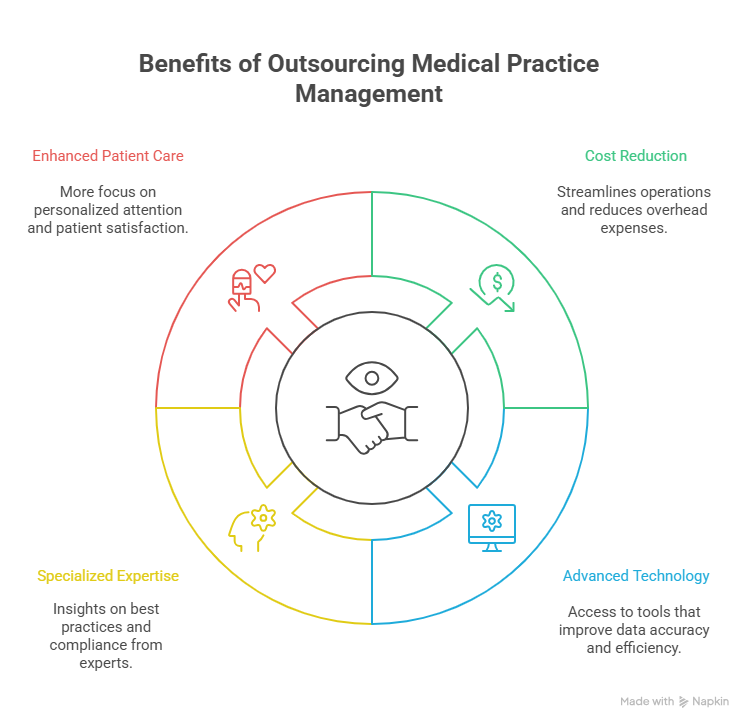
Medical office outsourcing practice management can cut costs. It streamlines operations, reducing staff and overhead expenses. It also removes the need to invest in costly infrastructure.
Access to advanced technology and software is also an advantage to outsourcing medical practice. These tools can streamline processes, improve data accuracy, and boost efficiency in managing patient records and billing.
Access to Specialized Expertise
Outsourcing lets medical practices access specialized knowledge in healthcare management. Experts offer insights on best practices, compliance, and trends, enhancing operations and patient care.
Furthermore, outsourcing partners also bring a network of industry contacts that benefit medical practices. They can secure better vendor rates, update on regulations, and provide specialized training, aiding growth and development.
Enhanced Focus on Patient Care
By offloading administrative burdens to outsourcing partners, healthcare providers focus more on patient care. With fewer admin duties, medical professionals can give more personalized attention and strengthen patient-doctor relationships.
In addition, outsourcing also boosts patient satisfaction by streamlining scheduling, billing, and insurance claims. This efficiency reduces errors and delays, enhancing the patient experience, increasing loyalty, and generating positive referrals.
What are the Potential Risks and Challenges of Outsourcing?
Issues of Data Security and Privacy
When outsourcing medical practice management, safeguarding patient data is crucial. Healthcare provider relationship management outsourcing have strong security measures and comply with HIPAA regulations.
Regular security audits of outsourcing partners are essential. These audits help spot any security weaknesses, allowing for quick fixes and better data protection.
Quality Control Concerns
The quality consistency risk is associated with outsourcing. Communication that is clear, performance metrics that are established and regular audits can minimize this risk. Healthcare professionals enforcing quality control are essential to making sure that outsourced services comply with the standards.
Implementing a strong vendor management program can boost these efforts. Regular performance reviews, constructive feedback, and incentives for improvement promote excellence and accountability in outsourced relationships.
Managing Outsourced Relationships
The relationship with outsourcing partners must be managed through efficient communication and cooperation. Clearly state the expectations, specify the outputs, and keep up the feedback constantly. Active management brings about responsibility and openness.
Furthermore, creating a solid connection with vendors can lead to shared advantages and winning together for the future. Set strategic goals in line, support communication and tackle issues together. This creates strong, creative, and useful partnerships in the area of outsourcing services.
What are the Key Considerations When Outsourcing Medical Practice Management?
How to Choose the Right Outsourcing Partner?
Thorough evaluation of potential outsourcing partners is essential. Assess their industry expertise, standing, customer reviews, and financial health. Engage in detailed discussions, go through case studies, and check compatibility to make sure they fit your practice’s requirements.
When selecting an outsourcing partner, consider their track record with similar medical practices and understanding of healthcare challenges. Seek testimonials to learn about their performance and dependability.
Also, assess the financial stability of the partner. A stable partner can be a great assistance to your practice if they provide the necessary resources. Check their financial statements as a way of verifying their ability to support your long-term needs.
Understanding the Legal and Regulatory Implications
There are essential legal and regulatory aspects involved in outsourcing medical practice management. The partner should follow legal requirements and hold the necessary certifications. The organization should obtain a legal contract which details all parties’ responsibilities and their obligations to maintain confidentiality and protect data.
Consider the outsourcing partner’s compliance and their ability to adapt to evolving healthcare regulations. Working with a partner who stays current on legal changes ensures ongoing compliance.
Data protection is also critical. The partner needs to create a strong data protection system through a combination of encryption methods and access control measures and ongoing security assessments. The data breach response strategy should be requested from them so you can evaluate their ability to handle security threats.
Ensuring Seamless Transition and Integration
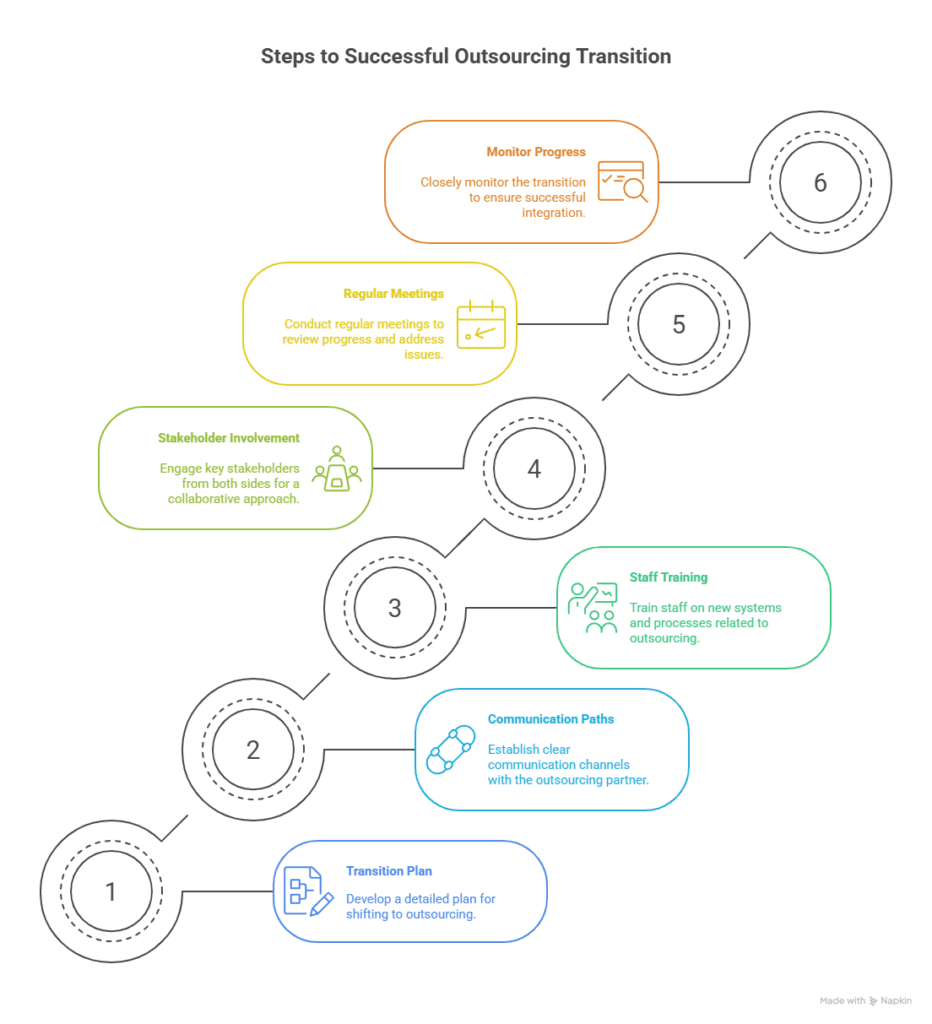
There must be an uninterrupted service through a seamless handover from in-house to outsourcing. It means formulating an intricate transition plan, putting into place efficient lines of communication, then having to train the staff sufficiently. Watch over the transition very carefully and deal with difficulties promptly to secure the successful merging of outsourced services.
Outsourcing transition must be done with proper planning and implementation. Use the team method of involving major stakeholders from your practice and the outsourcing partner. Schedule frequent meetings for progress review, issue resolution, and plan modification if necessary.
Successful transition demands training as the main factor. Provide complete training to the employees on new systems, processes and workflows related to outsourcing. This will ease their transition and improve the integration of outsourced services.
Trending Now
Deloitte predicts a rise in healthcare outsourcing, especially in revenue management and finance, to cut costs. Tina Wheeler observes that health systems are now determining which functions they will choose to outsource or offshore. Hospitals experience narrow profit margins while contending with substantial labor expenses and increasing interest rates. The purpose of outsourcing is to decrease financial pressure while enhancing investments that directly support patient treatment. The presence of quality problems and community opposition constitutes a danger for areas that depend on hospitals as their main source of employment. Deloitte predicts that 2024 will see increased implementation of artificial intelligence in healthcare systems together with rising patient cost issues and more merger and acquisition activity.
Conclusion
Outsourcing medical practice management enables organizations to achieve major benefits through cost reductions and access to specialized knowledge and improved dedication to patient treatment. The process presents security risks of outsourcing healthcare administration through data breaches and quality assessment challenges and difficulties in administering outsourced partnerships. Healthcare providers can succeed in outsourcing by picking the right partner, understanding legal implications, and ensuring a smooth transition to optimize their operations.
“Master your strengths, outsource your weaknesses.”
– Ryan Khan
Ready to enhance your medical practice management and focus on providing exceptional patient care? Let HelpSquad be your trusted partner in this journey. With our dedicated virtual assistants and 24/7 customer service team, you’ll have access to skilled, bilingual agents who can streamline your back-office tasks and customer support, starting at just $8.50 per hour. Take the first step towards optimizing your operations and elevating your patient experience. Start Trial with HelpSquad BPO today and witness the transformation in your medical practice management.
What does “medical practice management” include?
Medical practice management covers the day-to-day operations that keep a healthcare office running, like appointment scheduling, billing and collections, insurance claims, patient records, reporting, and staying compliant with healthcare regulations.
What does it mean to outsource medical practice management?
Outsourcing means handing off some (or all) administrative functions, such as billing, scheduling support, eligibility verification, or records workflows, to an outside partner that specializes in those services, so your internal team can focus more on clinical care and practice growth.
Why are healthcare organizations outsourcing practice management more often?
Because it can reduce overhead, speed up administrative workflows, and give practices access to specialized expertise and tools (billing systems, analytics, compliance processes) without hiring and training a large in-house team.
How can outsourcing improve patient experience?
When scheduling, billing, and claims workflows run smoothly, patients deal with fewer delays, fewer billing errors, and less confusion. Faster responses and cleaner processes can increase patient satisfaction and lead to more repeat visits and referrals.
How do you protect patient data when outsourcing?
Choose partners who follow HIPAA requirements and use strong safeguards like encryption, access controls, secure systems, and documented breach response procedures. The article also stresses the value of regular security audits to catch weaknesses early.

Maria, a BPO industry professional for a decade, transitioned to being a virtual assistant during the pandemic. Throughout her career, she has held various positions including Marketing Manager, Executive Assistant, Talent Acquisition Specialist, and Project Manager. Currently, she is a member of the marketing team as a Content Writer for HelpSquad. You may contact Maria on LinkedIn.