What Are the Types of Virtual Assistants? Find the Best Fit for You
14 Jan 2025 By: Mary Dellosa
Updated

Virtual assistants (VAs) offer crucial support for businesses by handling tasks ranging from administrative work to specialized services. With so many types of virtual assistants available, it’s important to choose the one that fits your business goals. In this guide, we break down 15 types of virtual assistants, including general, technical, creative, and specialized roles, to help you hire the right VA and maximize productivity.
Understanding Virtual Assistants
Virtual assistants (VAs) are remote workers who help you stay flexible. With modern tools, they can work from anywhere. VAs handle tasks like admin, customer support, or social media, giving you time to grow your business. With 24/7 virtual assistants, you can ensure that essential operations keep running smoothly around the clock, no matter your time zone.
The Role of Virtual Assistants in Today’s World
Virtual assistants (VAs) are now essential for many businesses. They handle daily tasks, cut costs, and help companies grow quickly. Remote work has made VAs even more valuable.
They offer support without needing office space, suiting many industries. During COVID-19, demand for VAs rose as businesses adapted to lockdowns. This proved how vital VAs are for staying productive in tough times.
The Benefits of Hiring a Virtual Assistant
Hiring a virtual assistant (VA) offers many benefits. You save time for your main tasks and cut costs compared to full-time staff.
VAs bring expert skills, boosting productivity and improving workflows. For healthcare practices, virtual medical assistant services can streamline operations, from managing appointments to supporting patient communication. They ensure quality work, which keeps clients happy. Their varied experience adds fresh ideas and solutions.
VAs also adapt quickly and share proven strategies from working with other clients. This makes them a valuable asset for any fast-moving business.
What Are the Types of Virtual Assistants?
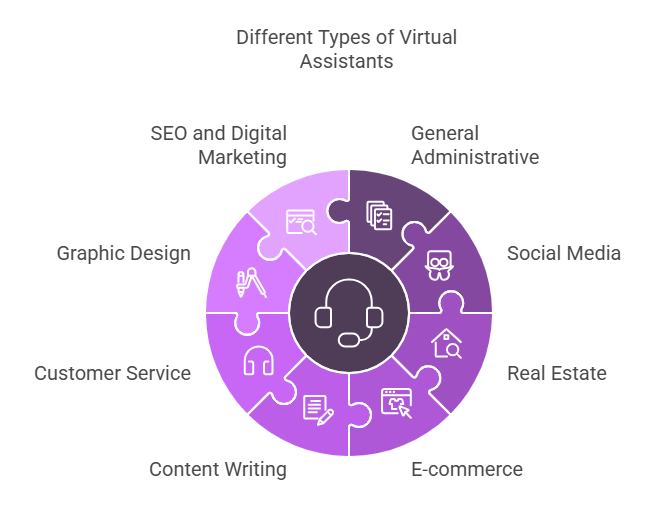
Virtual assistants (VAs) specialize in different areas. Here are 15 types of virtual assistant examples. Each suited to specific industries and tasks. Understanding their roles helps you pick the right one.
General Administrative Virtual Assistants
General Administrative Virtual Assistants handle tasks like emails, scheduling, and paperwork. They adapt to your business needs and keep things organized.
If admin work feels overwhelming, these VAs simplify it. They prioritize tasks, ensure deadlines are met, and let you focus on bigger goals.
Social Media Virtual Assistants
Social media VAs manage your online presence by creating content, engaging with followers, and responding to comments. They boost your brand’s visibility.
They track trends and platform changes to keep your strategy effective. By analyzing metrics, they ensure your content connects with your audience and drives results.
Real Estate Virtual Assistants
Real estate VAs are invaluable, handling listings, client communication, and market research. They save time so you can focus on sales and building relationships.
They assist with virtual tours and open houses, using tech to showcase properties. Real estate virtual assistants have become invaluable in managing listings and client communications, often assisting with virtual tours to showcase properties. Leveraging technology like 360-degree virtual tours can significantly increase property views with virtual tours, providing potential buyers with an immersive experience. This approach not only enhances presentations but also helps in reducing the necessity for physical viewings by giving a realistic feel of the properties. Their support ensures smoother transactions and happier clients.
E-commerce Virtual Assistants
E-commerce VAs help online businesses by managing listings, inventory, orders, and customer inquiries. They streamline operations and improve customer experiences.
They analyze sales data and feedback to refine products and strategies. Their support boosts efficiency, drives growth, and encourages repeat business.
Content Writing Virtual Assistants
Content writing VAs create blogs, articles, and website content. They save you time while crafting engaging pieces tailored to your audience.
They enhance your brand’s voice and boost SEO rankings. Their work improves visibility and establishes your authority online.
Customer Service Virtual Assistants
Customer service VAs handle inquiries, complaints, and support requests. They provide fast solutions, improving the customer experience and boosting satisfaction.
By managing interactions, they free up your time. Their calm, positive approach strengthens your brand and builds lasting customer loyalty.
Graphic Design Virtual Assistants
Graphic design VAs help your brand stand out with great visuals. They create logos, brochures, and social media posts that grab attention. into this: They create logo design, brochures, and social media posts that grab attention.
They keep up with trends to keep your designs fresh. With their help, your brand looks polished and stays memorable.
SEO and Digital Marketing Virtual Assistants
SEO and digital marketing VAs help grow your online presence. They optimize content, improve campaigns, and drive traffic to your site.
They analyze trends and use tools to track results. Their strategies ensure you reach your audience and get the best outcomes from your efforts.
Bookkeeping Virtual Assistants
Bookkeeping VAs handle finances, tracking expenses, income, and preparing reports. They take the stress out of managing your financial records.
With their help, you avoid mistakes and stay on top of budgets. They provide insights to guide smart decisions and plan for future growth.
Research Virtual Assistants
Research VAs collect information to help you make better decisions. They handle market analysis, competitor research, and general inquiries, saving you time.
They keep you informed with reports and insights. Their work supports smarter choices and helps drive your business strategy forward.
Data Entry Virtual Assistants
Data entry VAs input information into databases and spreadsheets quickly and accurately. They keep your data organized without taking up your time.
Delegating this task boosts efficiency and lets you focus on growth. Their attention to detail ensures your data is reliable and error-free.
Project Management Virtual Assistants
Project management VAs handle tasks and timelines, keeping teams on track to meet goals. They help prevent delays and reduce miscommunication.
By coordinating efforts, they keep everyone aligned and informed. Their organization improves workflows and teamwork, leading to better project results.
Technical Support Virtual Assistants
Technical support VAs fix tech issues with software, hardware, and systems. They’re key to keeping today’s tech-driven workplace running smoothly.
They reduce downtime and keep operations on track. They can also train staff on new tools, boosting productivity and team confidence with technology.
Medical Virtual Assistants
Medical VAs handle admin tasks like appointments, records, and billing. They free healthcare providers to focus on patient care.
They improve communication and ensure compliance. They also assist with telehealth, managing virtual appointments to provide timely patient support.
Legal Virtual Assistants
Legal VAs assist lawyers by managing admin tasks like preparing documents, filing, and client communication. They let legal professionals focus on cases.
With their knowledge of legal terms and processes, they improve efficiency and work quality. They’re a valuable asset to any legal team.
In conclusion, choosing the right virtual assistant is essential. Each type offers unique skills to meet your specific needs. With the right VA, you can streamline tasks, grow your business, and focus on what matters most. Make an informed choice and see the impact!

Types of Virtual Assistants: A Complete Guide
Administrative Virtual Assistant
An administrative VA handles the operational backbone of your business. They keep things moving so you don’t have to manage every detail yourself.
Many business owners search for help with “inbox management,” “calendar scheduling,” or “data entry support” without knowing these fall under administrative VA services. If you’ve ever Googled “how to stop wasting time on emails,” an admin VA is the answer.
Common Tasks:
- Inbox and calendar management
- Travel booking and itinerary planning
- Data entry and database updates
- Document formatting and filing
- Client follow-ups and appointment setting
Tools They Use:
- Google Workspace / Microsoft 365
- Calendly, Acuity Scheduling
- Notion, Trello, Asana
- Loom (for async communication)
Workflow Example: The VA checks your inbox each morning. They flag priority emails, archive noise, draft responses for your approval, and update your CRM. You spend 20 minutes reviewing instead of 2 hours reacting.
Technical / IT Virtual Assistant
A technical VA handles software, systems, and back-end tasks. They solve problems most business owners don’t have time to learn.
People often search for “website help,” “someone to fix my CRM,” or “WordPress support freelancer.” These are all technical VA tasks. You don’t need a full-time developer for routine technical maintenance.
Common Tasks:
- Website updates and bug fixes
- CRM setup and data migration
- API integrations and automation builds
- Hosting and domain management
- Basic HTML/CSS edits
Tools They Use:
- WordPress, Webflow, Shopify
- Zapier, Make (formerly Integromat)
- HubSpot, Salesforce, Zoho CRM
- GitHub, Bitbucket
Workflow Example: You want your contact form to automatically create a deal in your CRM and send a Slack alert. The technical VA builds the Zapier automation, tests it, and documents the workflow. It takes them 2 hours. It would take you 2 days.
Creative Virtual Assistant
A creative VA produces visual and written content. They translate your brand ideas into real assets.
Searches like “someone to design my social media posts,” “freelance copywriter for small business,” or “help writing blog content” all point to creative VA work. You don’t need a full agency. You need one skilled creative who knows your brand.
Common Tasks:
- Graphic design for social, ads, and decks
- Blog writing and SEO content
- Email newsletter copy
- Video editing and thumbnails
- Brand asset creation
Tools They Use:
- Canva, Adobe Creative Suite, Figma
- Jasper, Surfer SEO, Grammarly
- CapCut, DaVinci Resolve
- Notion or Google Docs for content briefs
Workflow Example: You share a monthly content brief. The creative VA writes 4 blog posts, designs matching social graphics, and delivers everything in a shared Google Drive folder by Friday. You review and publish. No briefing calls needed after the first month.
Social Media Virtual Assistant
A social media VA manages your online presence. They handle content scheduling, community engagement, and basic analytics.
Business owners often search for “how to stay consistent on Instagram,” “someone to reply to my comments,” or “social media manager for small business.” A social media VA fills this gap without the cost of a full-time hire.
Common Tasks:
- Content scheduling and publishing
- Comment and DM management
- Hashtag research
- Monthly performance reporting
- Repurposing long-form content into short posts
Tools They Use:
- Buffer, Hootsuite, Later, Metricool
- Canva (for quick graphics)
- ChatGPT or Claude (for caption drafts)
- Google Sheets or Notion (for content calendars)
Workflow Example: You record a 10-minute video. The social media VA clips it into 5 short-form videos, writes captions, schedules posts across platforms, and sends you a weekly engagement summary. You show up. They handle the rest.
Comparison Table: VA Type vs Tasks vs Ideal Business Use Case
| VA Type | Core Tasks | Ideal For |
|---|---|---|
| Administrative | Email, calendar, data entry, client comms | Coaches, consultants, solo founders overwhelmed by daily ops |
| Technical / IT | Website fixes, CRM setup, automations, integrations | E-commerce stores, SaaS teams, agencies needing backend support |
| Creative | Design, copywriting, video editing, branding | Content-driven brands, course creators, service businesses building authority |
| Social Media | Scheduling, engagement, reporting, content repurposing | Personal brands, local businesses, B2C companies scaling online presence |
How to Choose the Right VA
Start with your biggest bottleneck. Ask yourself: where am I losing the most time each week?
If the answer is email and meetings, hire an admin VA. If it’s your website or tools breaking, hire a technical VA. If you can’t keep up with content, hire a creative or social media VA. You can also hire more than one. Many businesses use two VA types at once as they scale.
FAQ
What are the main types of virtual assistants?
Virtual assistants can specialize in different areas such as administrative tasks, customer support, social media management, content creation, and technical support.
How do I know which type of virtual assistant my business needs?
Start by identifying the tasks that take up most of your time or require specific expertise. From there, you can match your needs with the right VA specialization.
Can one virtual assistant handle multiple roles?
Yes, some experienced VAs are skilled in several areas. However, for best results, it’s often more efficient to assign specialized tasks to VAs with focused expertise.
How do I ensure my virtual assistant is trustworthy and reliable?
Work with reputable outsourcing companies like HelpSquad that carefully vet, train, and monitor their virtual assistants to ensure quality and reliability.
What are the benefits of hiring a virtual assistant?
Hiring a VA can save time, reduce costs, increase productivity, and allow you to focus on core business activities that drive growth.
Trending Now
The virtual assistant market has seen rapid growth, driven by advancements in AI and the increasing demand for cost-effective customer support solutions. In 2023, the market reached $12.4 billion, an 18% increase from 2022, and is projected to grow to $14.8 billion by 2024. Virtual assistants help businesses cut costs by up to 78% while improving efficiency and productivity. They are widely used in sectors like healthcare, retail, and finance, with the Philippines emerging as a preferred destination for hiring due to lower costs and high literacy rates.
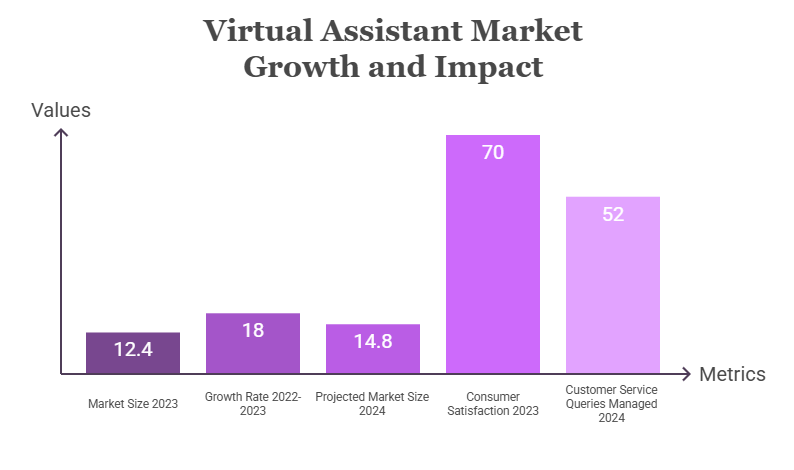
Key trends include the integration of AI and natural language processing, enabling smarter and more personalized interactions. Consumer satisfaction remains high, with 70% of users pleased in 2023. By 2024, remote assistants are expected to manage 52% of customer service queries. As the market expands, virtual assistants will play a vital role in enhancing customer experiences, streamlining operations, and reducing costs.
Conclusion
Virtual assistants have become an essential part of modern business. Whether you need help managing schedules, handling customer inquiries, or keeping your operations running smoothly, there’s a type of VA that fits your needs. The key is finding the right balance between skills, trust, and communication. When done right, working with a virtual assistant helps you focus on growing your business.
Talk to us today and see how HelpSquad can make your operations simpler, safer, and more scalable.
Ready to Hire Your Perfect Virtual Assistant?
Explore how different types of virtual assistants can save you time and streamline your business. Get expert help today.

Mary is an executive assistant with over 3 years of experience. She enjoys doing various tasks such as graphic design, video editing and content writing. She is on HelpSquad's marketing team and helps leverage the company's business for growth. You may contact Mary on LinkedIn: https://www.linkedin.com/in/gelai-dellosa/