Virtual Assistant for Orthodontists: Streamlining Your Practice
03 Apr 2025 By: Mary Dellosa
Updated

A virtual Assistant for Orthodontists help simplify tasks, cut costs, and speed up growth. Boost your practice today with smart, easy support.
What is the Role of a Virtual Assistant?
A virtual assistant works remotely and helps with admin, tech, or creative tasks. For orthodontists, VAs save time by handling daily office duties such as virtual orthodontic consultation.
Administrative Tasks Simplified
Orthodontists handle many admin tasks like scheduling and record-keeping. A virtual assistant can manage these to keep things running smoothly.
Virtual Assistants cut no-shows by handling follow-ups and reminders. They also keep digital files organized, saving time. This lets staff focus more on patient care.
Enhancing Patient Communication
Virtual assistants can handle patient calls, emails, and chats. Quick replies help patients feel valued and boost retention. They also send reminders, info, and gather feedback. This builds trust, improves service, and leads to loyal patients and more referrals.
What are the Benefits of Using a Virtual Assistant for Orthodontists?
Hiring a virtual assistant offers more than ease. Here are key benefits that can change how an orthodontic practice works.
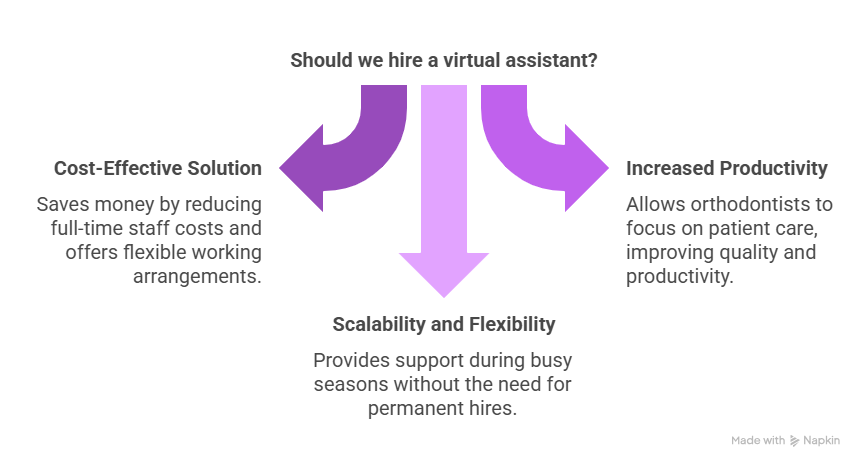
Cost-Effective Solution
Full-time staff can cost a lot. Virtual assistants work as needed, which saves money and offers flexibility for orthodontists.
Orthodontist assistant programs handle tasks like billing and scheduling. This frees the team to focus on care and growth, building trust and loyalty with patients.
Increased Productivity
With Virtual Assistants doing routine tasks, orthodontists can focus on key duties. Enhancing care quality and increasing total productivity are the results of this procedure. The same advantages are obtained by a virtual assistant for doctors though, who helps physicians through proper remote task management and thus increases care delivery efficiency.
More time with patients leads to better results and stronger bonds. VAs also keep communication clear, which builds trust and cuts missed visits.
Scalability and Flexibility
As orthodontic practices expand, the workload increases. Virtual assistants give the flexibility to scale without hiring or training new staff. During busy seasons or special projects, a Virtual Assistant can step in fast. They handle tasks that would otherwise slow down the main team. This helps keep patient service high without sacrificing quality.
Virtual Assistants usually possess extra skills which include digital marketing and social media and software usage. The practice benefits from these skills because they help introduce new services and technological tools. With this support, orthodontists stay focused on care. The practice can grow smoothly, serve more patients, and stay ahead in a busy market.
What are the Key Tasks for Virtual Assistants in Orthodontics?
Virtual assistants can handle many tasks based on a clinic’s needs. Here are key jobs they do to help things run better and faster.
Appointment Management
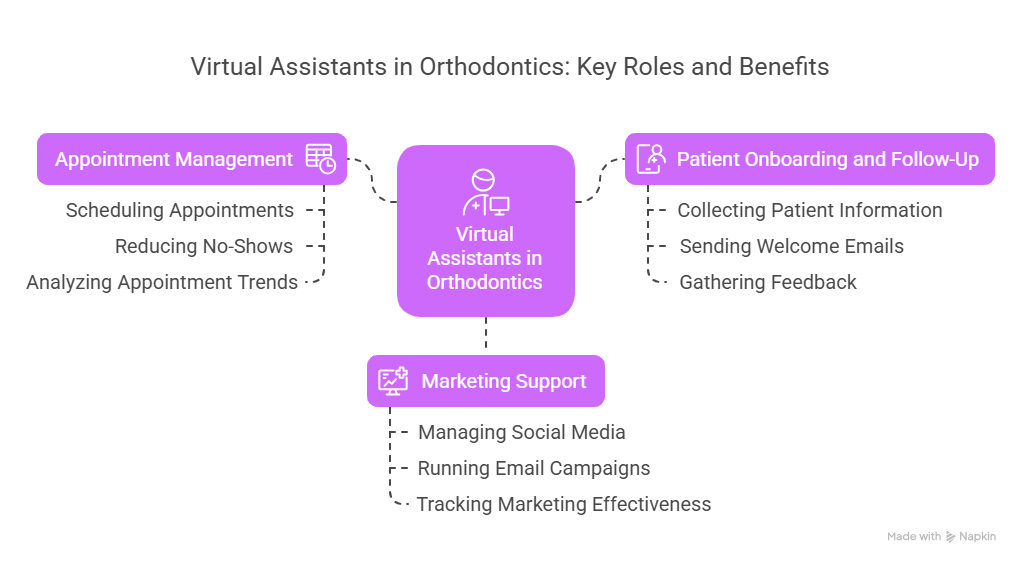
A virtual assistant’s primary function is appointing patients. They look up appointments, change them, and alert patients in order to lower no-shows and prevent overlaps. This makes the clinic operate efficiently. Patients receive reminders just in time, therefore, the chances of their coming are higher. VAs too can handle sudden changes without any difficulty.
Beyond just booking, Virtual Assistants track appointment trends over time. They spot peak hours or slow days. This data helps orthodontists adjust schedules for better flow. By knowing when things get busy, staff shifts can be planned smarter. Equipment use gets balanced too. This boosts both patient service and team performance.
Virtual Assistants turn scheduling into a smart system. It saves time, improves care, and supports growth.
Patient Onboarding and Follow-Up
A smooth start matters for new patients. VAs help by collecting info, sending welcome emails, and sharing clear steps before the first visit. This makes patients feel ready and valued. It sets a strong tone from the start and helps avoid confusion during onboarding.
After visits, VAs keep in touch. They send follow-ups, gather feedback, and remind patients to wear retainers or come back for checkups. This steady contact builds trust. Patients stay engaged, feel cared for, and are more likely to stick with the clinic or refer others.
Marketing Support
Smart marketing wins new patients in competitive markets. Virtual assistants can help by managing social media, writing posts and running email campaigns. They keep the clinic visible and active online. This builds trust and shows the team’s skills to a wider audience.
Virtual Assistants also track what works. They check clicks, views, and responses. This helps focus on the best marketing tools and drop what doesn’t work. With clear data, the practice can tweak its message and boost reach. This raises the clinic’s profile and brings in more patients over time.
How to Choose the Right Virtual Assistant?
Not all Virtual Assistants fit every clinic. Picking the right one is key. Here are some things to check when choosing a Virtual Assistant for your orthodontic practice.
Experience in Healthcare
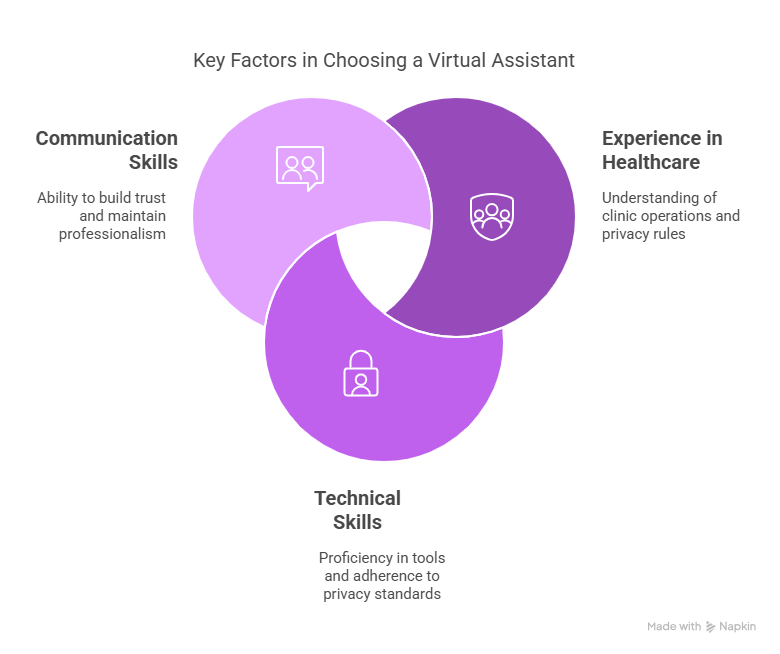
Choose a Virtual Assistant with healthcare or online orthodontics experience. They’ll know the terms, tools, and how clinics run, which makes onboarding faster.
They also understand patient privacy rules like HIPAA. This helps protect patient data and builds trust with clients.
A skilled VA can also manage appointments better. They know how to plan around different treatments and answer patient questions more clearly.
Technical Skills
Pick a Virtual Assistant with orthodontic or healthcare experience. They’ll know the terms, tools, and clinic flow, so they get up to speed quickly. They also follow privacy rules like HIPAA, keeping patient info safe and secure. This builds trust with your patients.
With their knowledge, they can schedule smarter and handle questions better. This improves service and keeps things running smoothly.
Communication and Interpersonal Skills
Since Virtual Assistants often speak with patients first, they need clear and kind communication skills. They must share info well and stay professional. Good people skills help build strong ties with both patients and staff. A friendly tone makes patients feel welcome and cared for.
Great Virtual Assistants also smooth out talks between patients and the orthodontist. They help fix issues fast and keep things running well. This method creates patient loyalty while enhancing the clinic’s public image. Patients who receive positive experiences will return to the clinic and tell others about their satisfaction.
Integrating a Virtual Assistant into Your Practice
Successfully integrating a virtual assistant into an orthodontic practice requires careful planning and communication. Here are some steps to ensure a smooth transition.
Define Roles and Responsibilities
Before hiring a Virtual Assistant, list their tasks and goals clearly. This helps both sides stay aligned and work toward shared targets. Set clear rules and performance checks. Regular talks help track progress and adjust tasks if needed.
Write down all roles and duties. This avoids confusion and gives the VA a guide to follow. When VAs know what’s expected, they work better and feel more motivated. This boosts their impact on the practice.
Training and Onboarding
Even skilled VAs need training to fit your clinic. Onboarding teaches your tools, rules, and culture. Time spent on training pays off. A trained VA works better and blends in with your team.
Let them shadow staff to see how things run. Watching real tasks helps them learn faster. This hands-on time gives insight into patient care and daily flow. It helps the VA support your team more effectively.
Utilizing Technology for Collaboration
Strong teamwork between the orthodontist and VA is key. Use tools like task apps and chat platforms to stay connected. Share updates often and give access to needed files. This keeps things clear and running smooth.
Video calls help talk through tough cases or new plans. They make remote teamwork feel more direct. With the right tools, VAs can share ideas and help improve systems. This boosts clinic speed and service quality.
Trending Now
Due to its high-pressure nature, working in dentistry frequently results in burnout. The profession demands extreme attention and accuracy, resulting in mental exhaustion. Physical stress is also caused by repetitive movements and bad posture. Many dental care pros (DCPs) also face emotional stress from anxious patients. Isolation, especially in solo practices, worsens the problem. Young dentists, solo practitioners, and perfectionists face the highest risk due to added career, financial, or emotional pressures.
Avoiding burnout can be done through keeping a work-life balance, through practicing mindfulness, and through better physical health by good posture and exercise. The dental practice that provides such cosmetic treatments as whitening will not only gain satisfied patients but also improve its overall morale. Men and women face burnout differently, hence a fit strategy should be developed based on the cause. Providing mental health resources, encouraging communication, and training are ways companies can support their employees. Strong support helps normalise prevention, brings needed tools, and builds a caring workplace culture.
The Future of Orthodontic Practices
Healthcare keeps changing, and orthodontists must keep up. Virtual assistants help streamline work and boost care quality. With VAs handling tasks, doctors can focus on patients. This leads to better care and a stronger, more efficient practice.
VAs bring skill and support. They help clinics run faster and smarter without losing the personal touch. The future looks bright for orthodontics. Using VAs is a smart move toward growth and better patient service.
Are you all set to elevate your orthodontic practice to a higher level? Through the HelpSquad BPO, you can get a dedicated professional virtual assistant team and customer service experts who are available 24/7 and have already understood the specific requirements of your field. Our bilingual agents are ready to take care of all your admin work, communication with patients, and more for as low as $8.50 per hour. This is your chance, do not let it pass by, to enhance your practice’s productivity and the quality of service. Sign up for a trial with HelpSquad now and feel the variation in services.
What is a virtual assistant for orthodontists?
A virtual assistant (VA) for orthodontists is a remote professional who supports your practice with administrative, communication, and marketing tasks, helping you save time, reduce workload, and keep patient service running smoothly.
Why do orthodontic practices hire virtual assistants?
Orthodontic teams often get stretched by scheduling, reminders, patient messages, and documentation tasks. A VA reduces that daily admin burden so your in-office staff and providers can focus more on patient care and treatment flow.
What administrative tasks can a virtual assistant handle in an orthodontic office?
Common tasks include appointment scheduling and rescheduling, reminder follow-ups to reduce no-shows, organizing digital records, basic inbox management, and keeping routine processes moving so the front desk isn’t overloaded.
How does a virtual assistant improve patient communication?
Virtual assistants can respond to patient calls, emails, and chats quickly, send reminders and educational information, and collect feedback after visits. Fast, friendly communication helps patients feel valued, boosting retention, satisfaction, and referrals.
Is hiring a virtual assistant a cost-effective option for orthodontists?
Yes. A VA can provide flexible coverage without the full costs of hiring additional in-office staff. Because you can scale hours based on demand, it’s easier to control costs while still improving service and efficiency.

Mary is an executive assistant with over 3 years of experience. She enjoys doing various tasks such as graphic design, video editing and content writing. She is on HelpSquad's marketing team and helps leverage the company's business for growth. You may contact Mary on LinkedIn: https://www.linkedin.com/in/gelai-dellosa/