The Ultimate Guide to 24/7 Customer Service for Happy Customers
07 Jan 2025 By: Mary Dellosa
Updated

Customers expect help anytime, anywhere. Providing 24/7 customer service and support isn’t just a bonus, it’s essential for loyalty and satisfaction. Businesses that implement round-the-clock support see faster issue resolution, higher customer retention, and stronger trust. In this guide, we’ll explore practical strategies for delivering 24/7 support, from staffing smartly to leveraging automation, ensuring your team meets customer needs without overwork. Whether you’re managing a small business or scaling enterprise operations, these insights will help you optimize customer interactions and stay ahead of competitors.
What is 24/7 Customer Service and Support?
24/7 customer service means that help is always available. There are no time limits and no closed doors. In a global marketplace, this level of availability has become one of the biggest advantages a business can have. I have learned that customers do not think about company schedules. They think about getting answers when they need them.
What is 24/7 Customer Service?
24/7 customer service provides nonstop communication through phone, chat, email, and social media. Call answering services handle urgent requests when offices are closed. Many people ask what is 24 hours customer service, and the simple explanation is that real people or smart self service tools respond at any moment. When we provide 24/7 customer support, customers choose the channel they like best and that freedom improves their experience.
The Role of 24/7 Customer Service in Today’s Business Landscape
I am not an executive, but as someone involved in virtual operations I notice how fierce competition has become. E commerce stores, digital agencies, and healthcare groups all feel pressure to stay reachable. Technology and remote work have made traditional business hours almost disappear. Online reviews spread fast and one missed interaction can hurt a brand. Constant accessibility builds trust and protects reputations, and I agree with John Jonas on this point because invisible support keeps the business moving.

The Connection Between Customer Service and Customer Satisfaction
From my own experience, customer service directly affects satisfaction. Great 24/7 call answering service can change a negative moment into a positive one. I have watched frustrated buyers calm down after a quick chat. When customers feel valued, they return and they talk about the brand in good terms.
How Customer Service Impacts Customer Perceptions
Every interaction shapes how customers view a company. A quick response or helpful attitude can elevate perceptions and strengthen loyalty. I think of the times a customer received prompt assistance during a technical problem. That person not only felt relieved but also believed the company truly cared. On the other hand, slow or unhelpful service creates frustration and can overshadow many positive experiences.
The Power of Positive Customer Experiences
Positive experiences push repeat business. I have read that 73% of users prefer live chat and 63% are more likely to return when there is 24/7 customer support. Word of mouth becomes powerful when real people respond fast. Self-help tools and chatbots also support this process, and platforms like Aichief, an AI tools directory that helps businesses find the right customer support and automation solutions, make it easier to choose the best tools, especially when these technologies are paired with trained agents. Teams often use Jira automation to handle repetitive support tasks more efficiently.
Benefits of 24/7 Customer Support for Retention and Loyalty
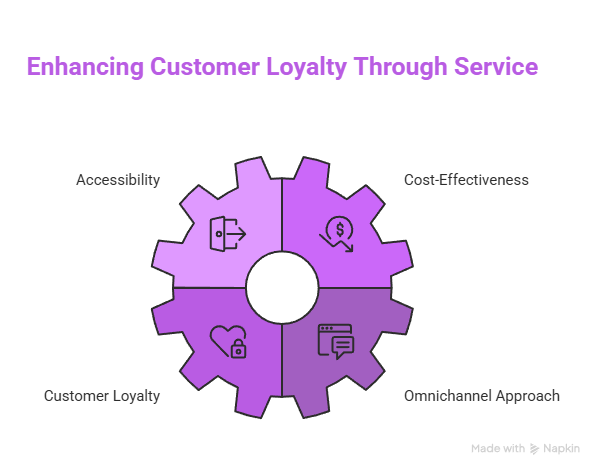
Customer retention is tied to accessibility. Businesses that stay available 24/7 assist customers across time zones and remove barriers. I often remind teams that retaining customers costs less than finding new ones. Satisfied clients spend more and they forgive small mistakes.
Why Customer Retention Matters
Customer retention matters because loyal buyers keep revenue stable. Statistics show that companies with excellent service see customers 93% more likely to return and 96% of buyers consider it key to brand loyalty. Poor service costs billions, while positive experiences make people spend 140% more. I view retention as the safety net of any organization.
How Constant Availability Enhances Customer Loyalty
Constant availability builds trust. I have seen omnichannel platforms like 24/7 customer support, call answering services, and virtual assistants deepen relationships. Live chat and social media engagement prove that a company is committed. Accessibility makes customers feel secure in their choice.
Key Takeaway
Automation lowers your cost per ticket. Live staff raises your resolution quality. Use automation to handle volume and live agents to handle value. That balance is where cost-effective 24/7 support lives.
Implementing 24/7 Customer Service in Your Business
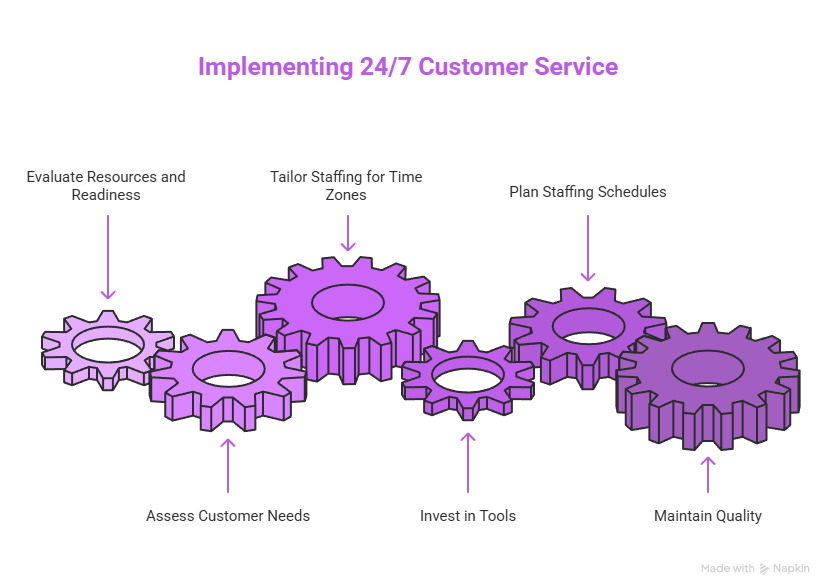
Implementing 24/7 service takes planning. I approach this the same way John Jonas explains hiring remote specialists. First, evaluate resources and readiness. Then design rotating schedules and use call answering services for after hours gaps.
Key Considerations for 24/7 Service Implementation
Businesses should identify peak contact times and after hours demand. Tailor staffing for time zones so coverage is smart instead of expensive. Tools like AI chatbots, CRM systems, and call answering services streamline inquiries.I like the idea that outsourcing customer service lets a company scale efficiently while maintaining consistent support quality without exposing the internal operations. When we provide 24/7 call answering service and we provide 24/7 customer support, the system feels natural to customers.
Overcoming Challenges in Providing 24/7 Support
Providing 24/7 customer support has obstacles. The biggest one is staffing. John Jonas always talks about clear expectations and good training, and I follow that mindset. Rotating schedules and remote workers add flexibility. Quality requires ongoing coaching and real feedback. Regular reviews keep standards high.
Trending Now
The numbers around customer service are hard to ignore. Buyers consider service essential for loyalty at a rate of 96%. Poor service costs $75 billion annually. Great experiences make customers 93% more likely to return and 73% feel most satisfied with live chat. Self service tools save up to 75% in costs and automation improves satisfaction by 10 to 20 percent. I track these trends because they prove that accessibility and 24/7 call answering service protect revenue and retention.
Measuring the Success of 24/7 Customer Service Programs
Measuring success is something I have handled in blog projects and operations sheets. The process starts with tracking performance. Response time, resolution rate, and satisfaction scores reveal whether the 24/7 customer support works.
Key Performance Indicators for Customer Service
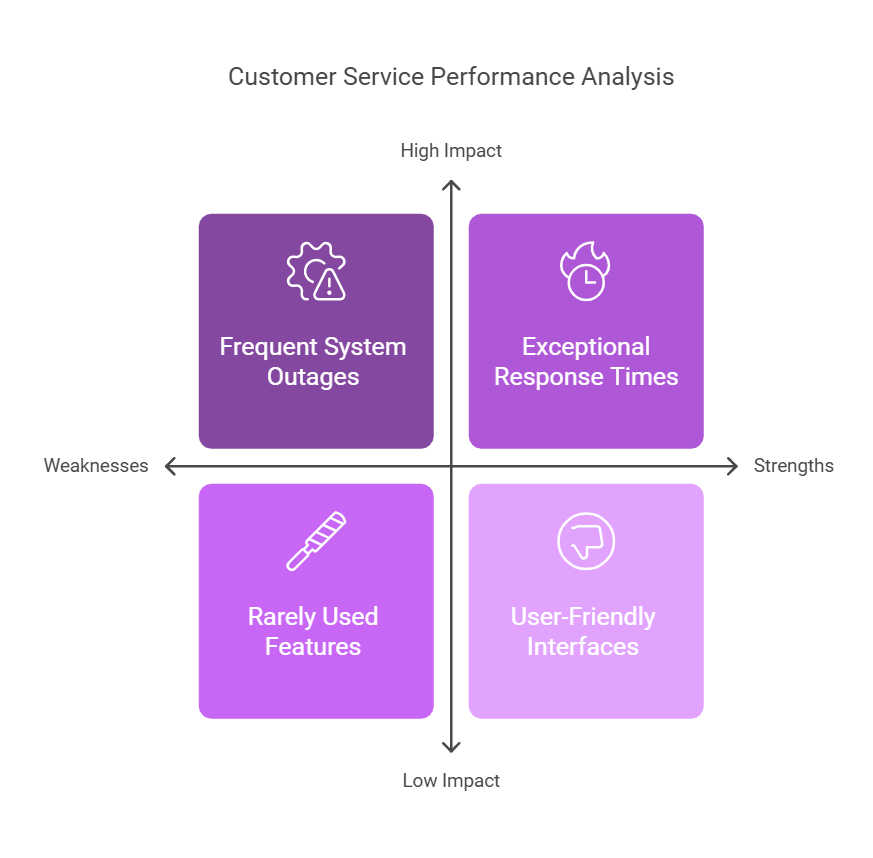
Key indicators include first reply speed, resolved tickets, and customer satisfaction. I tell managers to review these KPIs monthly. Quick responses show respect for customer time. High resolution rates prove that the 24/7 call answering service delivers results.
Evaluating Customer Satisfaction and Retention Rates
Surveys and NPS scores capture loyalty and referrals. Follow ups refine strategies. I believe that businesses should adapt based on real feedback instead of imagined reports.
Practical Tips for 24/7 Customer Support
Running support around the clock is achievable for businesses of any size. These tips help you do it without burning out your team or your budget.
Set clear response time expectations
- Display expected reply times on your contact page and in auto-replies.
- Be specific: “We reply within 2 hours” beats “We’ll get back to you soon.”
- Update expectations during holidays or high-volume periods.
Use a helpdesk with smart routing
- Route tickets by topic, urgency, or customer tier automatically.
- Assign overnight tickets to the next available agent with full context.
- Tools like Intercom, Zendesk, or Freshdesk handle this out of the box.
Build a self-service knowledge base
- Cover your top 20 most common questions in detailed articles.
- Add step-by-step guides with screenshots where possible.
- Keep articles updated every time your product changes.
Set up automated responses for common queries
- Automate order status, password resets, and refund policy questions.
- Use conditional logic so responses feel relevant, not generic.
- Always offer a path to a human agent if automation fails.
Staff strategically across time zones
- Hire remote agents in different regions to cover gaps naturally.
- Stagger shifts so handoffs are clean and documented.
- Use shared notes and ticket summaries to avoid customers repeating themselves.
Monitor quality continuously
- Track first response time, resolution time, and CSAT scores daily.
- Review a sample of overnight tickets each morning.
- Use feedback loops to improve scripts, macros, and automation rules.
Automation vs. Live Staff: Cost-Effective 24/7 Solutions
The goal is not to choose one over the other. The goal is to use each where it delivers the most value.
What Automation Does Well
- Handles high volume instantly. Chatbots and auto-replies respond in seconds, 24/7.
- Resolves repetitive queries without human input. FAQs, order tracking, account lookups.
- Scales at near-zero marginal cost. Handling 1,000 queries costs roughly the same as handling 10.
- Collects data before a human steps in. Name, order number, issue type, all gathered upfront.
Where Live Staff Are Essential
- Complex or emotionally charged issues. Refund disputes, complaints, and sensitive situations need empathy.
- High-value customers. VIP or enterprise clients expect a human touch.
- Edge cases automation cannot handle. Unusual requests, policy exceptions, and nuanced problems.
- Trust-building moments. A real person can turn a frustrated customer into a loyal one.
The Cost Breakdown
| Approach | Typical Cost | Best For |
|---|---|---|
| Chatbot only | $50-$500/month (platform fee) | Simple, high-volume queries |
| Outsourced live agents | $8-$20/hour per agent | Overnight coverage, overflow |
| In-house agents | $15-$35/hour per agent | Complex support, brand-sensitive roles |
| Hybrid model | Varies | Most businesses above startup stage |
How to Build a Hybrid Model
- Audit your ticket types. Categorize the last 3 months of tickets by complexity and frequency.
- Automate the bottom tier first. Start with the highest-volume, lowest-complexity queries.
- Add a human escalation path. Every automated flow needs a clear “talk to a person” exit.
- Fill overnight gaps with outsourced staff. Use BPO providers or platforms like Influx or Hyr.
- Review monthly. Track which automated flows fail and hand off to humans. Improve or replace them.
Conclusion
I am not a famous CMO, but in my role as a virtual property manager and marketing writer I know one thing. Customers want help anytime. If you pair trained bilingual agents, call answering services, and smart AI tools, you can truly say we provide 24/7 customer support. That is the model I trust.
Talk to us when you are ready to scale your 24/7 customer service. HelpSquad Health can place brand invisible specialists behind your phone lines and live chat. Talk to us to know more.
FAQs About 24/7 Customer Service and Support
What is 24-7 customer service?
Why is 24-7 customer support important?
What is a customer service agent?
What role does customer service play in customer satisfaction?
How do we ensure the information in this article is credible?
The insights in this article are based on widely accepted industry definitions and business research from reputable sources that highlight how continuous support impacts customer experience and loyalty. I also grounded recommendations in real trends and measurable outcomes seen across customer service studies.

Mary is an executive assistant with over 3 years of experience. She enjoys doing various tasks such as graphic design, video editing and content writing. She is on HelpSquad's marketing team and helps leverage the company's business for growth. You may contact Mary on LinkedIn: https://www.linkedin.com/in/gelai-dellosa/