What Does CEM Stand For? Understanding Customer Experience Management
30 Jan 2024 By: Michael Kansky
Updated
What does CEM stand for? CEM, or Customer Experience Management, is the process of designing, monitoring, and improving every interaction a customer has with a business. From first contact to post-purchase support, CEM ensures that every touchpoint delivers a seamless and positive experience. Understanding CEM meaning helps businesses boost customer satisfaction, loyalty, and long-term retention. In this guide, we’ll break down the definition of CEM, explore its key components and benefits, and show practical steps to implement an effective Customer Experience Management strategy. Whether you’re new to CEM or looking to optimize your current approach, this article answers all your questions and helps you leverage CEM for measurable results.

CRM, or customer experience management, is like having a toolkit to make customers feel valued, even beyond what the company does directly. This guide dives deep into CEM, providing key terms to boost your understanding of this crucial business area.
What Does CEM Stand For?
CEM stands for Customer Experience Management. It is a common acronym used in business and marketing sectors. It represents the strategic approach to managing every interaction a customer has with a brand.
- C: Customer (the individual or business)
- E: Experience (the sum of all interactions)
- M: Management (the process of oversight and optimization)
CEM Meaning
The meaning of CEM revolves around understanding the customer’s journey from their perspective. It is not just about a single transaction or support call. It refers to the overall perception a customer forms about a company over time.
- It involves tracking every touchpoint in the lifecycle.
- It focuses on emotional connections and brand loyalty.
- The goal is to align business goals with customer needs.
CEM Customer Experience Management
CEM (Customer Experience Management) is a collection of processes used to track, oversee, and organize every interaction. Unlike traditional customer service, it is proactive rather than reactive. Companies use CEM to build long-term value and reduce churn.
- Data Collection: Gathering feedback through surveys and analytics.
- Strategy: Using insights to personalize the user journey.
- Technology: Utilizing specialized software to monitor real-time satisfaction.
- Consistency: Ensuring a seamless experience across web, mobile, and in-person channels.
The Meaning of CEM in Business Contexts
Customer Experience Management ensures customers have great interactions with a company’s services, increasing loyalty and referrals. It all comes down to getting the things that customers want and all those things they expect.
CEM is an ongoing process that requires constant attention, evaluation, and improvement. It involves everyone in the company, from frontline staff to those supporting customer interactions and those overseeing the big picture of customer-centric efforts.
Key Components of Customer Experience Management
A successful CEM strategy means understanding your customers inside out. Knowing what they want and meeting their expectations. Next we have customer driven aesthetics. This involves providing services and customer experiences in line with the collected data. On the other hand, we cannot forget the customer-centric culture. This is about prioritizing customers’ needs to ensurecustomer retention and overall customer satisfaction.
Another crucial part of CEM is tracking and analyzing. This means keeping an eye on important customer experience signs, analyzing data to spot trends and areas for improvement, and making changes accordingly.
Benefits of Implementing CEM
There are plenty of good reasons to get a solid CEM strategy going. For instance, it might be one of the events that keeps the customers close to your restaurant. If the customer had a positive experience, the could recommend your company more with their friends and provide you more business in the long run!
CEM can further make consumers happy and this might translate into the increase in NPS (Net Promoter Score). When a company strives to create memorable experiences for customers, it can meet or even surpass expectations, potentially increasing sales. Understanding what customers truly want helps streamline operations and deliver a seamless experience for them.
Key Terms in Customer Experience Management
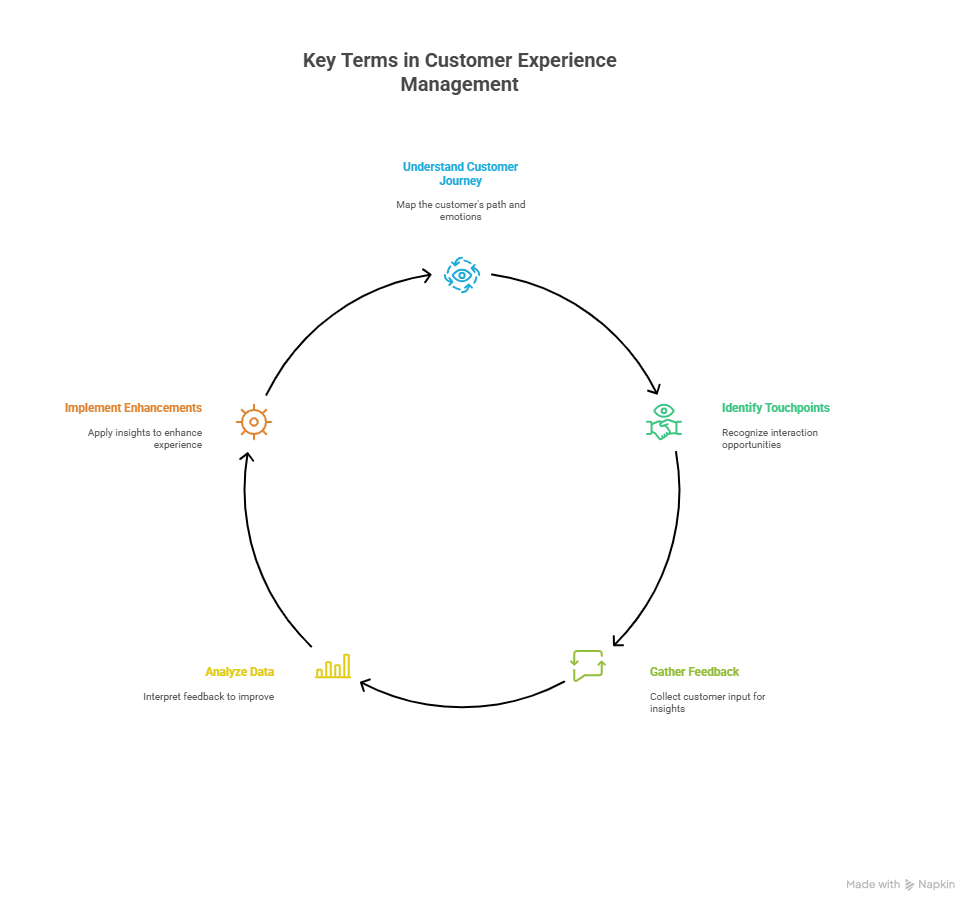
In Customer Experience Management, you’ll come across some key terms often. “Customer journey” is the whole experience you have with a company over time. “Touchpoints” are the specific times you interact with the company. And “customer lifecycle” is the path you take from first learning about a company to becoming a loyal customer.
Furthermore, you will come across some other terminologies as well. “Customer persona” is creating a comprehensive profile of a typical customer. Finally, there is “customer segmentation” that all customers are placed in various groups, based on their common characteristics.. And “customer feedback”? That’s just the input or comments customers give based on their experiences with a company. It’s all about getting to know who you’re serving and making sure their voices are heard.
Customer Journey
The customer journey is about how you feel about a brand, from discovery to purchase and beyond. Companies use this awareness to create an amazing experience for you, from start to finish.
Think of the customer journey as your personal roadmap when interacting with a company. It’s like tracing your steps, noting every stop or touchpoint, and how you feel along the way. This tool helps companies find out what’s keeping you from having the best experience and work on making it happen. It is mainly about ensuring that you have a journey that is as calm and relaxing as it should be.
To enhance the overall customer journey, many businesses turn to tools that streamline their support processes. Exploring a list of help desk software can help you discover platforms that automate routine tasks, deliver personalized customer experiences, and provide actionable insights to continuously improve your service operations.
Touchpoints
Touchpoints are when you connect with a company, like visiting their website or using their products. These can take place at any time that you might be getting any service.
Every time you engage with a company, it’s their opportunity to make you feel good about the experience. That’s why touchpoints matter so much in CEM. Companies want to know all the ways you engage with them, gather feedback from each interaction, and ensure they consistently provide you with a great experience.It is all about ensuring that every step with you feels comfortable and accommodating.
Tools and Techniques for Effective CEM

Also, companies use neat techniques like customer segmentation. It’s basically about sorting customers into groups based on shared characteristics.. Next is building customer personas, that is, creating detailed pictures of the typical customers. Besides digital marketing, there’s customer experience design, where products and services are personalized to fit your needs and preferences, almost as if they’re made just for you.. It’s like everything is customized just for you, based on what they know you like.
Customer Journey Mapping
Creating a customer journey map is key in this CEM process. Think of it as a painting of your journey with a brand, showing every interaction and how you feel. This map helps companies improve your experience, planning each step carefully. It’s not just knowing about it, but also constantly improving.
Creating a customer journey map is easy. First, define your typical customer. Then, draw a timeline from their first interaction with your company to becoming a customer or fan. Mark all the places they engage with your business. Talk to customers, analyze data, and get input from your team. It’s like solving a puzzle to improve their experience with your company.
Customer Feedback Systems
Customer feedback systems are super important in CEM. They’re basically setups that gather and make sense of what customers think about their experiences. This input can be really eye-opening for a company. There are lots of ways to share your feedback. Through surveys, interviews, social media, or reviews. It’s all part of making sure your voice is heard to help improve things continuously.
Gathering feedback lets companies spot trends, understand customer desires, identify improvement areas, evaluate their customer service efforts, and track progress over time. It’s essentially a guide from customers on how to improve.
How to Implement CEM in Your Organization
Rolling out a great CEM strategy means clearly defining how you want customers to feel about their experience, understanding their journey, creating a plan based on that understanding, making it happen, and then keeping tabs on it. You’ll use customer feedback and data to keep tweaking and improving things. It’s about making sure customers always have the best experience possible.
Each step needs a mix of tools, methods, and skills, and involves many different people in the company. It also needs the company’s leaders to be really dedicated, and a culture where putting the customer first is important for everyone in the organization.
Defining the Customer Experience Vision
Starting a CEM strategy means creating a vivid vision of the customer experience you aim for. A vision that’s more than just a picture, but a guiding light. It reflects your company’s beliefs, values, and goals, acting as your North Star in shaping customer interactions. This vision directs every move towards offering your customers the best journey possible.
Creating a customer experience vision dives deep into what your company stands for and its essence, while also tuning into your customers’ needs and expectations. It involves thorough research and understanding. Once set, this vision guides your entire team, influencing every decision and action related to customer interactions, ensuring everything aligns with how you want customers to perceive and feel about your brand.
Understanding the Customer Journey
The next step in a CEM strategy is understanding the customer journey, from discovering your company to possibly becoming loyal fans or leaving. It involves mapping out their steps and interactions with your company, and how they feel about each. It’s about creating a map to ensure a great journey for your customers.
Getting the customer journey right involves collecting a bunch of info. From customer feedback and data to insights from your team. You firstly must be familiar with what you offer, how your company works, and what the competitors are doing. So, if you are focused on this big picture, you make every customer interaction a happy and smooth one. It is as if you have to assemble a puzzle so that customers will have a flawless experience from the beginning to the end of the process.
Common Challenges in Customer Experience Management
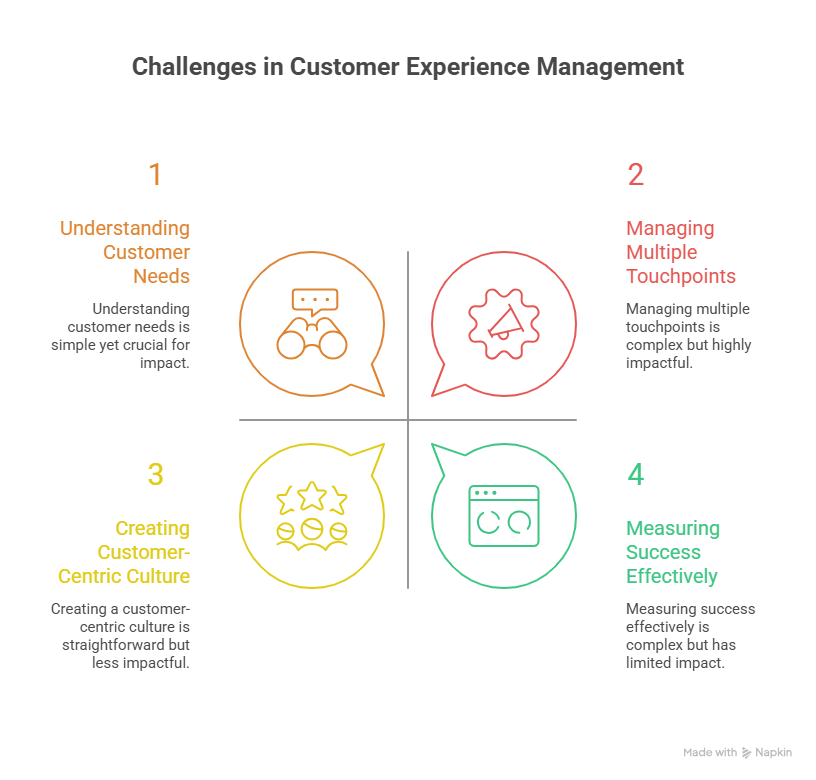
CEM has its perks but also its challenges. It’s tricky managing customer experiences across different interactions, understanding exactly what customers want, creating a company culture that values customers highly, leading effectively, and measuring success properly. It’s like balancing several things at once to ensure your customers always have the best experience.
Getting a CEM strategy right, despite the challenges, can lead to great results like loyal customers, higher satisfaction, and more sales. It’s important for businesses to tackle these challenges to reap the benefits of deeply understanding and appreciating their customers. It’s all about turning difficulties into chances to make customers feel valued.
Managing Multiple Touchpoints
One big puzzle in CEM is keeping up with the customer experience across all the different ways customers can connect with a company. Customers interact with companies in various ways, from in-store visits to online browsing, calls, or social media messages. Each interaction is a chance to impress, requiring a balance to maintain a consistently great experience, much like ensuring every guest at a party, whether dancing or chatting on the balcony, feels welcomed and enjoys themselves.
Managing customer interactions across all touchpoints involves really getting their journey and making sure they have a smooth experience every step of the way. It takes the whole team working together and being ready to adapt to what customers need and want. It’s similar to a band staying in harmony, with each member playing in sync and adjusting as the music changes.
Understanding Customer Needs and Expectations
A big challenge in CEM is truly understanding customers’ needs and wants, diving deep into what they value most. People’s needs and expectations can be influenced by things like their age, their past experiences, and what they personally prefer. Getting to the bottom of these needs and wants involves doing customer research, analyzing data, and constantly listening to what customers have to say.
After learning what customers want, it’s crucial to apply these insights to improve your offerings and interactions. This means understanding your company’s strengths, innovating from customer feedback, and continuously enhancing your approach. Since customer desires evolve, staying adaptable and committed to improvement is key. It’s similar to constantly adjusting a recipe to keep it appealing to your customers.

Trending now
CEM is crucial for making customers happy and loyal in a competitive market. The global CEM market is growing fast, with a focus on personalization and seamless experiences. AI, voice interfaces, and teamwork are key. Top companies include IBM, Oracle, Adobe, Nokia Networks, and Avaya. Collaboration between CEM vendors and partners helps companies provide great customer experiences and stay ahead.
When companies focus on understanding how customers feel about their products and services, they can improve interactions and experiences. This especially helps contact center employees, who play a vital role in customer service. By listening to employees’ feedback and making improvements, companies can boost employee satisfaction, which in turn leads to happier customers.
FAQ
What is CEM (customer experience management) and how does it differ from traditional customer service?
Customer experience management (CEM) is a systematic approach to monitoring, managing and optimising every interaction a customer has with a business throughout their journey. Unlike traditional reactive customer service, CEM proactively maps touchpoints. Seeks feedback and ensures the experience aligns with customer expectations.
Why should businesses adopt CEM customer experience management solutions?
Employing CEM solutions enables organizations to deliver seamless and consistent experiences across channels. It increases customer loyalty, boost metrics like Net Promoter Score, and drive growth. These tools help capture feedback, analyze journey data, and inform continuous improvement.
What are the key components of a strong CEM strategy?
A robust CEM strategy involves: defining a clear customer-experience vision, understanding the customer journey in all its touchpoints, using customer segmentation and personas, implementing feedback systems, and tracking experience metrics. These components together help brands design experiences that feel valuable and personalized to customers.
How can CEM engage customers and support customer-engagement management efforts?
Through CEM, businesses identify the moments that matter in the customer journey, personalize interactions, and create consistent experiences, thus deepening engagement. By actively listening via feedback loops and refining touchpoints, brands keep customers involved and emotionally connected.
How does CEM strategy integrate with marketing efforts to maximise impact?
CEM strategy and marketing go hand-in-hand: marketing drives awareness and acquisition, while CEM ensures the experiences delivered align with marketing promises, reinforcing trust and satisfaction. By aligning marketing messaging with actual experience, companies enhance brand reputation, increase referrals and reinforce long-term relationships.
What does CEM stand for in business?
CEM stands for Customer Experience Management.
How does CEM differ from CRM?
CRM focuses on managing customer data and sales processes, whereas CEM focuses on the emotional quality of every interaction a customer has with a brand.
Why is Customer Experience Management important?
It fosters long-term customer loyalty, increases retention rates, and differentiates a brand from competitors.
What are the main components of a CEM strategy?
Key components include customer journey mapping, feedback collection, data analytics, and personalized engagement strategies.
How can I implement CEM in my organization?
Start by analyzing current customer touchpoints, collecting direct feedback, and aligning your internal culture to prioritize customer needs.
“Building a good customer experience does not happen by accident. It happens by design.”
Kerry Bodine
Conclusion
In conclusion, Customer Experience Management is key to outsourcing customer service. It’s about using various methods and tools to ensure customers have good experiences with a company, leading to their loyalty and recommendations.
Though CEM strategy implementation does not come without its obstacles, the benefits are so good to have, such as customer happiness and loyalty, which are far higher than the disadvantages. This is the exact idea of treating customers as VIPs and creating a foundation for a long-term partnership.
This guide has given you a full rundown of all the important words, ideas, tools, and tricks that come with Customer Experience Management. We hope it helps anyone looking to get a better grip on CEM and put it into action in their own company. It’s like a treasure map, guiding you through the world of making sure customers have the best experience possible. Ready to boost your customer experience with expert support? Contact HelpSquad today and let our team deliver seamless, high-quality service across every channel.

Michael Kansky, Founder of LiveHelpNow and HelpSquad, has leveraged his 20 years of industry experience and innovative support strategies to revolutionize customer service approaches, making LiveHelpNow a leading customer service software provider, and establishing HelpSquad as a bridge between businesses and customer needs. You may contact Michael on LinkedIn: https://www.linkedin.com/in/mkansky/