Who Uses White-Label BPO? 9 Industries That Use It Most and Why
17 Mar 2026 By: Maria Rush
Updated
What Does White Label Mean?
White label refers to a product or service that is produced by one company but rebranded and sold by another as if they made it themselves.
In business process outsourcing, this means a provider like HelpSquad handles your operations in the background while your clients only see your name and logo. The goal is to provide a seamless experience where the customer never realizes a third party is involved.
HelpSquad takes this a step further by offering “brand-embedded” support. This means we do not just answer phones; we use your specific software, follow your brand voice, and use your internal communication channels like Slack or Teams. We handle the hiring and training so you can scale your brand without the overhead of a large internal team.
How Is White Label BPO Different From Traditional Outsourcing?
The main difference is the identity of the service provider because white label BPO is built to be invisible while traditional outsourcing often uses the vendor’s own branding and systems. In a standard outsourcing deal, the customer usually knows they are talking to a third party. With white label BPO, the provider is “brand-embedded” to protect your reputation.
| Feature | Traditional Outsourcing | HelpSquad White Label BPO |
| Brand Identity | Vendor-branded (e.g., “HelpDesk Co.”) | Your Brand (Invisible to customer) |
| Software Used | Vendor’s own CRM and tools | Your existing tech stack and tools |
| Communication | Vendor email domains | Your custom email domains |
| Accountability | Shared with vendor | You own the client relationship |
Why Do Businesses Use White Label BPO?
Businesses use white-label BPO to scale their capacity instantly and add new service lines without the high cost of hiring full-time employees. It is a strategic move for companies that want to focus on sales and growth while leaving the daily operations to experts.
According to the Deloitte Global Outsourcing Survey, cost reduction, access to specialized talent, and scalability are consistently the top reasons companies outsource their operations. When companies choose a white label BPO model specifically, they generally do it for four reasons:
- Rapid Expansion: You can launch a 24/7 support department in weeks instead of months.
- Cost Efficiency: HelpSquad teams often start at $8.50 per hour, which is much lower than US-based salaries.
- Global Reach: You can offer support in multiple languages and time zones without staying up all night.
- Expert Governance: You get access to professional QA, training protocols, and security compliance that are already built out.
Which Industries Use White Label BPO the Most?
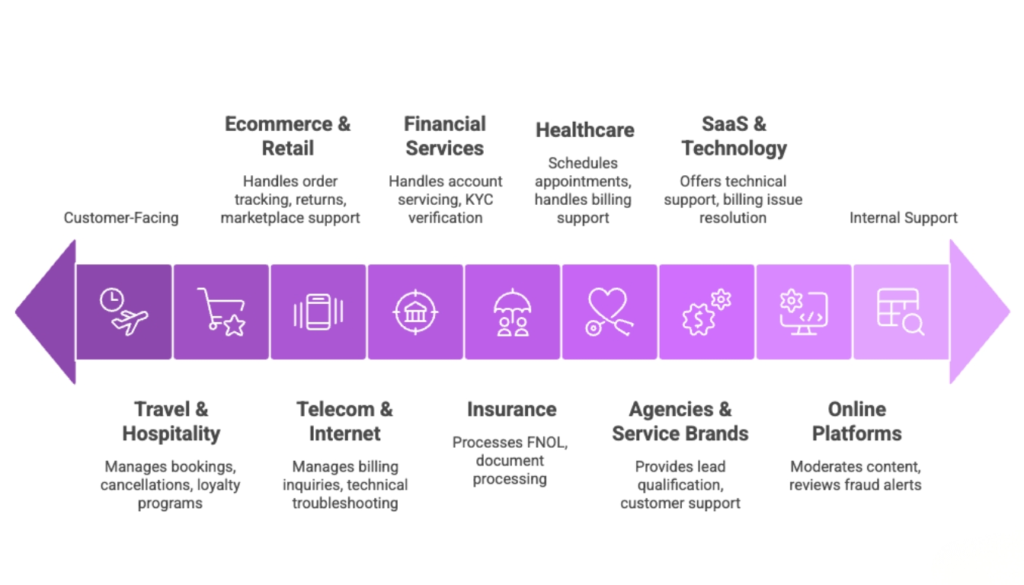
Agencies and Service Brands
Marketing agencies and Managed Service Providers (MSPs) use white label BPO to add recurring revenue. Instead of just managing ads, an agency can use HelpSquad to provide lead qualification or 24/7 customer support for their clients. The agency marks up our wholesale price and keeps the difference as pure profit.
Ecommerce and Retail Brands
Retailers use this model to handle surges in orders during the holidays. HelpSquad agents manage order tracking, returns, and marketplace seller support. Since our teams can be embedded in your Shopify or Gorgias accounts, the patient or customer never knows they are talking to a partner.
SaaS and Technology Companies
Tech companies use white label BPO to provide Tier 1 and Tier 2 technical support. This allows your expensive software developers to focus on fixing bugs and building features while HelpSquad handles the common “how-to” questions and account billing issues.
Travel and Hospitality Businesses
Travel companies use BPO to manage bookings, cancellations, and loyalty programs. We provide the 24/7 coverage needed to handle travel disruptions or itinerary changes across different time zones, acting as a virtual concierge for your brand.
Telecom and Internet Providers
ISPs use these services to handle high-volume billing inquiries and technical troubleshooting. Because these industries have very high contact volumes, they use HelpSquad to keep costs per interaction low while maintaining fast response times.
Financial Services and Fintech Companies
Fintech firms use white label BPO for account servicing and KYC (Know Your Customer) verification. This is a high-risk industry, so we follow strict security rules like the FTC Safeguards Rule to protect sensitive financial data while we represent your bank or app.
Insurance Companies
Insurance carriers use BPO for “First Notice of Loss” (FNOL) and document processing. During major storms or catastrophes, insurance companies use our elastic staffing to handle thousands of claims at once without their systems crashing.
Healthcare Organizations
Healthcare practices use HelpSquad for patient intake, appointment scheduling, and billing support. We sign a Business Associate Agreement (BAA) to ensure HIPAA compliance. We work directly in your EHR systems like Athenahealth or Epic so your office staff can focus on patients in the room.
Online Platforms, Marketplaces, and Gaming Companies
Marketplaces use white label BPO for trust and safety moderation. HelpSquad teams monitor content, review fraud alerts, and handle appeals. This 24/7 oversight is critical for protecting the community and keeping the platform safe for users.
How to Know if White Label BPO Is Right for Your Industry
White label BPO is right for you if your business handles repeatable tasks that require a specific brand voice but do not require your physical presence. If you are currently turning away leads or missing calls because your team is too small, you are a prime candidate for this model.
You should consider it if:
- Your customer support is not 24/7 and you are losing international business.
- Your senior staff is stuck doing “admin” work instead of growing the company.
- You want to offer a new service but cannot afford to hire five new people to test it.
What to Look for in a White Label BPO Partner

You should look for a partner that prioritizes brand invisibility and has a proven track record with ISO 37500 governance. A good partner does not just provide labor; they provide a managed system that includes training and quality control.
When evaluating HelpSquad or other providers, check for these three things:
- Tool Agility: They should be able to work inside your CRM, not force you to use theirs.
- Security Standards: Ensure they offer HIPAA, PCI, or GDPR compliance depending on your industry needs.
- Pricing Flexibility: Look for models that fit your volume, such as per-agent monthly rates or per-ticket consumption models.
Conclusion
Growing a business eventually means hitting a wall where you either need to hire a massive internal team or watch your service quality slip. White label BPO offers a much more practical third option. By bringing in a partner who embeds directly into your systems and adopts your brand voice, you can scale operations and offer 24/7 support without sacrificing your company’s identity.
If your senior staff is buried in admin work, or if you are missing out on off-hours leads, it makes sense to bring in some invisible backup. Your customers get the seamless experience they expect, and your team gets the breathing room to actually focus on growth.
Ready to see how HelpSquad can fit into your operations? Talk to us.
Frequently Asked Questions
What is a white label call center?
A white label call center provides customer support agents who answer phones, chats, and emails using your company’s name and branding. To your customers, it feels exactly like they are speaking to your internal team, while the third-party provider handles the hiring, training, and daily operations behind the scenes.
What is an example of a white label service?
A common example is an IT managed service provider (MSP) using a white label partner to offer 24/7 helpdesk support. When a client submits a ticket at 2 AM, the white label team resolves the issue using the MSP’s software and email domain. The client assumes the MSP’s own staff fixed the problem.
What does it mean to white label work?
To white label work means to produce a product or deliver a service that is then rebranded and sold by another business as their own. It allows the purchasing company to expand their offerings quickly without having to build the infrastructure or hire specialized talent themselves.
What is white label outsourcing?
White label outsourcing is hiring a third-party vendor to perform business processes (like customer service, billing, or tech support) under your brand’s identity. Unlike traditional outsourcing where the vendor might use their own systems, white label outsourcing is designed to be completely invisible to your end-user.
What is the difference between OEM and white label?
OEM (Original Equipment Manufacturer) typically refers to physical parts or components built by one company that are used inside another company’s finished product (like a specific brand of microchip used inside a laptop). White label usually refers to fully finished products or services (like customer support or software) created by one company but sold entirely under another company’s brand name.
Why trust our insights on white label BPO?
The information in this article is grounded in HelpSquad’s direct experience providing brand-embedded, white label BPO services to hundreds of businesses across healthcare, SaaS, retail, and more. Our operations strictly adhere to international governance standards, including ISO 37500, HIPAA, and PCI compliance, ensuring these insights reflect real-world, secure business practices.

Maria, a BPO industry professional for a decade, transitioned to being a virtual assistant during the pandemic. Throughout her career, she has held various positions including Marketing Manager, Executive Assistant, Talent Acquisition Specialist, and Project Manager. Currently, she is a member of the marketing team as a Content Writer for HelpSquad. You may contact Maria on LinkedIn.