Understanding Why the Customer is Not Always Right
31 Jul 2017 By: Maria Rush
Updated

In customer service, “the customer is always right” is a common belief. This idea puts customer needs above all else. It means going to great lengths to please them. However, this well-meaning approach can mislead. Because the customer is not always right.

Understanding the Myth: “The Customer is Always Right”
Origins of the Customer Service Mantra
The idea that the customer is always right started in the early 20th century. Harry Gordon Selfridge, founder of Selfridges in London, coined the phrase. He wanted to prioritize customer satisfaction. Selfridge believed success would follow by putting the customer at the center. His approach set a new standard in retail and quickly spread worldwide.
Selfridge’s philosophy valued customers’ power to shape a business’s success. He believed in valuing their opinions and meeting their needs. By exceeding expectations, companies could build strong loyalty. This loyalty gave businesses a competitive edge in the market.
Why This Approach Can Be Misleading
Prioritizing customer satisfaction is crucial for success for every business owner. However, blindly following “the customer is always right” has downsides. Customers, like anyone else, can be mistaken or unreasonable in their demands; this does not mean that the customer always right. Recognizing this is important.
Unrealistic Expectations:
Strictly adhering to “the customer is always right” can lead to unrealistic expectations. Customers might demand more than the company can provide. This strains resources and pressures employees. It can result in disappointment for both parties.
Misunderstandings:
Another challenge with this approach is potential misunderstandings. Customers may not clearly communicate their expectations. Employees might misinterpret requests. This mismatch can lead to dissatisfaction and frustration for both sides.
Toleration of Abusive or Disrespectful Behavior:
While customers should always be treated with respect, blindly accepting “the customer is always right” can tolerate abusive behavior. This can create a toxic work environment and harm employees’ well-being. Businesses must set clear boundaries and policies to protect employees.
Striking a Balance
Instead of blindly following “the customer is always right,” businesses should balance customer satisfaction and employee well-being. Listen to feedback, address concerns, and find mutual solutions. Empower employees to make decisions and support them in handling tough interactions.
In conclusion, the mantra “the customer is always right” aims to prioritize customer satisfaction. However, businesses should approach it cautiously, keeping in mind the reasons why the customer turns to them. By recognizing pitfalls and seeking balance, companies can foster a positive and sustainable customer service culture for both customers and employees.
Trending Now
This concept is echoed in Entrepreneur’s article on Dick’s Sporting Goods. The company has moved beyond “the customer is always right.” Chief People Officer Julie Lodge-Jarrett shared how they revamped training based on employee feedback. Managers now address disrespectful behavior directly, prioritizing employees’ dignity and respect. This change fosters a more civil store environment. While disagreements are inevitable, they are handled with respect and understanding. Additionally, initiatives like Dialogue Circles facilitate healthy discussions on challenging topics, reinforcing a culture of respect and unity.
Identifying Situations Where Customer is Not Always Right
In customer service, the saying “the customer is always right” is common. However, this isn’t always true. This article explores situations where customer expectations, behavior, or understanding may not be reasonable or feasible for a business.
Unrealistic Expectations
Customers can have unrealistic expectations, expecting flawless service always. They may demand unreasonable discounts, refunds, or special treatment. Businesses have limits on what they can provide.
For instance, a customer might expect a full refund for a product used extensively for months without a valid reason. Businesses need to manage these expectations. They should explain their policies and limitations while finding a mutually satisfactory solution.
Misunderstandings and Miscommunications
In customer interactions, miscommunications can occur. Customers might misinterpret information or make incorrect assumptions about the business’s policies or capabilities. These misunderstandings lead to frustration and dissatisfaction.
For example, a customer might think they are entitled to a service not offered or misunderstand purchase terms. It’s crucial to address and clarify these misunderstandings quickly. Clear communication and active listening help bridge the gap and find a resolution that satisfies both parties.
Abusive or Disrespectful Behavior
Sometimes, customers abuse or disrespect service representatives. This can include insults, threats, and harassment. While service is vital, employee well-being is equally important.
Businesses should establish procedures to handle these difficult interactions. Support employees by training them in de-escalation techniques. Give them authority to involve a supervisor when needed or implement a zero-tolerance policy for abuse.
Addressing abusive behavior helps maintain a healthy work environment. This ensures employees can continue to provide exceptional service to all customers.
Navigating Difficult Customer Interactions
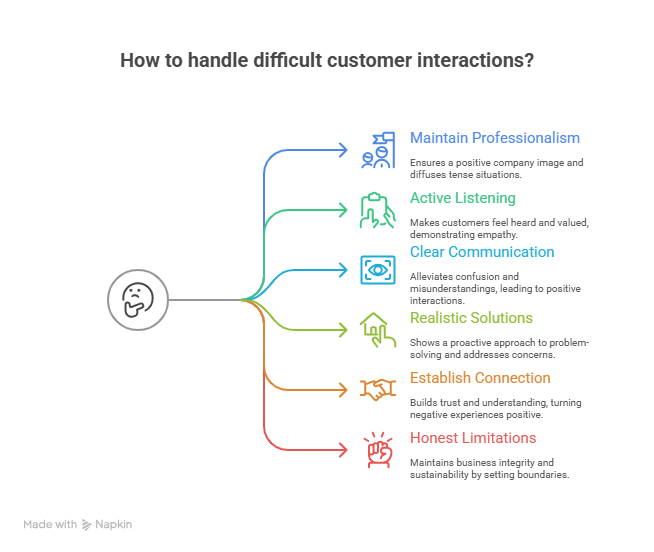
When faced with a challenging customer, customer service representatives must maintain professionalism. They should stay calm, empathetic, and composed, even when facing hostility. This approach helps diffuse tense situations and upholds the company’s positive image.
Active Listening
One effective strategy for maintaining professionalism is active listening. Give the customer your full attention, as this is one of the reasons why the customer feels appreciated. Make eye contact and nod to show you understand. This demonstrates empathy and makes the customer feel heard and valued.
Providing Clear Expectation
In addition to active listening, provide clear explanations. Use simple and concise language when addressing a difficult customer’s concerns. This ensures they fully understand the information. Clear communication helps alleviate confusion and misunderstandings, leading to a more positive interaction.
Providing Realistic Solution
Furthermore, offering viable solutions is crucial to address customer concerns and minimize dissatisfaction. Customer service representatives should provide realistic options within the company’s capabilities. This demonstrates a proactive approach to problem-solving and shows the customer their concerns are taken seriously.
Stablish Connection
Building rapport and showing genuine concern can turn a negative experience into a positive one, even if the customer is not right. Customer service representatives should aim to connect with customers by finding common ground or shared experiences. This creates trust and understanding, leading to more productive conversations and a higher chance of resolving issues.
Being Honest with Limitations
While meeting customer needs is important, some requests may be unreasonable. It is essential to tactfully communicate these limits and offer alternatives. Saying no can be hard but necessary for the business’s integrity and sustainability.
In conclusion, navigating difficult customer interactions requires professionalism, effective communication, and setting boundaries. By doing so, representatives can address concerns and contribute to the company’s success and reputation.
Implementing Company Policies to Support Staff
Importance of Clear Policies
Having clear policies and guidelines is vital for supporting staff with difficult customers. These policies should outline acceptable behavior, escalation procedures, and steps for extreme cases. They provide a framework for employees to navigate challenging interactions with confidence and clarity.
Training Staff for Difficult Situations
Providing comprehensive training to customer service representatives is essential. Training should cover conflict resolution, de-escalation techniques, and self-care practices. This ensures staff feel supported, empowered, and prepared to handle difficult situations.
Fostering a Supportive Work Environment
A supportive work environment is crucial for customer service representatives’ well-being. Encourage open communication, recognize their efforts, and provide growth opportunities. When staff feel valued and supported, they handle challenging customers more effectively.
Why the Customer Isn’t Always Right?
- Customers Don’t Always Have It Right
Let’s be real—customers aren’t perfect. Sometimes they misunderstand how something works or expect more than what’s actually possible. And that’s okay—it’s not usually their fault. But it also doesn’t mean a business can suddenly pull off miracles just to meet those expectations. - Some Requests Just Go Too Far
There are moments when customers ask for things that simply don’t make sense—like refunds for products they damaged or discounts so big they’d hurt the business. Wanting to keep people happy is natural, but saying “yes” to everything can do more harm than good. - Employees Need Backing Too
When a company constantly puts the customer first, employees can start feeling overlooked and unappreciated. That chips away at their motivation and energy, making it harder for them to give the great service everyone wants. A supported team creates happy customers—it’s that simple. - Protecting the Business Comes First
Making one customer happy today feels good, but if it risks the health of the entire business, it’s not worth it. Sometimes, the kindest and smartest thing a company can do—for its employees, its future, and even its customers—is to confidently say “no.”
Frequently Asked Questions
The customer isn’t always right, but they are the customer. So if they are wrong, let them be wrong with dignity and respect.
— Shep Hyken
Conclusion
In conclusion, while customer satisfaction is vital, blindly following “the customer is always right” can be harmful. It’s important to identify when the customer isn’t right and use strategies to manage these situations. Foster a supportive work environment and have clear policies in place. This ensures employees feel empowered and confident in handling challenging customer interactions.
Understanding that the customer isn’t always right is just the first step. The next is ensuring you have a team that can expertly navigate these complex situations. With HelpSquad BPO, you gain access to a dedicated, bilingual team ready to provide exceptional customer support and virtual assistance around the clock. Starting at only $8.50 per hour, our professionals can enhance your customer service experience and take on those back-office tasks, freeing you to focus on what you do best. Ready to transform your customer service approach and boost your business efficiency? Start your trial with HelpSquad BPO today and experience the difference for yourself.

Maria, a BPO industry professional for a decade, transitioned to being a virtual assistant during the pandemic. Throughout her career, she has held various positions including Marketing Manager, Executive Assistant, Talent Acquisition Specialist, and Project Manager. Currently, she is a member of the marketing team as a Content Writer for HelpSquad. You may contact Maria on LinkedIn.