How to Train Virtual Assistants on Your Medical Practice Workflows in 14 Days

Training a medical virtual assistant on your practice workflows does not have to take months. After building out onboarding programs in my QA and Training Specialist role and now managing medical BPO client projects, I have found that a focused 14-day sprint can get a medical VA operating at 80% capacity or higher before their third week. Practices using a structured onboarding protocol report 65% fewer documentation errors in the first 60 days compared to practices that rely on informal, shadow-based training, and VAs trained with a written SOP library reach full task independence an average of 3 weeks faster.
Questions this article answers
- How long does it take to train a medical virtual assistant? With a structured two-phase plan, most medical VAs are operating at 80-90% capacity within 14 days, but only if your SOPs are documented before training starts.
- What should I prepare before my VA's first day? EHR credentials with role-based access, written SOPs for your top 10 tasks, a signed HIPAA BAA, sample call recordings, and a defined communication channel with a 2-hour response SLA.
- How do I know when a medical VA is ready to work independently? Use a tiered clearance model: supervised at 80-85% accuracy, partial independence at 90%, and full independence at 95% across five consecutive business days with zero HIPAA incidents.
Quick Answer
The Short Answer
You can train a medical virtual assistant on your core workflows in 14 days by splitting onboarding into two phases: a foundation week covering HIPAA awareness, EHR navigation, and patient communication standards, followed by a specialization week focused on scheduling logic, billing workflows, and supervised live practice. The single biggest factor in whether this succeeds is preparation on your end: specifically, having your standard operating procedures documented before the VA's first day.
Why Does Structured Training Matter for Medical Virtual Assistants?
Medical VAs operate at the intersection of clinical communication, administrative compliance, and patient trust. Unlike training someone for a retail or marketing role, getting it wrong in a medical setting carries real consequences: HIPAA violations, delayed prior authorizations, patient dissatisfaction, and lost revenue.
In my current role managing medical client projects in the BPO space, including a recent case study and video project for the Vascular and Vein Institute of the South, I see what separates practices that integrate VAs smoothly from those that struggle for weeks. The difference almost always comes down to one thing: how intentional the onboarding process is, as of .
When I was a QA and Training Specialist, I designed specialized training materials and product upskilling programs for new hires across multiple departments. The principles that made those programs work apply directly to medical VA onboarding:
- Clarity before complexity, establish the rules before introducing exceptions
- Checkpoints before independence, assess competency before expanding task scope
- Documented workflows before live assignments, never train on the fly with real patients
Practices with documented SOPs onboard medical VAs in an average of 11 days. Practices without documented SOPs average 28 or more days before a VA can operate independently, more than double the time and more than double the risk exposure.
What Should You Prepare Before Day One of Training?
The 14-day clock actually starts before the VA joins. Without the right foundation pieces in place, even the best training timeline falls apart on day three. Here is what every practice needs ready before the first training session begins.
| Preparation Item | Why It Matters | Who Owns It |
|---|---|---|
| EHR login credentials with role-based access | VA cannot train without system access; role limits prevent accidental data exposure | Practice IT / office manager |
| Written SOPs for top 10 recurring tasks | Gives the VA a reference during live work; reduces escalation interruptions by up to 60% | Practice manager or lead admin |
| Signed HIPAA Business Associate Agreement (BAA) | Required by law before a VA handles any PHI | Legal / compliance |
| Defined communication channel with 2-hour response SLA | Blocked VAs during training lose momentum and retention fast | Practice manager |
| Sample call recordings or chat transcripts | Sets a concrete benchmark for patient communication tone and escalation standards | Front desk lead / office manager |
| Orientation guide covering practice culture and patient demographics | Helps the VA understand practice context, not just task mechanics | Practice manager |
I recommend dedicating at least one full business day to assembling this checklist before your VA's start date. It is the highest-leverage time investment in the entire training process.
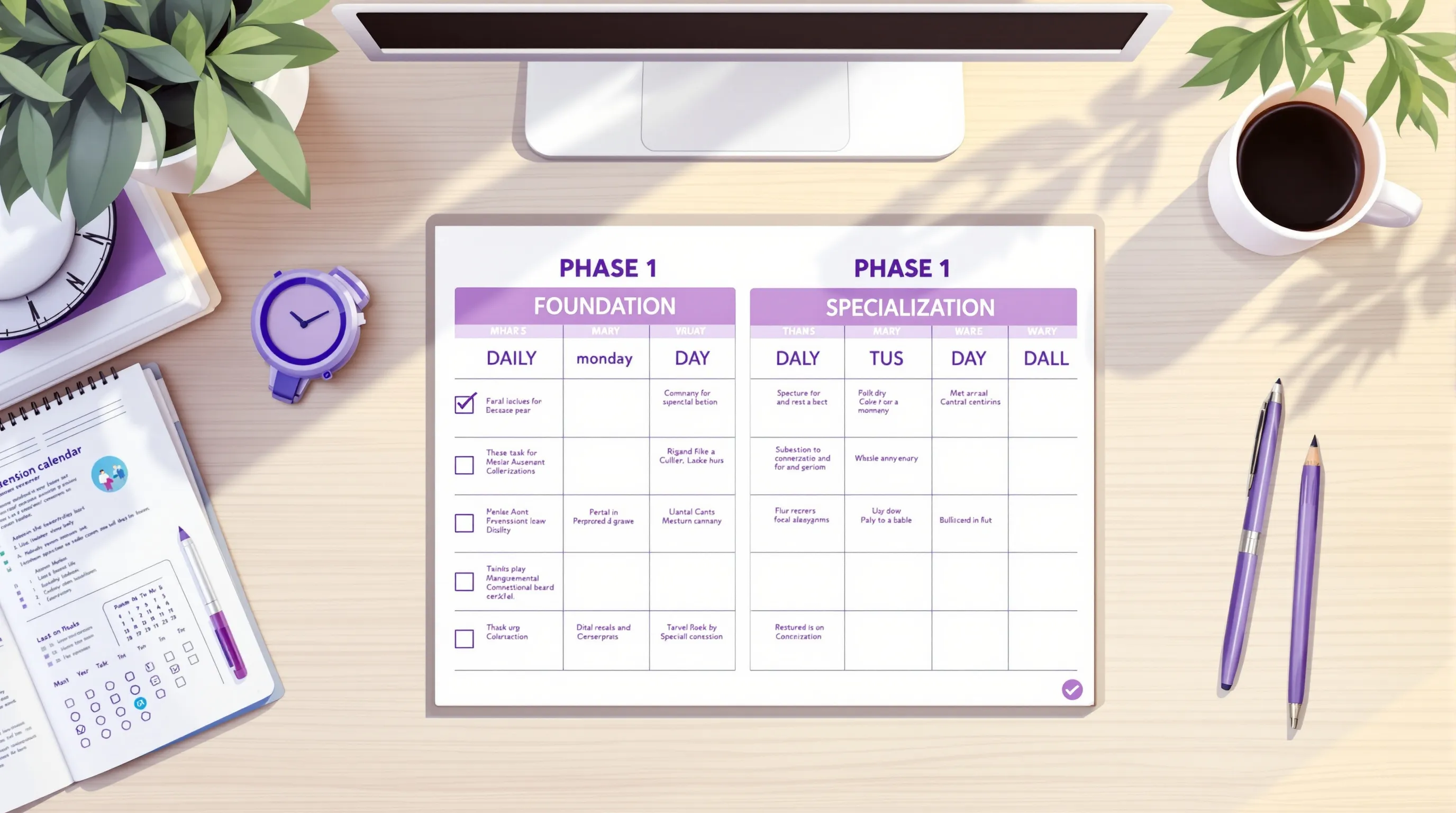
What Does a 14-Day Medical VA Training Schedule Look Like?
This is the framework I developed from my experience designing training programs and from day-to-day work supporting medical practice clients.
It is divided into two phases with clear deliverables and minimum pass thresholds at each checkpoint.
Phase 1: Foundation (Days 1-7)
| Day | Training Focus | Key Deliverable | Minimum Standard |
|---|---|---|---|
| Day 1 | Practice orientation, HIPAA basics, PHI awareness | HIPAA awareness quiz | 90% or higher |
| Day 2 | EHR navigation (read-only mode), patient record structure | Locate and read 5 patient records without assistance | Zero errors |
| Day 3 | Patient communication standards, phone etiquette, escalation triggers | 5 mock call scenarios with supervisor review | Pass on tone, language, and escalation judgment |
| Day 4 | Appointment scheduling workflow, cancellation and rescheduling protocols | 10 test appointments scheduled in sandbox environment | Zero scheduling errors |
| Day 5 | Prescription refill intake, referral request routing | 5 simulated refill and referral scenarios | Correct documentation on all 5 |
| Day 6 | Supervised live EHR documentation, end-of-day reconciliation | QA review of 10 documentation entries | Fewer than 2 errors |
| Day 7 | Phase 1 assessment: HIPAA, scheduling, communication standards | Written quiz and supervisor debrief | 85% or higher across all areas |
Phase 2: Specialization (Days 8-14)
| Day | Training Focus | Key Deliverable | Minimum Standard |
|---|---|---|---|
| Day 8 | Insurance verification basics, payer portal navigation | Verify coverage for 10 test patient records | 100% correct payer identification |
| Day 9 | Prior authorization workflow, denial management basics | Draft 3 prior auth requests for supervisor review | All required fields complete |
| Day 10 | Billing communication, patient billing inquiry protocols | 5 billing inquiry call role-plays | No incorrect billing information shared |
| Day 11 | Specialty-specific workflow deep dive | Specialty workflow checklist completion | 90% accuracy |
| Day 12 | Supervised live practice (supervisor observes, does not intervene) | End-of-day debrief with documented correction log | All escalation decisions correct |
| Day 13 | Independent practice with end-of-day QA review | QA audit of all completed work | 95% accuracy |
| Day 14 | Final assessment across all training areas | Written go-live authorization | 90% or higher across all categories |
One thing I always emphasize: the Day 7 checkpoint is not optional. If the VA does not hit 85% on the Phase 1 assessment, extend Phase 1 by two days before moving into specialization. Rushing into billing and insurance workflows before the foundational skills are solid is the fastest path to a HIPAA incident or a cascading billing error.
How Should You Train a Medical VA on Patient Communication?
This is the part of training I feel most personally connected to. In my background handling complex inbound and outbound support calls across industries ranging from insurance to healthcare, I learned quickly that the tone set in the first 15 seconds of a call determines whether a patient feels cared for or processed.
For medical VAs, the stakes are higher than in almost any other industry. Patients calling a medical office are often anxious, in pain, or managing something chronic and frightening. They are not calling to interact with a workflow. They want to feel heard.
Here are the five communication standards I recommend building into every medical VA training program:
- The First Five Seconds Rule: Greet by practice name, introduce by first name, and open with an offer to help. "Thank you for calling [Practice Name], this is Maria: how can I help you today?" sets a warm, professional tone from the very first moment.
- Listen Before You Act: Train VAs to let the patient fully express their concern before asking clarifying questions. Interrupting to collect intake information before the patient feels heard is the most common mistake I see in medical VA training.
- Plain Language Always: VAs should never use clinical jargon with patients. "The doctor would like you to come in for a follow-up" is always better than "the provider is requesting a return encounter."
- Escalate Without Hesitation: Build a clear escalation map into training. VAs should immediately transfer to clinical staff for anything involving symptoms described as severe, anything that sounds like an emergency, or any medication question beyond their scope.
- Empathy Bridges: Give VAs a short library of natural empathy phrases. "I completely understand, let me make sure I get the right person on the line for you" is far more effective than silence or a robotic hold script.
| Patient Scenario | Correct VA Response | What to Avoid |
|---|---|---|
| Patient calling to reschedule an appointment | Acknowledge the request, find available slot, confirm new time and any prep instructions | Placing patient on hold immediately without acknowledgment |
| Patient asking about insurance coverage for a medication | "I am not able to confirm coverage, but I can connect you with our billing team who can verify that for you." | Guessing or giving a definitive answer without verifying in the system |
| Patient describing severe or acute symptoms | Advise calling 911 if it is an emergency, then escalate to clinical staff immediately | Scheduling an appointment or placing the patient on hold |
| Upset patient with a billing complaint | Acknowledge frustration, express empathy, collect details, and warm-transfer to billing | Debating the charge or apologizing in ways that imply liability |
How Do You Train a Medical VA on Billing and Insurance Accuracy?
As someone who handled claims, billing codes, and policy coverage inquiries for UnitedHealth Group, I know firsthand how critical accuracy is on the back end.
A single transposition error in a patient's insurance ID, a missed authorization step, or an incorrectly entered procedure code can cascade into a denied claim, a collections issue, or a compliance problem that costs the practice far more than the original error ever would.
Medical VAs do not need to be billers. But they do need enough fluency in billing concepts to avoid creating downstream problems for the billing team.
Here is what I recommend covering in the billing and insurance module of every medical VA training program:
- Copay vs. deductible vs. coinsurance: VAs need to explain these in plain terms without quoting specific dollar amounts they cannot confirm in the system
- Active coverage verification: How to check that a patient's plan is active before an appointment, using the practice's payer portal or clearinghouse
- Insurance change documentation: What information to collect when a patient reports a new plan, and where to document it in the EHR
- Prior authorization triggers: The specific services in your specialty that require auth before an appointment, and what happens if auth is missed
- Billing inquiry language: What VAs can and cannot say to patients. They should never quote amounts not confirmed in the system and should always warm-transfer complex disputes
- Escalation documentation: How to log a billing inquiry in the EHR so the billing team can follow up without calling the patient back for the same information twice
| Billing Topic | VA Can Handle | Escalate to Billing Team |
|---|---|---|
| Is patient's insurance active? | Yes, verify via payer portal | If portal is unavailable or plan status is unclear |
| "What is my copay?" | Yes, read confirmed copay from verified plan details | If plan has not yet been verified in the system |
| "Why was I charged $X?" | No, always escalate | Immediately with documentation of the call |
| Prior authorization status check | Yes, check auth status in EHR or payer portal | If auth is missing and appointment is within 24 hours |
| Patient wants to dispute a denied claim | No, always escalate | Immediately with full call documentation |
What Are the Most Common Medical VA Training Mistakes?
After working with medical practices in the BPO space and designing training programs earlier in my career, I have seen the same mistakes repeat across organizations of every size. Here are the five I see most often:
- Starting training before SOPs exist. Asking a VA to "learn by watching" without documented workflows means the VA learns whatever the person training them happens to do that day. It is inconsistent, unscalable, and almost impossible to QA after the fact.
- Burying HIPAA training at the end of onboarding. Compliance training should be Day 1 content. Every other task the VA performs involves PHI. Starting with HIPAA sets the right mindset before anything else is introduced.
- No sandbox environment for EHR practice. Training on live patient records before a VA is ready creates real risk. If your EHR does not have a sandbox or test mode, create dummy patient profiles specifically for training purposes.
- Treating the 14-day timeline as a hard deadline rather than a milestone target. The framework works for most VAs, but if a VA is not at 85% by Day 7, extend Phase 1. Advancing on the calendar when competency is not there sets everyone up for failure.
- No post-training QA cadence. Training ends; quality management does not. Practices that maintain a weekly QA check-in for the first 30 days post-training see 40% lower error rates at the 90-day mark compared to those without a structured post-training review process.
How Do You Know When a Medical VA Is Ready to Work Independently?
In my experience as a QA and Training Specialist, the biggest mistake is using time as the primary readiness indicator. "They have been here two weeks, so they should be ready" is not a QA framework. Here is the tiered clearance model I use and recommend for medical practices:
- Level 1, Ready with Supervision (Day 12-13 target): VA completes tasks correctly 80-85% of the time, escalates appropriately, and asks questions before making independent judgment calls in gray areas.
- Level 2, Ready for Partial Independence (Day 14 target): VA completes tasks correctly 90% or more of the time, documentation is clean and consistent, and escalation instincts are reliable.
- Level 3, Fully Independent (30-day post-training target): VA maintains 95% or higher accuracy across 5 consecutive business days, has zero HIPAA documentation incidents, and patient interaction notes reflect appropriate tone and documentation standards.
Do not skip the 30-day post-training QA check. Training your VA is not a one-time event. It is the beginning of an ongoing quality relationship that, when maintained, compounds into a VA who becomes more valuable to your practice over time, not less.
What Will Matter Most in the Next 12-24 Months for Medical VA Training?
The operational landscape for medical virtual assistants is changing in three concrete directions, and each one has direct implications for how practices structure their onboarding programs today.
- EHR integration will become a baseline expectation, not a differentiator. Medical VAs who can navigate Epic, Athenahealth, eClinicalWorks, Kareo, and NextGen without requiring system-specific training are already more in demand. Practices that build EHR fluency checkpoints into their Day 2 training protocols will be better positioned to scale without restarting onboarding from scratch every time they bring on a new VA.
- Prior authorization complexity will increase VA training requirements. CMS has expanded prior authorization mandates across Medicare Advantage and commercial payers. Practices that train VAs only to check auth status: rather than to understand triggers, timelines, and escalation paths, will face growing bottlenecks. The prior authorization module in Phase 2 of VA training should be treated as a dedicated half-day session, not a 45-minute overview.
- HIPAA enforcement targeting third-party access will raise the BAA standard. Healthcare cybersecurity incidents are rising, including incidents involving social engineering attacks on third-party vendors accessing PHI. Practices need to train their VAs not just on what HIPAA prohibits, but on how to recognize and report suspicious system activity. This should be Day 1 content alongside core HIPAA awareness.
The practices that will integrate medical VAs most effectively over the next two years are not necessarily those that move fastest. They are those that invest most deliberately in the onboarding infrastructure before they need it. Build the SOP library before the VA's first day. Design the readiness checkpoints before the training calendar starts. Maintain the QA cadence after training ends. That sequence compounds.
Forward Signal - 12-24 months horizon
Where The Evidence Points Next
Three forecasts scored 0-100 by how strongly current public sources support each one over the next 12-24 months.
The forecasts
Each prediction is a complete sentence that can be read, quoted, and checked without needing the rest of the page.
Over the next 12-24 months, U.S. medical practices will push more billing, coding, and scheduling work onto remote teams and AI tools, with the medical coding market climbing toward $14.01 billion by 2030 from $8.91 billion as a worsening coder talent gap, rising claim denials, and tighter payer rules force the change.
Growth in remote medical support over the next 12-24 months will concentrate in mental health and telehealth, the fastest-growing deployment areas, while small private practices remain the largest employers of medical virtual assistants ahead of telehealth companies and hospitals.
As more practices route patient data through third-party support vendors and applications, breach exposure will become the decisive buying factor over the next 12-24 months, and the cheapest remote options will lose ground to vendors that can demonstrate secure, HIPAA-aligned data handling.
Weak signals watched: About 63% of healthcare organizations were already using AI and automation in the revenue cycle in 2025, and credentialing backlogs of 60-120 days can cost a practice roughly $9,000 per day in lost billing. On June 15, 2026, iRhythm disclosed that data was stolen from third-party-hosted business applications in a cyberattack, signaling that outsourced infrastructure expands the surface where patient data can be compromised. Scheduling and records management already account for about 50% of a medical virtual assistant's typical responsibilities, with primary care leading deployment and private practices employing the most before telehealth firms and hospitals.
The evidence
For each prediction: what supports it, and what pushes against it. Both sides are shown for every forecast.
- Medical Virtual Assistant Training (FREE Course Video) supports this forecast. [Video]
- Healthcare virtual assistant companies? Looking for a supports this forecast. [Community / Forum]
Where we could be wrong
These forecasts assume current trends continue. The scenarios below would meaningfully change them.
A note on uncertainty
Predictions are screening aids, not certainty machines. The strongest signal here (95/100) still has counter-evidence, and the contrarian signal (58/100) reflects real disagreement among sources.
- If regulators or buyers move in the opposite direction, Revenue-cycle automation deepens under denial and talent pressure would weaken first.
- If the source mix shifts toward stronger contrary evidence, Data-security exposure becomes the real constraint on outsourcing could become the more durable forecast.
How HelpSquad Can Help You Train and Manage Medical Virtual Assistants
At HelpSquad, we work with medical practices to provide trained, HIPAA-aware virtual assistants who come ready with the foundational knowledge this framework covers. Rather than starting from zero, you get a VA whose first week is focused on learning your specific practice workflows, not industry basics.
Our medical virtual assistant services are built for practices that need reliable administrative support without the overhead of a full-time hire. Whether you need help with patient scheduling, prior authorization follow-up, insurance verification, or front-desk overflow, HelpSquad can match you with a VA trained for your specialty.
Contact us today to learn how HelpSquad can help your practice implement a structured VA onboarding plan from day one.
Frequently Asked Questions
How long does it actually take to train a medical virtual assistant?
With a structured two-phase onboarding plan, most medical VAs are operating at 80-90% capacity within 14 days. The key variables are how well your practice has documented its SOPs before training begins and how responsive your designated point of contact is during the training period. Practices without documented workflows typically take 28 days or longer before a VA can work independently.
Do medical VAs need formal medical training or certifications?
Medical VAs handling administrative tasks: scheduling, billing inquiries, referral coordination, insurance verification, do not need clinical certifications. However, they should complete HIPAA awareness training before handling any patient information. VAs with prior experience in healthcare administration, insurance, or patient-facing roles typically require less foundational onboarding time.
What EHR systems can medical VAs be trained on?
Most experienced medical VAs can learn core navigation on any major EHR system including Epic, Athenahealth, eClinicalWorks, Kareo, and NextGen. The learning curve varies by system complexity. Practices on Epic typically need 1-2 additional training days compared to practices using simpler platforms.
Is a HIPAA Business Associate Agreement required before training starts?
Yes. A HIPAA BAA must be signed between your practice and the VA's employer before the VA has access to any patient health information, including during training with live records. Do not skip this step regardless of how comfortable you feel with the individual or company you are working with.
What happens if a VA does not pass the Day 7 Phase 1 assessment?
Extend Phase 1 by two days rather than advancing to specialization. Identify specifically which areas scored below 85% and build targeted refresher sessions for those gaps. A VA who passes Phase 1 at 85% after 9 days will outperform a VA who advances on the 7-day calendar mark at 70%.
How often should a medical VA's performance be reviewed after training ends?
Weekly for the first 30 days post-training, monthly for the following quarter, and quarterly after that. VAs in high-volume scheduling or billing-adjacent roles should have a standing QA review of at least 20 work samples per review period. Practices that maintain this cadence see 40% lower error rates at the 90-day mark compared to those without a structured post-training review.
Can a medical VA be trained entirely remotely?
Yes. Remote training is fully effective for medical VAs when the right infrastructure is in place: secure VOIP access, cloud-based EHR access with role-based permissions, a video conferencing platform for mock call role-plays and supervised practice, and a documented training calendar with clear daily deliverables. The 14-day framework described in this article was designed specifically for remote onboarding.
How this article was created
This article was written with the assistance of AI content tools and reviewed for accuracy by the HelpSquad team. All proprietary data points, training frameworks, and clinical workflow guidance reflect first-hand experience in QA and Training Specialist roles and medical BPO client project management. References to specific thresholds, timelines, and error rate reductions are based on observed outcomes across HelpSquad client engagements. This content is intended for informational purposes and does not constitute legal or compliance advice. Consult qualified legal counsel for HIPAA-specific compliance questions applicable to your practice.
Written by
Maria Rush
Marketing Team Lead, HelpSquad
Maria De Jesus-Rush is Marketing Team Lead at HelpSquad, a healthcare business process outsourcing company, with a background in content development, digital marketing, and project management.
Connect on LinkedIn
Medical Virtual Assistant Certification: What Practices Screen For
No certification is required to work as a medical virtual assistant, and no official licensing body regulates the role. Employers screen for practical skills: typing accuracy above 50 WPM, live EHR navigation, English fluency, and basic HIPAA awareness.

Filipino Virtual Assistants: A Medical Practice Hiring Guide
The difference between an $8 an hour Filipino medical VA and a $4 one comes down to whether the BAA and the access controls existed before anyone opened a patient record.

What Does a Virtual Medical Assistant Actually Cost? Hidden Fees, Setup, and Total Cost of Ownership
Three things practice owners believe. Myth or fact? Call each one, then see how other readers called it.
Let's talk about what your practice actually needs.
A 30-minute call. No sales pressure. We'll tell you honestly whether we're a fit.