The Ultimate Guide to Assistive Technology for Vision Loss in 2026
A look at vision loss tech in 2026, from OrCam MyEye 3 and eSight Go to AI glasses that read menus aloud, plus how healthcare is adapting to 13M+ users.
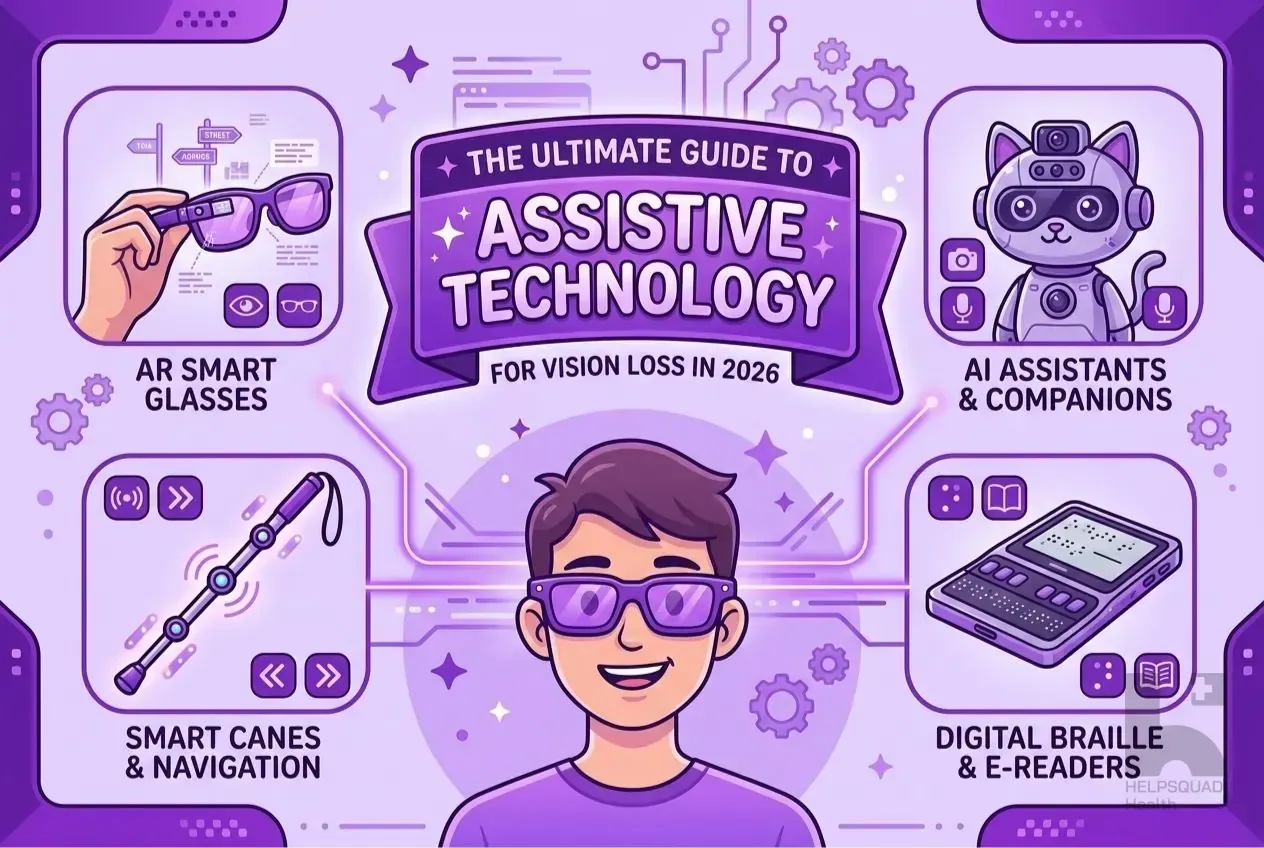
Assistive technology for vision loss in 2026 uses smart AI, wearables, and mobile apps to help people see, read, and navigate independently. These tools range from simple magnifiers to AI-powered glasses that describe surroundings in real time. For example, a smartphone app can read a restaurant menu aloud or identify currency, making everyday tasks easier without relying on constant assistance from others.
As we move through this new era, the mix of high speed internet and smart AI has turned basic tools into actual partners. If you want to keep your career on track or just enjoy a good book, getting to know the world of assistive technology for vision loss is the first step toward getting your independence back.
The State of Vision Support in 2026
The shift we are seeing right now is unlike anything before. Currently, over 13 million Americans aged 65 and up have significant vision issues, and that number is expected to double by 2050. This huge jump has sparked a massive wave of investment in the accessibility world. By the end of 2026, the market for these tools will likely hit nearly 8 billion dollars.
This growth is not just about medical needs. It is about a change in how we view disability. The idea now is that the environment and the tech should adapt to the person, not the other way around. Modern assistive technology for vision loss reflects this by being easy to use and discreet, rather than bulky or awkward.
What is Driving Growth?
- Computer Vision: Tools that recognize objects are growing incredibly fast.
- New Rules: New laws require government websites to be fully accessible by 2027.
- Wearables: Lightweight glasses are replacing the old heavy magnifiers.
Different Ways to Solve the Problem
To pick the right tool, you have to look at your specific needs and how much vision you still have. Here is how we break down assistive technology for vision loss in 2026.
1. Optical Aids
These are the classics. We are talking high powered glasses, stand magnifiers, and handheld telescopes. They are low tech but still very useful for simple magnification and tasks where you want to feel what you are doing.
2. Electronic Low Vision Aids (EVES)
These use a camera and a screen to blow up text and objects. In 2026, these have become very small and can often fold up to fit in your pocket. They let you flip the colors, like putting yellow text on a black background, which is a lifesaver if you are sensitive to light.
3. AI and Wearable Tech
This is the gold standard for assistive technology for vision loss right now. These gadgets use spatial computing to describe what is around you, recognize faces, and read text out loud. It is the fastest growing area because it offers the most freedom for people who are always on the move.
Top 5 Wearables of the Year
The market is led by a few big names that have figured out how to make high tech look good and work well. If you are looking for assistive technology for vision loss, these five are the ones to watch in 2026.
- eSight Go: This one uses a fast camera to enhance whatever you are looking at and projects it onto screens right in front of your eyes. It works wonders for people with central vision loss.
- OrCam MyEye 3: This tiny device clips to your glasses and talks to you. It reads text, recognizes people, and even lets you ask questions like “How much is the total on this bill?”
- Oxight Onyx: These smart glasses use augmented reality to help people with tunnel vision by moving images into the areas where they can still see clearly.
- Envision Glasses: Using the best text recognition software out there, these glasses can read handwritten letters or scan barcodes. They even let you call a sighted friend for help.
- WeWalk Smart Cane 2: This is a smart cane that syncs with your phone. It uses sensors to find obstacles like hanging branches that a normal cane would miss.
The Smartphone in Your Pocket
You do not always have to spend thousands of dollars to get help. Your phone is probably the most powerful piece of assistive technology for vision loss you own.
Best Apps for 2026
- Seeing AI: A free app from Microsoft that tells you what it sees, from money to people’s faces.
- Be My Eyes: This connects you with real volunteers or a very smart AI to describe photos or help you find your way.
- Lookout: Google’s version that is great for sorting through mail or reading food labels quickly.
The smartphone has made it so that anyone on a budget can start using assistive technology for vision loss right away.
Continue Reading:
How Does a Virtual Assistant for the Visually Impaired Revolutionize Daily Independence?
Why People Stop Using Their Tech
One big problem is that many people get these devices but then stop using them. Usually, it is because they do not have the right training. At HelpSquad Health, we know that buying the gadget is only half of the story. Learning how to actually use it in your daily life is what really matters.
To make sure your tech actually works for you, we suggest:
- Getting an Expert Opinion: Talk to a specialist to match the tech to your specific eye condition.
- Taking it Slow: Start with one simple task, like reading your mail, before you try to navigate a city.
- Finding a Group: Join a community of other users who can give you tips and tricks.
How to Pay for Everything
The big question is always about the cost. While prices are coming down, high end wearables are still an investment.
- Medicare and Medicaid: Usually, they do not cover magnifiers, but new 2026 rules might help if the device is a medical necessity for your rehab.
- Vocational Rehab: If you are working or looking for a job, your state agency might pay for your assistive technology for vision loss.
- VA Benefits: The VA is great about providing tech for veterans with vision issues.
- Grants: Groups like the Lions Club often give out money to help seniors and students buy the gear they need.
Looking to the Future
As we head into 2027, the digital world is getting just as accessible as the physical one. New website rules mean that apps and sites are finally being built to work with screen readers and assistive technology for vision loss. The gap between having the tech and being able to use it is finally closing.
The message for 2026 is simple: Technology is no longer just something that might help. It is something that will help. By using assistive technology for vision loss, you are choosing a life where you can participate in everything, totally unhindered.
Trending Now!
Assistive technology and adaptive equipment significantly enhance independence for those with vision loss by providing tools like screen readers, AI-powered smartphone apps, and smart canes that assist with navigation and communication. From high-tech AI visual interpreters to low-tech tactile markers, these resources bridge accessibility gaps and allow users to safely connect with their surroundings. When combined with professional orientation and mobility training, this technology empowers individuals to manage daily tasks and maintain a high quality of life.
Common Questions (FAQ)
Does Medicare cover this tech?
It depends. While basic glasses are usually out, some electronic devices might be covered under specific plans if a doctor says you need them for your rehab.
What is the best app for identifying things?
Seeing AI and Be My Eyes are currently the top choices for describing the world around you in real time.
Can AI glasses replace a white cane?
Not really. They are great for telling you what things are, but they do not help you feel the ground for obstacles like a cane does. Use them together.
How much do electronic magnifiers cost?
You can find basic ones for about $200, but the top tier wearable systems can cost $3,000 or more.
Are there free screen readers?
Yes. NVDA is free for Windows, and all Apple products have VoiceOver built in already.
Comparing the Options
| Solution Type | Portability | Best For | Average Cost |
|---|---|---|---|
| Optical Aids | High | Quick reading | $50 to $300 |
| Electronic Magnifiers | Medium | Photos and long reading | $200 to $1,500 |
| AI Wearables | High | Mobility and freedom | $2,000 to $5,000 |
| Smartphone Apps | Extreme | Everyday quick info | Free to $20/mo |
The growth of assistive technology for vision loss is a huge win for everyone. By making these tools part of your life, you are not just dealing with vision loss. You are moving past it. Whether it is a high tech pair of glasses or a free app on your phone, the goal is always the same: complete independence.
Are you ready to see things differently? Reach out to a HelpSquad Health specialist today to find the right setup for you.

AI in Primary Care: Transforming Diagnosis, Treatment, and Patient Experience
AI in primary care splits into three layers at very different maturity levels: ambient documentation, clinical decision support, and patient triage. What works now and what does not.

Top Revenue Cycle Management Best Practices for 2026 Success
Healthcare RCM practices for 2026, covering AI claims tools that cut denials 30%, eligibility checks at service, and automated patient billing plans.

Top Benefits of Revenue Cycle Management Software for Healthcare Providers
Revenue cycle management software cuts billing errors, speeds up payments, and reduces claim denials by up to 30%, easing financial services work for providers.
Let's talk about what your practice actually needs.
A 30-minute call. No sales pressure. We'll tell you honestly whether we're a fit.