How to Become a Medical Administrative Assistant Online: A Step-by-Step Guide
How to become a medical administrative assistant from home: the training that counts, the EHR skills employers test, the CMAA credential, and where remote roles are posted.
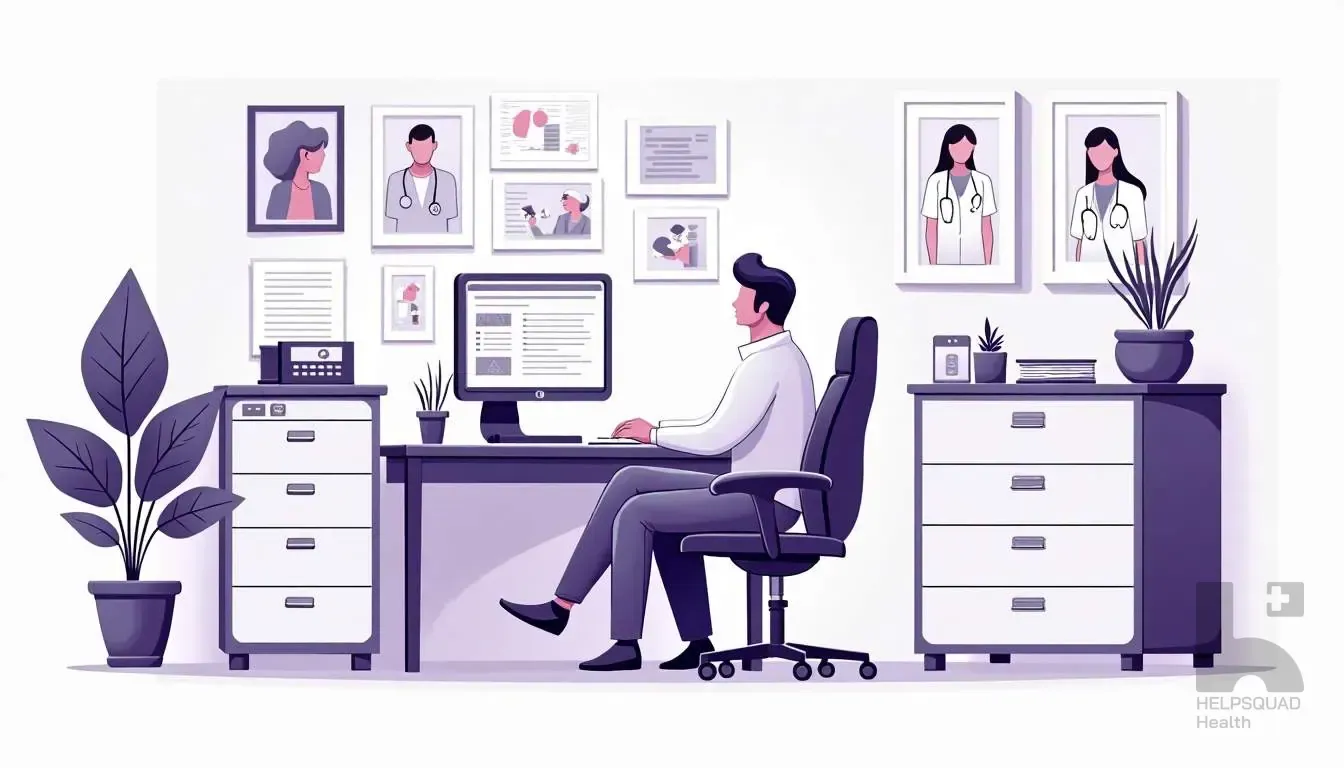
Hiring, not job-hunting? If you run a practice and want to hire remote admin support, HelpSquad Health places HIPAA-compliant virtual medical assistants from $8 per hour with a signed BAA.
Yes, this job can be done from home, and a large share of it now is. Scheduling, insurance verification, billing follow-up, patient messaging, and records work all happen inside software, so the tasks move to a home office without much friction. What decides whether an employer will let you do it remotely is their security setup rather than the work itself, because the practice needs a way to give you chart access without patient data landing on your personal machine.
There is no degree requirement and no state license for the role. What employers screen for is medical terminology, privacy rules, and at least one electronic health record system you can actually navigate. This is how to get those in place and get hired.
What the job involves
The daily work is the administrative spine of a practice:
- Booking, confirming, and rescheduling appointments, and filling the gaps cancellations leave
- Verifying insurance eligibility and benefits before a visit
- Keeping patient records current and correctly coded
- Preparing intake paperwork and supporting telehealth visits
- Answering patients by phone, secure message, and portal
- Following up on claims that came back unpaid
You are usually the first person a patient deals with and the last one they talk to about a bill, which is why employers weigh communication as heavily as technical skill.
Step 1: Set up a workspace that passes a security review
Before the skills, the setup, because this is what gets candidates rejected after a good interview.
You need reliable internet, a computer you can keep locked, a noise-canceling headset, and a private space where patient information cannot be overheard or seen on a screen by anyone else in the household. Employers ask about the last one specifically. A practice cannot let protected health information be visible to a family member walking past.
Most employers then add their own layer: secure remote access, encrypted messaging, and defined rules for what may be downloaded. HelpSquad, for example, issues every medical VA a HIPAA-compliant virtual desktop so patient data never touches a personal device. Knowing that this is how it works, and being able to say so, signals that you understand the job.
Step 2: Learn the three subjects that get tested
Skip the general office-skills courses. These are the three that come up:
Medical terminology. You need to read a provider’s note without stopping. Universities publish courses you can audit free on Coursera, including Rice University’s medical terminology course.
HIPAA and patient privacy. The most common interview topic for remote healthcare roles, and the cheapest to learn properly because HHS publishes its own training materials at no cost. Learn the procedure, not just the rule: what you may open, what has to be logged, and what you do when information reaches you that should not have.
One EHR, learned deeply. Practices run on Epic, Athenahealth, eClinicalWorks, NextGen, or Tebra. Recognizing five and knowing none is the most common weakness in applicants. OpenEMR is free and open source, so you can build a mock patient from intake through to a submitted claim and have something concrete to describe.
Our ten-week medical virtual assistant course plan sequences all three with the free source for each, if you want the order rather than the list.
Step 3: Build evidence you can point at
Employers screen for demonstrated skill, and applicants without practice experience routinely beat applicants with it by showing their work.
- A mock patient record you built in a real system, not a description of one
- A resume line that names the software and the task, so “eligibility verification and scheduling in OpenEMR” rather than “proficient with EHR systems”
- Written answers to the standard HIPAA questions, prepared in advance
- Any real exposure to how a practice runs: volunteering, reception work in any medical office, or a short virtual internship with a telehealth clinic
Freelance platforms can give you real tasks for real clients, which builds both the resume and your sense of whether the work suits you. Treat them as a way in rather than a destination.
Step 4: Decide about certification
Certification is not required and it does shorten the conversation. The Certified Medical Administrative Assistant exam from the National Healthcareer Association costs $129, which is the usual starting credential for administrative and front-desk work.
The Certified Professional Coder from the AAPC is a bigger commitment and worth it only if you intend to move toward billing, where it changes what you can earn. Be wary of programs that issue their own certificate under an invented name. If the same company teaches the course, writes the test, and awards the credential, no employer is screening on it.
Step 5: Apply where remote roles actually are
Telehealth practices and healthcare outsourcing companies are the most remote-friendly employers, because they already have the security infrastructure the role requires. Traditional single-location practices are the hardest, because remote access is a project they have not undertaken.
Search the job title variants rather than one phrase. The same work is posted as medical administrative assistant, medical office assistant, patient services representative, front office coordinator, and virtual medical assistant. Filtering on only one of those hides most of the market.
Step 6: Prepare for the interview they will actually run
Expect three things: a question about which EHR you have used and what you did in it, a HIPAA scenario, and something about how you organize a day with no supervisor present.
Check your setup before the call, because a remote interview is also a test of whether you can run a video meeting. Have your mock record open and ready to describe. When the privacy question comes, answer with procedure rather than a definition, which is the single clearest way to sound like someone who has done this work.
Where it leads
The common next steps are medical billing specialist, claims or denials analyst, prior authorization specialist, and virtual office manager. Each pays more than the entry administrative role and builds on the same records and insurance knowledge, so the first job matters mainly for getting you inside the systems.
If you want a wider view of the career, how to become a virtual medical assistant covers the same ground for the broader role, including federal wage data and the trade-offs nobody mentions in the job ads.
Ready to apply? HelpSquad Health hires remote medical administrative assistants and trains them on the client’s own EHR during onboarding, so you do not need experience with a specific system before you apply. Current openings are on our careers page.
Frequently Asked Questions
Can medical administrative assistants work from home?
Yes. Scheduling, insurance verification, billing follow up, patient messaging, and records work all happen inside software, so they move to a home office without much friction. What usually decides it is the employer’s security setup rather than the tasks: the practice needs a way to give you chart access without putting patient data on your personal machine. Telehealth practices and healthcare outsourcing companies tend to be the most remote-friendly employers.
What technology do I need to work from home in this role?
A reliable computer, stable internet, a noise-canceling headset, and a private space where patient information cannot be overheard or seen on screen. Most employers add their own layer on top: secure remote access, encrypted messaging, and defined data-handling rules. HelpSquad, for example, issues every medical VA a HIPAA-compliant virtual desktop so patient data never lands on a personal device.
What are the certification requirements for a medical administrative assistant?
There is no legal license for this role. Employers generally look for a high school diploma or GED plus evidence that you understand medical terminology, privacy rules, and at least one EHR. The common credentials are the Certified Medical Administrative Assistant (CMAA) from the NHA, and the Certified Professional Coder (CPC) from the AAPC if you want to move toward billing. Certification is not required to get hired, but it shortens the conversation.
Do certification requirements differ by state?
Not for the administrative role itself, because it is not state licensed. What varies is what individual employers ask for, and roles that touch billing or patient records often add a background check and proof of current HIPAA training. Read the job posting rather than the state rules.
Do remote medical administrative assistants need different training than in-office staff?
The clinical and administrative knowledge is identical. The difference is everything around it: secure remote access, written communication that carries tone without a hallway conversation, and enough self-direction to work a queue without someone checking on you. Employers who hire remotely usually train on their own tools during onboarding, so experience with their exact system matters less than people expect.
What can this job lead to?
The common next steps are medical billing specialist, claims or denials analyst, prior authorization specialist, and virtual office manager. Each pays more than the entry administrative role and builds on the same EHR and insurance knowledge you start with.
How long does it take to land the first remote role?
It depends where you start. If you already work in an office, the healthcare-specific piece is terminology, privacy rules, and one EHR, which is the shorter path. Starting from scratch takes real training time before you are competitive. Naming a specific EHR on your resume, even one you learned in a training environment, moves you up the pile faster than a general certificate does.

Virtual Assistant Services for Medical Practice: Boost Efficiency and Patient Care
Virtual assistants for medical practices handle scheduling, billing, follow-ups, and HIPAA-compliant record keeping so your healthcare team can focus on patients.

Exploring the Benefits of Virtual Medical Assistant Services
Remote medical virtual assistants handle scheduling, insurance verification, billing follow-ups, and EHR updates for clinics under HIPAA rules.
Virtual Medical Assistant 101: Medical Terminology for Beginners
Two errors cost clinics the most: misrouting urgent symptoms and breaking the revenue cycle. This terminology primer for virtual medical assistants prevents both.
Let's talk about what your practice actually needs.
A 30-minute call. No sales pressure. We'll tell you honestly whether we're a fit.