Virtual Receptionists for Medical Offices: Key Benefits

Quick Answer
Quick answer: A virtual receptionist pays off when it catches the calls your front desk can't. It covers overflow, sick days and after-hours lines. It also books visits and handles admin such as prior authorizations. Treat it as backup, not a replacement, with clinical calls routed to your staff.
Key Points
- A study of 7,000 calls across 22 medical practices, cited in a virtual receptionist vendor's buyer's guide, found 42% went unanswered during business hours.
- HelpSquad's fully managed service starts at $8 per hour , and full-time virtual staffing from HelpSquad costs $8-$13 per hour.
- In a 2024 r/LawFirm thread, one firm with about 500 inbound calls per month kept 2 internal receptionists and sent only overflow to Ruby, at about $700/month.
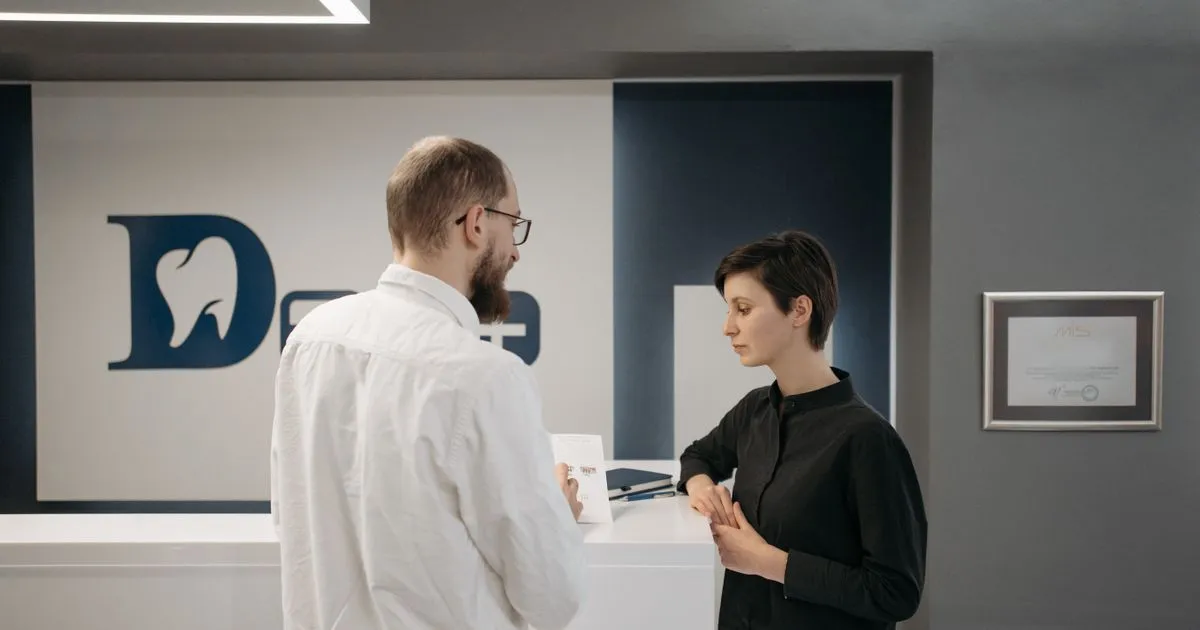
At the front desk, each patient conversation needs the receptionist's full attention while the phones keep ringing.
Is a virtual receptionist worth it for a small medical office? In a 2023 r/smallbusiness thread, a solo attorney called one "an easy ROI" because it would "capture cases that you would have otherwise missed." The same owner warned against generalist services "answering for thousands of companies across every industry imaginable." Both points apply to a clinic.
Automation alone is not the fix. A medical office training guide cautions that with automated phone menus, "many callers can get lost in the system." Patients who get lost rarely call back.
In this guide I follow one family practice with one receptionist through missed calls, after-hours coverage, AI versus human answering, cost, HIPAA and choosing a provider. My view is simple. Before you sign, ask any provider who will answer your line on a Friday afternoon, and how a caller reaches your clinical team.
A virtual receptionist is a remote professional who answers a practice's phones, books patients and handles front-desk admin from outside the building. Why does that matter? Because the phone is often a patient's first contact with a physician's office. A medical office administration guide makes the case plainly: a live person on the line shows patients the office cares in a way an automated menu cannot.
Picture a family practice with one receptionist. One Denver practice reached a breaking point with only one medical assistant supporting its clinic. The research section below walks through what those numbers can and cannot prove. Some are wrong numbers, early hang-ups or refill requests. Below, I cover what missed calls cost, what good coverage looks like, AI versus human answering, pricing, HIPAA and how to choose a provider.
Questions this article answers
Why Do Medical Offices Miss So Many Patient Calls?
Medical offices miss calls because of structure, not effort. Call volume bunches into a few peak hours, and most front desks rely on one or two people who also check patients in.
Before you buy any kind of coverage, find where your own gaps sit:
- Pull a week of call logs and mark the busiest hours.
- Count how many people can pick up the phone in each of those hours.
- Write down what happens to the phones when one of them is out sick.
- Note which calls end in voicemail and whether anyone returns them the same day.
One AI receptionist vendor's 2026 roundup of 2025 data puts primary care at about 53 inbound calls per physician per day, with 38% of daily calls landing in the first and last hours of operation. The same vendor reports that solo practices miss 30%+ of calls. A second vendor cites a study of 7,000 calls across 22 practices that found 42% of incoming calls went unanswered during business hours. The common assumption is that missed calls are an after-hours problem. These figures point to the morning rush instead.
Staffing makes the peaks worse. Writing in Dental Economics in 2011, Mick Malek, DDS, noted that a practice with one receptionist, one hygienist and one dental assistant "often experiences partial paralysis" when one team member is absent. A 2025 r/healthIT thread adds a seasonal layer: from October through December, patients who have met their deductible rush to book expensive services such as imaging before it resets.
Picture a family practice with a single receptionist. A sick day, a Monday rush and a December surge all hit the same phone line. A comparison of 5 sources shows the same pattern. The gaps are predictable. Predictable gaps can be staffed.
That is why I'd start with the hours that hurt most, not the whole day. At HelpSquad, part-time engagements start at 20 hours per week and are quoted individually, which suits an office that only needs cover for its peaks. Our guide to what to outsource in your medical practice shows which front-desk tasks to move first.

What Do Unanswered Calls Really Cost a Medical Practice?
An unanswered call costs whatever that patient would have booked, and voicemail rarely saves it. Most callers who reach voicemail hang up without leaving a message.
Voicemail feels like a safety net. It isn't. One AI receptionist vendor reports that 62% of patients hang up without leaving a voicemail when they call a medical office. The habit shows up outside healthcare too. A small-office lawyer described a raft of new-client names in the call history every Friday afternoon after the office closed, adding: "Most of them don't bother to leave voicemails."
So what rescues a missed caller? Speed. Hunter Business School's guide to medical office phone etiquette says patients who don't want to stay on hold should be offered a call back, returned "in a reasonable amount of time." A missed call that gets a prompt callback is a delay. A missed call that gets nothing is a lost patient.
Why a single dollar figure misleads
Vendor content often puts one price on every missed call. A common example is $125-$200 per missed call. I wouldn't build a budget on that. Patient10x, a healthcare marketing firm, says plainly that "there is no reliable universal dollar amount for missed-call revenue loss." Its October 2026 article multiplies these inputs instead:
- qualifying missed or abandoned calls
- the documented recovery rate
- the documented scheduling rate
- the documented completed-appointment rate
- a finance-approved contribution measure
- a capacity adjustment for what the practice can actually fit in
"Documented" means each input comes from a named source of truth: the phone system, scheduling platform, practice-management system or finance report. So which of your missed calls actually cost you a patient? Wrong numbers, early hang-ups and refill questions are not new bookings.
Go back to our family practice with one receptionist. Its Monday-morning misses only become a dollar figure once its own logs show how many callers were reached, booked and seen. Once you know that number, set it against a known price. HelpSquad's managed virtual medical assistant services start at $8 per hour, which gives you a clear hourly cost to weigh against the leakage your data shows.
Can you trust the missed-call numbers vendors quote?
Search for how many patient calls medical offices miss and the answers sound precise. Put a few of them side by side, though, and the precision starts to fall apart.
Start with the share of calls nobody answers. A virtual receptionist vendor's buyer's guide cites a study of 7,000 calls across 22 medical practices: 42% went unanswered during business hours, when the front desk was staffed. An AI receptionist company's blog credits a 2025 industry report with a 23% average. In that report the rate rises above 30% for solo practices and falls to 15 to 18% for large groups.
The study figure is nearly double the report's average. Neither vendor page explains how its source chose practices or defined a missed call. Both numbers reach readers through companies that sell the fix. We sell call coverage too, so a bigger number would suit us as well.
The dollar figures vary even more, sometimes within a single page. On the AI receptionist company's blog, the low end of its own estimate is more than five times the outside estimate it cites a few lines later.
| Figure quoted | Credited to | Sits uneasily with |
|---|---|---|
| $800,000 to $1.3 million a year, at 25 missed calls a day | The AI receptionist company's own calculation | Over $150,000 a year for an average multi-physician practice, cited on the same page |
| $125 to $200 per missed call | Healthcare Financial Management Association, 2025 | About $200 per missed appointment slot, credited to the National Institutes of Health by another vendor |
| $3,125 to $5,000 lost per day | 25 missed calls, each priced at the full per-call figure | Missed calls that were never going to book |
The biggest estimates assume every missed call would have become paid work. The figure of roughly $200 per missed appointment slot measures something else: a booked visit that never happened.
The sharpest challenge came from a healthcare marketing writer, Anthony Ezidro II of Patient10x. His analysis this month runs under the headline "The $500,000 Problem," yet the article states: "There is no reliable universal dollar amount for missed-call revenue loss." He writes that many unconnected calls were never revenue. His examples include wrong numbers, early hang-ups, services the practice does not offer, callers when no slot was open, and existing patients calling about a refill or a bill. Even the phone system's labels can mislead. A call marked abandoned "may have been answered after the caller disconnected" or "incorrectly classified by a system integration."
In place of a headline number, he proposes a chain of rates. Each rate comes from the practice's own records, and all of them are measured on the same group of calls.
From missed call to money actually at stake
- Start with qualifying missed or abandoned calls, after removing the ones that were never patient demand.
- Multiply by the share of those callers your team reached.
- Multiply by the share of reached callers who booked.
- Multiply by the share of bookings completed.
- Multiply by the value per visit your finance team approves.
- Multiply by the share of that demand you had room to see.
Adapted from Patient10x, October 2026. The author calls the result a planning estimate and says it should never be marketed as guaranteed recovered revenue.
The second step is where the voicemail numbers matter. A 2025 patient survey relayed by the AI receptionist company found that 62% of patients hang up without leaving a voicemail. In a forum thread of health IT and practice staff, one commenter put it this way: "missed calls themselves aren't the real problem, it's what happens after the miss." Ezidro warns that callbacks can mislead in the other direction as well: "a high callback count can hide a low completed-appointment rate."
Knowing where to look first is easier. Figures relayed by the same company put 38% of daily calls in the first and last hour the office is open. An imaging worker in the forum thread called October through December the hardest stretch, because patients who have met their deductibles rush to book scans before the deductible resets. Ezidro recommends sorting calls by time of day, day of week, location and call category.
The sources agree on the shape of the problem and disagree on its size. Calls go unanswered, they bunch at predictable times, and few missed callers leave a message. What those calls are worth depends on numbers no vendor page can give you: how many missed callers were real patients, how many your team reached again, and how many of those ended in a completed visit with room on the schedule. The headline figures are a good reason to start counting. They cannot replace the count.
- When any vendor, us included, quotes a missed-call rate or dollar loss, ask for the original study, its sample, its year and its definition of a missed call.
- Before pricing missed calls, take a month of phone logs and remove wrong numbers, early hang-ups, services you do not offer and requests resolved through another channel.
- Check calls your phone system labels abandoned against callback and scheduling records, and agree on one definition of answered and completed before calculating a return.
- Track what happens after a miss: how many callers your team reaches, how many book, and how many bookings end in a completed visit.
- Break results down by hour, weekday and season, starting with the first and last hour, so added coverage goes where misses actually happen.
How we checked this
We read a healthcare marketing firm's October 2026 analysis, pages from two companies that sell virtual or AI receptionist services to medical practices, and a December 2025 forum thread of health IT and practice staff. Every missed-call rate and dollar figure above came to us secondhand through those vendor pages. We could not see the original studies, their samples or their methods, and the forum comments are individual experiences. None of the figures are HelpSquad's own. We sell virtual receptionist and call coverage services, so we have a stake in how large this problem looks. Still unknown: what share of a typical practice's missed calls come from new patients who would have booked. None of our sources measured that.
- Anthony Ezidro II, Patient10x, analysis of missed-call revenue loss in medical practices, October 2026.
- An AI receptionist company's blog post compiling medical practice phone statistics from 2025 industry surveys and reports, January 2026. Not linked because the publisher sells a competing service.
- A virtual receptionist vendor's buyer's guide citing the 7,000-call study and the National Institutes of Health estimate, undated. Not linked for the same reason.
- r/healthIT, forum thread on missed patient calls, December 2025.
What Does Good Patient Phone Handling Look Like?
Good handling means a fast pickup, a clear greeting, permission before any hold, a prompt callback and an emergency path. Hold every receptionist, in-house or virtual, to the same standard.
Why spell it out? Because the phone is often the first interaction a patient has with your office. Hunter Business School's training guide for medical office administrative assistants sets out a simple, testable standard:
| Standard | What it means on the call | How to check it |
|---|---|---|
| Fast pickup | Answer within two to three rings | Ring-to-answer time in phone reports |
| Proper greeting | Facility name first, then the staff member's name, then the caller's name | Listen to recorded calls |
| Hold etiquette | Ask permission before any hold or transfer | Spot-check transfers to physicians |
| Callback option | Offer a call back to patients who won't wait on hold | Time from request to return call |
| Emergency path | In any phone tree, the first option reaches someone in an emergency, plus a dial-zero option for an operator | Call your own menu and test it |
The guide singles out elderly patients as the ones most likely to need that live operator. It's worth noting that these rules are about consistency, not charm. Consistency = KEY.
Now the contrast. In 2023, a chiropractor said they had gone through 3 answering services, and each "made tons of mistakes and forgot to forward messages." That is the failure mode to screen for. A pleasant voice means little if the message never reaches your team.
The American Medical Association makes a related point. In its 2024 profile of a Denver practice using virtual assistants, it lists the effect on the patient experience among the points to plan for before hiring. In my view, the table above is the plan. Ask any provider, including a HIPAA-focused healthcare BPO partner, how they measure each row.
The technology is simple. One physician practice owner lists three tools a remote front desk needs: a cloud-based EHR, a voice over internet phone system and virtual communication tools. Here is a sample overflow routing plan you can adapt in your phone system:
MAIN LINE (in-house receptionist rings first)
  Option 1: Medical emergency → emergency instructions, then on-call clinician
  Option 2: Scheduling       → in-house; if busy or after hours → virtual receptionist
  Option 3: Billing          → billing staff or billing VA
  No answer after set rings  → virtual receptionist (overflow)
  Staff absent / after hours → virtual receptionist (all non-emergency calls)
Keep the emergency option first. Everything else can flow to whoever is free.
How Do Virtual Receptionists Cover After-Hours, Weekend and Overflow Calls?
Continuous coverage means daytime peaks, early closures and weekends all reach a person. HelpSquad operates across six countries so your patients are never sent to voicemail.
"24/7 availability" is the benefit every provider lists. I'd reframe it. The real value is that no gap in your schedule becomes a gap in patient access, whether that gap is a Monday rush, a sick day or a Saturday morning.
Which hours matter most?
A 2025 r/Lawyertalk thread offers a useful parallel from another appointment-driven profession. One commenter called a virtual receptionist worth it "for Friday afternoon and, more importantly, 5pm-8:30am every other day." Another firm had stopped outsourcing every call. Instead, the service became "the backup if support staff misses a call or is out." A third ran screening criteria so qualifying calls were live-transferred to staff and the rest arrived as email messages.
Three setups, one lesson. Coverage works best when it is aimed at specific hours and specific call types.
Why emergencies need a live person
Voicemail is acceptable for routine messages when the office is closed. Emergencies are different. Phone etiquette training for medical offices treats a live after-hours answering service as the right tool when a patient may be having an emergency. A recorded greeting cannot judge urgency.
Where does that live person sit? The American Medical Association notes that a virtual assistant may work in your state, down the street, or "from another country on the other side of the world." For coverage, that spread is an advantage. Teams in different time zones can pick up your evening and weekend calls during their normal working day.
Back to our one-receptionist family practice. With overflow routed to a remote team, the receptionist's sick day no longer means a silent phone line. The evening caller with a worrying symptom reaches a human, not a beep. In summary: buy coverage for the hours your logs show are uncovered, and make sure emergencies always reach a person.
What Can a Virtual Medical Receptionist Handle Beyond Answering Phones?
A virtual medical receptionist can take on scheduling, reminder calls, faxes, messages, records requests, referrals, prior authorizations and billing support. The phones are only the starting point.
Once coverage is solved, look at the rest of the front desk's day. Why? Because that is where the hours actually go. One physician practice owner said her medical assistants and receptionists felt they had "a lot of really menial tasks that they didn't like doing things like sorting faxes, dealing with paperwork, being on the phone with the pharmacy."
Realistic duties for a remote front desk include:
- Scheduling and reminder calls, booked straight into your calendar
- Faxes and messages, sorted and routed to the right clinician
- Medical records, sent and requested
- Referrals and lab orders
- Prior authorizations
- Billing and coding support
- Language support and translation
In a 2024 presentation, that same owner described the progression. Her clinic hired two virtual assistants through a VA company and started them on faxes, messages and prior authorizations. It later added a third, then another VA for all billing, which "ended up being a more affordable option than the billing service we were currently using."
The pattern shows up outside medicine too. In a 2023 r/smallbusiness thread, one owner said their service answered calls, collected client information and put appointments directly into Google Calendar. It "has allowed me to double my work load," they wrote.
For our family practice with one receptionist, that changes the question. You are buying back hours, not just answered calls. My advice is to list every front desk task first and mark the ones that need no face-to-face contact. In summary, those tasks are your virtual receptionist's job description.
Should a Medical Practice Use an AI Receptionist or a Human Virtual Receptionist?
Use AI for routine booking and simple questions, and keep a person on insurance and clinical calls. What decides the outcome is how cleanly the AI hands callers to a human.
After that task list, a fair question follows. Why not let software do all of it? The pitch is strong. One AI vendor's demo promises patients can confirm a booking "even if it is 10 p.m. on a Sunday," with reminders sent automatically.
Practices using these tools tell a more careful story. In a 2025 r/autorepair thread on AI receptionists, a medical-practice user wrote: "You NEED a clean human escalation path. Our AI transfers anything insurance related or medically sensitive." They called that smooth handoff the "make or break feature." Not every caller accepts the bot, either. Two of five commenters said they hang up and call a competitor when an AI answers.
Automation can still lighten the load. A commenter in imaging, posting on r/healthIT, said an automated phone tree let them cut the front desk "from two to one," though it "was met with resistance at first." The second staffer moved to calls and back-office work.
| Call type | AI receptionist | Human virtual receptionist |
|---|---|---|
| Booking and rescheduling | Good fit, including after hours | Good fit |
| Routine questions | Good fit | Good fit |
| Insurance and billing questions | Transfer to a person | Handles the conversation |
| Medically sensitive or urgent calls | Transfer at once, emergency option first | Handles and escalates to the clinical team |
Here's where I land. AI handles the routine layer well. It is not a whole front desk. For our family practice with one receptionist, software could absorb simple booking calls while a person takes everything sensitive. In summary, the handoff to a human matters more than the bot itself.
How Much Does a Virtual Receptionist Cost Compared With Hiring In-House Staff?
Full-time virtual staffing from HelpSquad costs $8-$13 per hour. A flat hourly rate is easier to budget than per-minute answering, and it buys working hours rather than metered minutes.
Once you settle on human-led coverage, cost is the next objection. Is outsourcing really cheaper than a local hire? The evidence points to yes for many practices. A Denver private practice moved its budget to virtual assistants, "which were more affordable than the MAs and receptionists in our market," its founder said. The savings helped pay for a skilled office manager and two in-person medical assistants.
Per-minute answering services price differently. In a 2024 r/LawFirm thread, one firm with about 500 inbound calls per month kept 2 internal receptionists and sent only overflow to Ruby, at about $700/month depending on volume. In 2024, a competing vendor in the same thread claimed Ruby was charging "upwards of $3/min." The same firm owner said conversions were "much better" once their own people answered calls.
| Option | How you pay | What the evidence shows |
|---|---|---|
| Full-time virtual staff | Hourly | $8-$13 per hour |
| Overflow-only answering service | Monthly, by volume | About $700/month for overflow at about 500 calls per month (2024) |
| Per-minute answering service | Per minute | A competitor claimed "upwards of $3/min" (2024) |
| Local in-house hire | Wages and benefits | No wage figure in the evidence; one practice found virtual assistants more affordable |
My honest take: metered pricing gets expensive in exactly the months you need help most. Hourly pricing stays predictable. For our family practice with one receptionist, the fair comparison is an hourly rate against a second local hire, not against doing nothing. Part-time hours suit practices that only need the peaks covered. In summary, buy predictable coverage first and the lowest line item second.
What Changes When the Only Receptionist Calls in Sick?
Without backup, calls stall and the clinical team absorbs the phones. With a virtual receptionist on overflow, calls keep reaching a person and appointments keep landing in the schedule.
Picture our family practice with one receptionist on a morning she is out. The traditional fix is to hire extra backup staff. Writing in Dental Economics, Mick Malek, DDS, warned that this keeps a practice running but creates "high overhead and inefficiency."
| Before: no backup | After: virtual receptionist on overflow | |
|---|---|---|
| Incoming calls | Ring out or go to voicemail | Answered by a trained remote agent |
| Scheduling | Waits until someone is free | Booked straight into the shared calendar |
| Messages and refills | Pile up on paper notes | Relayed to the right clinician |
| Clinical team | Pulled away from patients to answer phones | Stays with patients |
| Cost of coverage | A full extra hire, idle on normal days | Paid hours only when needed |
The difference is not the absence. It is what happens next. I'd plan for that morning before it arrives.
How Do You Make Sure an Outsourced Medical Receptionist Is HIPAA Compliant?
HelpSquad's virtual assistants are HIPAA-certified through HIPAATraining.com. Beyond certification, check for a signed BAA, secure connections, role-limited system access and your own practice's privacy training.
Cost only matters if the arrangement is legally safe. So what does HIPAA readiness actually look like? I'd treat certification as the floor, not the finish line. A compliant setup covers people, contracts and systems:
- Certified staff: proof of HIPAA training for every agent who handles patient information.
- A Business Associate Agreement (BAA): a signed contract in which the vendor accepts responsibility for protecting your patients' data. Many virtual assistant staffing companies offer one.
- Secure connections: calls and system logins over a HIPAA-secure line, never a personal phone or open network.
- Role-appropriate access: credentials limited to what the job needs in your EHR or practice-management system, whether that is Epic, athenahealth or eClinicalWorks.
- Your own training: remote staff go through the same HIPAA training your in-person team completes.
Vendor pitches show how far access can go. One scribing vendor says its remote staff connect over a HIPAA-secure voice line and log into the EMR with the same type of credentials as a medical assistant or nurse. That is a useful benchmark. A receptionist who only schedules may need far less.
It's important to note that access is where risk grows. For our family practice with one receptionist, the remote hire should see the scheduling screen and messages, not full charts, unless the role truly calls for it. In summary, ask every vendor for the certificate, the BAA and a written access plan before the first patient call.
"I haven't figured out how to do an EKG remotely, but there are very many tasks that we have been able to transfer to our virtual assistants."
Carolynn Francavilla, MD, family physician and founder of Green Mountain Partners for Health
That line sums up the right test. If a task needs no face-to-face contact, it is a candidate for remote help.
How Do You Choose the Best Virtual Medical Receptionist Company?
Judge providers on three criteria: how hard they vet, how well they know healthcare and how stable they are. At HelpSquad, less than 3% of applicants clear every dimension.
With benefits, limits, cost and compliance covered, the last step is picking a partner. Should you recruit a virtual assistant yourself or use a company? Both routes can work, depending on how much time you have.
| Route | Strengths | Trade-offs |
|---|---|---|
| Recruit yourself (online platforms or local networks) | More affordable, no middleman or finder's fees | Takes more of your time; you handle vetting, training and payment |
| Virtual assistant staffing company | Quicker start, pre-vetted staff, often a BAA plus HIPAA, healthcare and EHR training; the company pays the assistant | Costs more |
If you go through a company, compare them on these three criteria:
- Vetting rigor: ask what share of applicants make it through and what they are tested on. Only those who clear every dimension are the people you meet.
- Healthcare specialization: a generalist answering for every industry learns your patients slowly. Ask about medical calls, EHR experience and a BAA.
- Stability: a provider that has been around for years keeps teams together. One small answering service pitches that its team "becomes familiar with you and your customers," and continuity is what makes that possible.
Here is how we measure up on those points. We have been founder-operated since 2015, and Clutch named us a 2026 Top Virtual Assistant Company and a 2026 Top Medical Billing Company.
If I were choosing for our family practice with one receptionist, I would weigh vetting and healthcare depth above price. A cheap provider that forwards messages late costs more than it saves. In summary, interview at least two providers against the same three criteria before you sign.
Is a Virtual Receptionist Worth It for a Medical Practice, and How Do You Roll One Out?
Yes, if your own data shows recovered calls turning into completed appointments. Start with overflow and after-hours coverage, measure against a baseline, then decide whether to expand.
Across every source in this guide, one pattern holds. Before you sign, ask the provider to report answered calls and booked appointments back to you in the same terms as your baseline. So how do you prove it is working? You run it as a measured pilot on your own numbers.
Patient10x puts it plainly: "A reliable estimate starts with the practice's own data, not a headline number." It also warns that "a low abandoned-call rate can hide a weak callback process, and a high callback count can hide a low completed-appointment rate."
A practical rollout looks like this:
- Set a baseline. Pull missed and abandoned calls from your phone system by time of day, day of week and call type. Confirm which "abandoned" calls truly went unreturned.
- Start with overflow and after-hours. Keep your own people on the main line and route the spillover.
- Plan for seasonal spikes. Add hours ahead of the year-end deductible rush, not during it.
- Track one call group end to end. Count how many missed callers were reached, scheduled and seen, using your scheduling and practice-management records.
- Study why patients call. One former surgical clinic manager read every voicemail note to learn the reasons, which helped cut call volume before it reached the desk.
Overflow coverage is a sensible first step. In 2024, one law firm owner called it "definitely better than letting calls go to voicemail or using a dial directory." The same logic applies to a clinic.
The research section above walks through these findings. For our family practice with one receptionist, a pilot that turns more missed calls into completed visits settles the question. The takeaway: put the baseline, the pilot hours and the review date in writing before the first call is routed.
| Step | What it counts | Where the number should come from |
|---|---|---|
| 1. Qualifying missed or abandoned calls | Unconnected calls, minus wrong numbers, early hang-ups and services you don't offer | Phone system |
| 2. Recovery rate | Missed callers reached through your approved callback process | Phone system |
| 3. Scheduling rate | Recovered contacts booked into the right appointment type | Scheduling platform |
| 4. Completed-appointment rate | Booked visits completed within the agreed window | Practice-management system |
| 5. Capacity adjustment | Share of that demand the practice can actually fit in the same window | Scheduling platform |
| 6. Contribution measure | The value of a completed visit, as finance approves it | Finance report |
What Should a Medical Practice Do Next About Missed Calls?
Pull your missed-call reports from your phone system by time of day, find the hours with the most unanswered calls, and cover those hours first with a trained remote receptionist.
That 42% unanswered-call finding is why this can't wait. My bet is that front desks keep blending: a smaller in-person core, remote assistants on routine phone and admin work, and a human handoff for anything clinical or insurance-related. Start with one question: which hours does your phone go unanswered today? Owners who have tried both report better conversions when their own people answer.
Hiring won't fix it fast either. One physician practice owner said it has been "harder and harder to find employees post-COVID." Flexible overflow capacity is the quicker lever. So what should a family practice with one receptionist do first? Cover the gaps, track which recovered calls become completed visits, then let those numbers decide how far to go.
If your one receptionist is buried in overflow, HelpSquad can add a bilingual, HIPAA-compliant agent backed by a dedicated account manager. Book an intro call to map your coverage.
Frequently Asked Questions
What Else Do People Ask About Virtual Receptionists for Medical Offices?
Most remaining questions cover price, hours, languages, privacy paperwork, clinical limits and how to measure results. Short answers to each follow, so you can settle them before choosing a provider.
How much does a virtual medical receptionist cost?
HelpSquad's fully managed service starts at $8 per hour, with transparent pricing and dedicated account management. The rate depends on hours and scope. To get an exact quote, book an intro call at helpsquad.com/contact or call 877-775-3667.
Can a virtual receptionist answer patient calls 24/7?
Yes. Our service runs 24/7, so evening, weekend and holiday calls reach a live person instead of voicemail. Most small practices start with overflow and after-hours coverage, then add daytime hours if the data supports it.
Can a virtual receptionist handle bilingual patients?
Yes. We provide bilingual agents across the US, Europe, Central America and South Africa. Tell us which languages your patients speak during the intro call so the right agents are matched to your line.
What is a BAA, and do I need one?
A business associate agreement (BAA) is a contract that binds an outside vendor to protect your patients' health information. Many virtual assistant staffing companies offer one, which shifts some legal and privacy responsibility to them. One physician practice owner said a BAA can help practices "feel a little more comfortable with different legal or privacy concerns." Don't let anyone touch patient data without one.
Should a virtual receptionist ever give medical advice?
No. Nonclinical staff should not make clinical judgments. Telephone triage means prioritizing the urgency of a caller's medical problem so emergencies are handled correctly, and urgent calls must follow protocols your clinicians approve. The receptionist's job is to route, not to diagnose.
How do I know if a virtual receptionist is actually working?
Track three rates on the same group of calls. The recovery rate is the share of missed callers you reach; the scheduling rate is the share of those who book; the completed-appointment rate is the share who show up. I'd pull all three from your phone system and scheduling platform, not from a vendor dashboard alone. A call marked "abandoned" may have been returned or resolved another way.
Sources & Further Reading
Where Can You Read More About Running a Medical Front Desk With Remote Help?
Start with a phone etiquette guide for front-desk basics, then physician-led material on remote assistants, then owner discussions that show what works and what fails in practice.
- Medical Office Phone Etiquette, Best Practices & Techniques - hunterbusinessschool.edu
- Virtual assistants can boost efficiency for private practices - American Medical Association
- How Missed Calls Are Destroying Medical Practice Revenue in 2025 - patient10x.com
- Virtual Assistants | Workflow and Process | AMA STEPS Forward - American Medical Association
- The dawn of the dental coordinator - Dental Economics
- Private Practice Simple Solutions Virtual Assistants - YouTube
- Virtual Receptionists? : r/smallbusiness - Reddit
- Anyone else drowning in missed patient calls lately? - Reddit
- Is a virtual receptionist worth it? : r/Lawyertalk - Reddit
- Virtual receptionist? : r/Chiropractic - Reddit
- Has anyone tried using an AI receptionist? Curious about real results. - autorepair
- Virtual Receptionist : r/LawFirm - Reddit
Related Articles
- Why Your Medical Practice Keeps Losing Patients to Unanswered After-Hours Calls - what happens to the calls that land after you close.
- Medical Answering Service for After Hours Calls: What It Covers and What It Costs - scope and pricing for evening and weekend coverage.
- Healthcare Front Desk Outsourcing: Which Tasks Transfer and Which Do Not - how to split work between your in-office team and remote help.
- Best Medical Answering Services in 2026: Ranked and Compared - a side-by-side look at providers before you book calls.
- Why Most Virtual Assistant Companies Cannot Sign a HIPAA BAA (And Why It Matters) - the privacy paperwork to ask for first.
Written by
Maria Rush
Marketing Team Lead, HelpSquad
Maria De Jesus-Rush is Marketing Team Lead at HelpSquad, a healthcare business process outsourcing company, with a background in content development, digital marketing, and project management.
Connect on LinkedIn
Medical Receptionist Software: Top 10 Tools Compared for 2026
A look at 10 medical receptionist software tools that handle scheduling, reminders, insurance checks, and billing for healthcare front desks.
Why Healthcare Practices Choose HelpSquad Over MedVA: A Complete Comparison Guide
Healthcare practices pick HelpSquad over MedVA for upfront pricing, HIPAA safeguards built in by default, and VAs who actually stick around long term.

Why Healthcare Documentation Drives Patient Safety and Quality
Healthcare documentation keeps care teams aligned and patients safe. Clear notes cut errors, support continuity across providers, and hold up legally.
Let's talk about what your practice actually needs.
A 30-minute call. No sales pressure. We'll tell you honestly whether we're a fit.